First class for the future
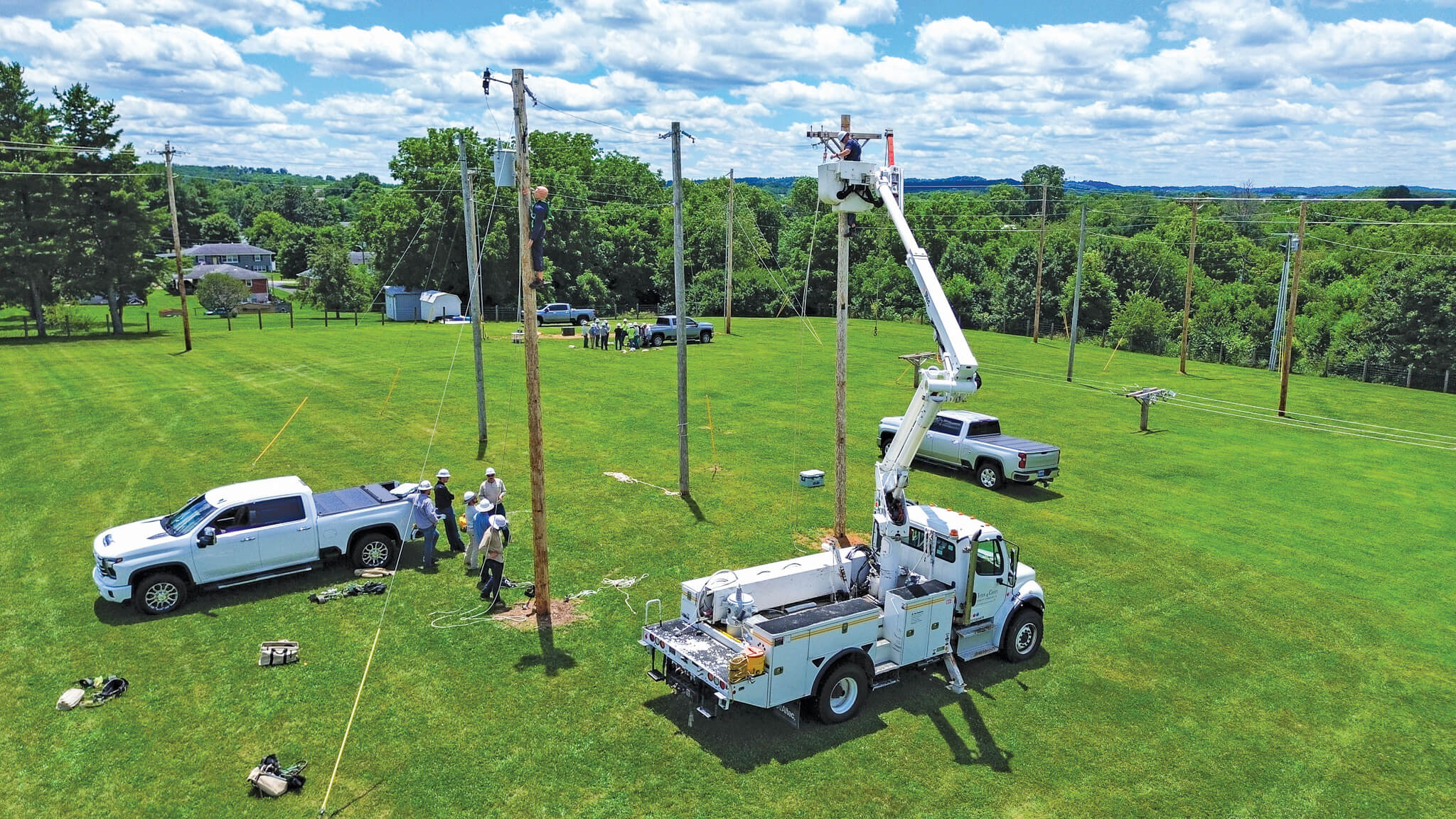
Apprenticeship graduates mark a milestone for lineworker training in Kentucky
“I THINK IT’S MADE ME BETTER.”
In sunglasses, a hardhat and a bright yellow shirt sporting the logo of his co-op, Jackson Purchase Energy Cooperative, Gabe Defew looks across the proving ground of utility poles and equipment at Inter-County Energy in Danville.
As he completes the four-year Kentucky Electric Cooperatives Apprenticeship Program, the journeyman lineworker takes measure of the experience.
“I think it’s made all of us better,” he adds.
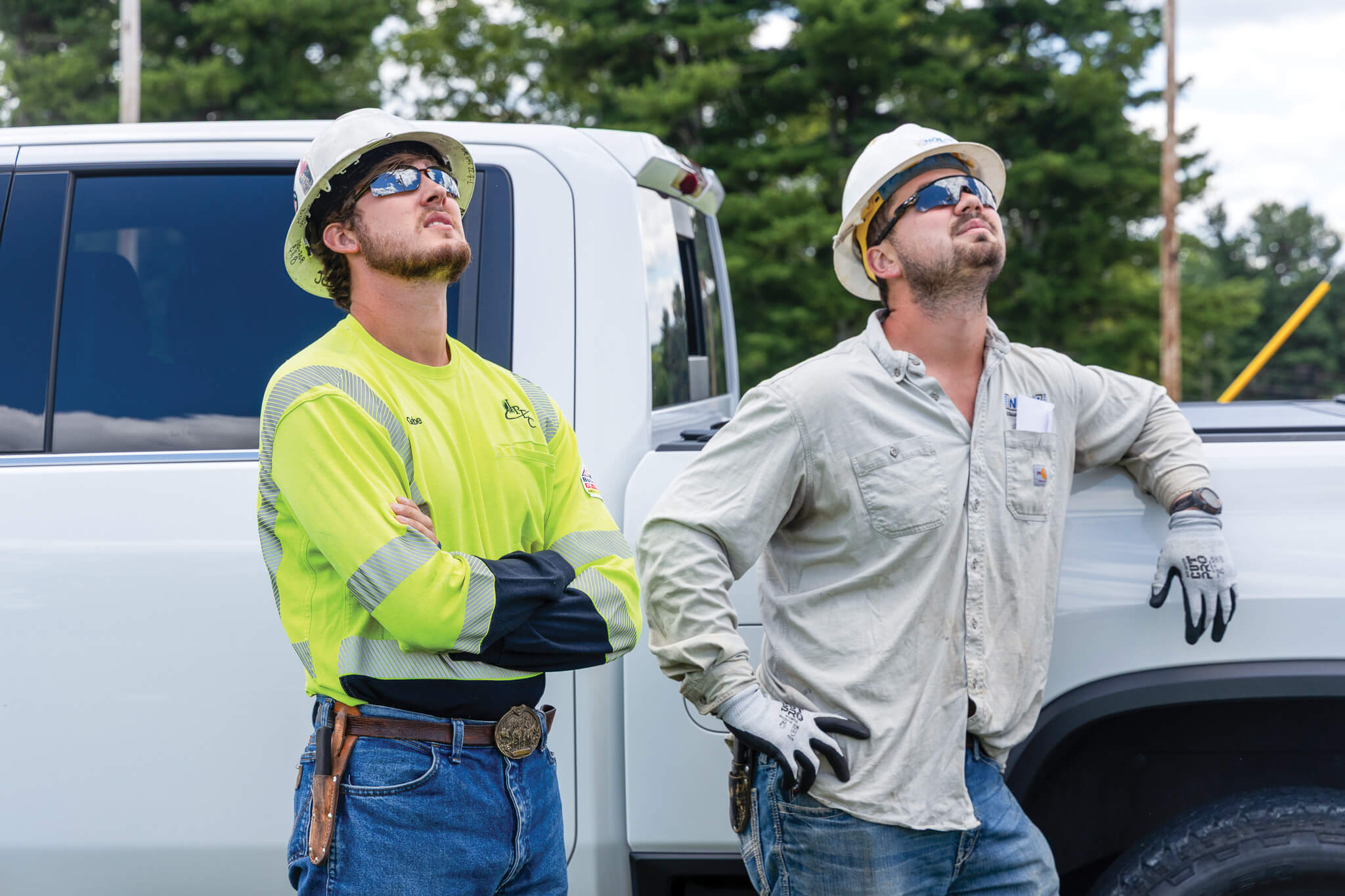
Jackson Purchase Energy’s Gabe Defew and Nolin RECC’s Tucker Shelton observe as participants reinforce the skills and teamwork essential to workplace safety during hurt man training, where pole-top rescue techniques and emergency response procedures help prepare crews to safely assist an injured coworker in the field.
Defew is one of 14 members of the milestone first graduating class of the apprenticeship program that combines hands-on training by six Kentucky Electric Cooperatives instructors with a Northwest Lineman College curriculum that meets state and federal Department of Labor standards.
“I think they get the best of both worlds,” says Seth Rose, a Northwest Lineman College director. “They get that online book training, but then they also have the hands-on experience that we’ve been able to cultivate and grow with you all.”
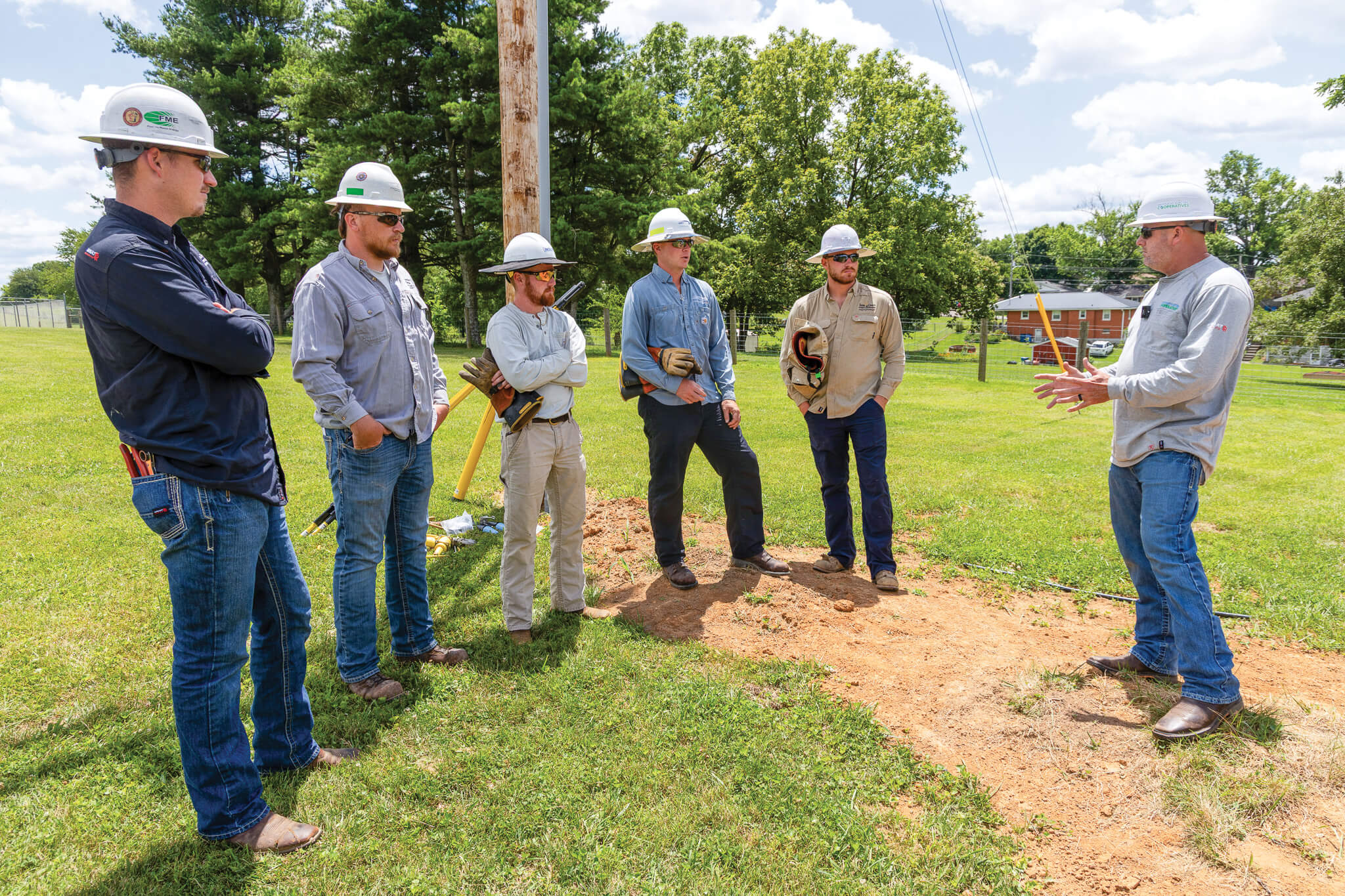
Safety and Loss Prevention Instructor Kevin McCarty gives an overview of insulation, isolation and grounding of primary underground. Shown from left are Ben Bush, Fleming Mason Energy; Austin Caskey, Grayson RECC; Bryson Puyear, Nolin RECC; Evan Meenach, Owen Electric; and Trinity Gribbins, Inter-County Energy. Photo: Wade Harris
Historically, much of the line trade was taught through on-the-job training passed down from one generation of lineworkers to the next. While that produced capable and resilient crews, it also meant practices could vary widely by cooperative, crew or foreman.
“Today’s operating environment demands a more consistent approach,” explains Randy Meredith, vice president of safety and loss prevention at the statewide co-op association. “Co-ops face higher reliability expectations, more energized work and greater technical complexity.”
Co-op operations staff, safety teams and leadership have been invited to observe field labs, helping build confidence in the program and encouraging broader participation.
“For the association, this is a clear example of shared-service value,” says Kentucky Electric Cooperatives President and CEO Chris Perry. “Our team can provide expertise, structure and training capacity that individual co-ops may not be able to develop as efficiently on their own.”
Inter-County Energy Lineman Trinity Gribbins says his four years in the apprenticeship program have taken his eight years in the industry to another level.
“I couldn’t recommend it more because you come out here with all these different co-ops and get to see the way that other people do things, and it’s an open book of knowledge,” Gribbins says.
“For our member co-ops, the return is a safer, better-prepared workforce,” Meredith adds. “We are building a stronger safety culture and a pipeline of lineworkers trained to meet the demands of today’s electric utility environment.”
“When you get into sticky situations, you can think back on this program,” Gribbins says. “These instructors, they’re there for you. They give you their number if you need them.”
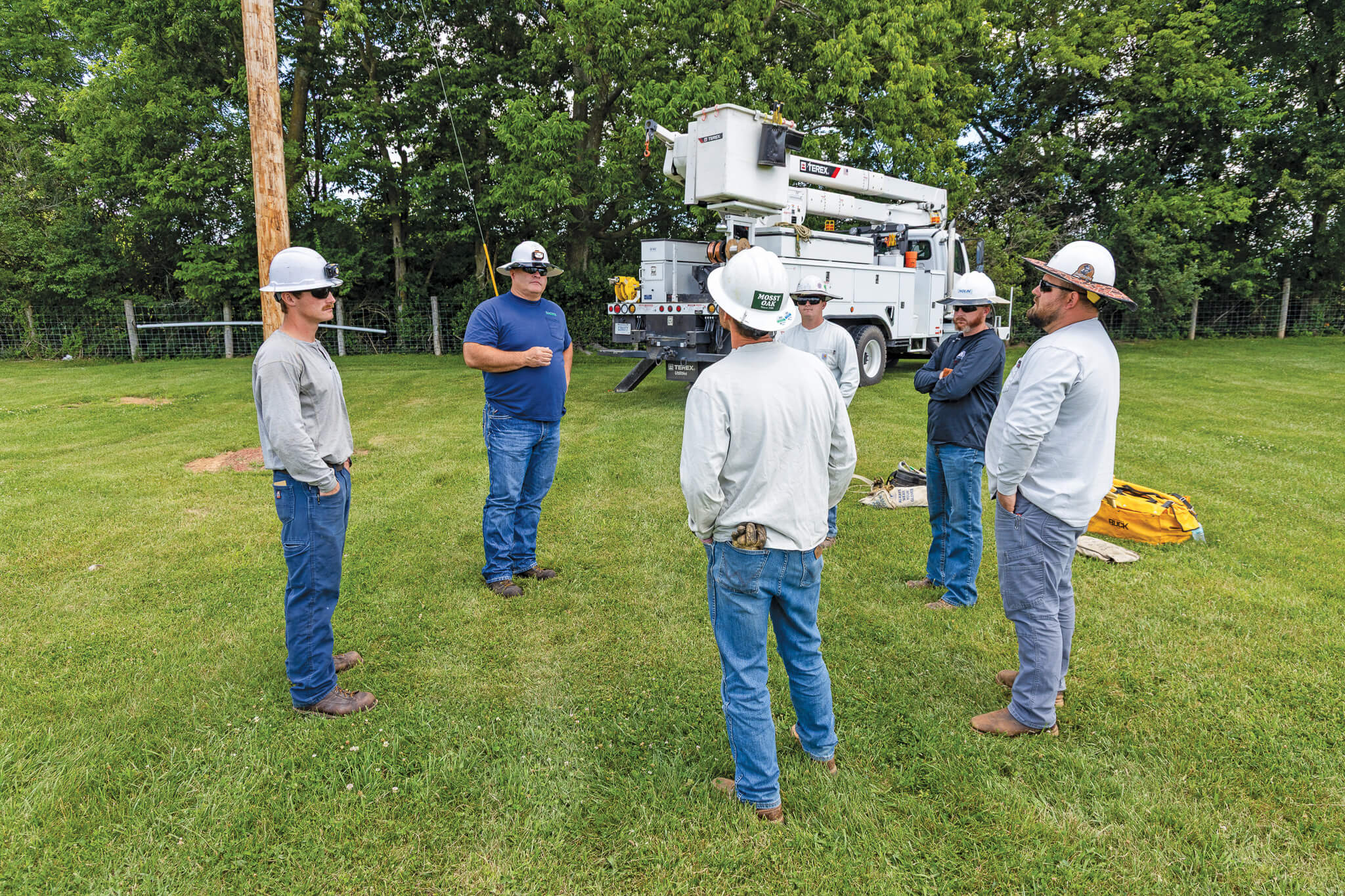
Randy Meredith, director of safety and training for Kentucky Electric Cooperatives, leads a field discussion during Inter-County Energy’s Field Lab 4. Photo: Wade Harris
Meredith says the ultimate goal is simple: to develop professionals who can do the work safely and return home to the people who count on them.
“Nobody can be what you are at home except you,” Meredith says. “Work safely and go back home and be all you can be at home.”
From the handful of Kentucky co-ops that committed to the apprenticeship program when it launched four years ago, 16 now participate, with verbal commitments from two more as they hire their next apprentices.
“I would say come in with an open mind,” says Tucker Shelton, an apprentice graduate and five-year Line Tech 3 at Nolin RECC whose cousin is beginning his first apprentice class this year.
“I feel great,” Shelton adds. “This program’s brought a lot to my attention on how the other parts of the state work. I’ve made a lot of great friends, and it’s overall been an amazing experience.”