Open seat, high stakes

Barr, Booker compete to succeed McConnell in U.S. Senate
WHEN MITCH MCCONNELL, the longest serving U.S. senator in Kentucky history, retires in January, the end of his seven terms and 42 years in office creates a rare opening.
The race to succeed him marks only the sixth time in the last 100 years that Kentucky will hold an election for an open seat in the Senate, highlighting the importance of the 2026 election, beyond the national mid-term scoreboard.
The Republican nominee is Congressman Andy Barr, who is completing seven terms in the U.S. House. The Democratic Party’s nominee is former State Rep. Charles Booker.
As the flagship publication of Kentucky’s electric cooperatives, Kentucky Living reached out to both candidates with four questions that represent the priorities and concerns of local electric co-ops and the communities they serve. Each candidate was allowed a total of 400 words to answer all questions combined.
Kentucky Living: What is your vision for Kentucky’s energy future, and what should be the federal government’s role in that future?
Barr: Kentucky is an energy powerhouse. We have abundant coal and natural gas, tremendous water resources, working waterways that connect our communities to national and global markets. We also have the potential to lead in nuclear and other emerging energy technologies. We should use every one of those advantages to make Kentucky a destination for industries and jobs of the future. My opponents’ Green New Deal will destroy Kentucky’s energy industry, I’m looking to make it thrive.
Booker: Kentucky’s energy sector deserves stronger leadership and a dedicated advocate in the Senate. My vision is to provide affordable, reliable power, well-paying jobs for Kentuckians and a balanced energy mix to strengthen our communities. The federal government should promise fair, wholesale markets, modernize the grid, streamline responsible permitting and support the industry’s resilience. I believe that Kentucky’s Public Service Commission, electric cooperatives, local utilities and communities should remain in charge of retail rates and local energy decisions.
Kentucky Living: As advocates for electric consumers, Kentucky’s electric cooperatives strongly believe that data centers should pay for the costs and risks their projects create—not shift them to existing co-op members. What can Congress do to protect ratepayers from any expenses which might arise from data center projects?
Booker: Data centers should pay the full cost and assume the full financial risk of the power, transmission, water and infrastructure they require. Those burdens should never be shifted to existing co-op members. Congress should promote transparency and cost-based protections in interstate power markets, while Kentucky regulators and local communities retain authority over rates, contracts, zoning and water use. When I’m elected, I will work to ensure that projects are only located in suitable areas, away from homes wherever possible, with meaningful public input and enforceable protections for ratepayers and communities. Kentucky is open for business, but we’re not for sale.
Barr: Communities shouldn’t be forced to accept data center projects they don’t want. These projects should have local buy-in. The Paducah data center is an example of a project done right: it will be on federal land, lower energy bills, create jobs and is the single largest economic development project in state history.

Charles Booker is a former state representative and has previously run for U.S. Senate. Photo: Booker campaign
Kentucky Living: In recent years, Kentucky has seen more than its fair share of natural disasters. Electric cooperatives rely on FEMA assistance to recover from these events. Can co-op members count on your support of HR 4669, The FEMA Reform Act, to ensure member cooperatives continue to get the support they need?
Barr: I’ve fought for Kentucky to receive the resources that we’ve needed in the aftermath of natural disasters that have impacted our commonwealth. Just last month, after I led a delegation letter pushing for FEMA relief, President Trump approved $9.1M in FEMA money to 20 counties in Kentucky for severe weather that hit earlier this summer. As Senator, I’ll make sure we fight for FEMA resources when it is necessary for the Commonwealth. I also commit to evaluating all ways to improve FEMA and other critical federal agencies to make them work better for Kentucky.
Booker: Absolutely. Based on its current provisions, I support H.R. 4669, the bipartisan FEMA Act of 2025. The House Transportation and Infrastructure Committee overwhelmingly approved it by a vote of 57 to 3. Kentucky has endured devastating tornadoes, floods and storms. Disasters do not care whether someone is a Republican or Democrat. I support faster, fairer disaster assistance that helps eligible cooperatives restore power without burdening members, while holding FEMA and every recipient accountable to taxpayers.
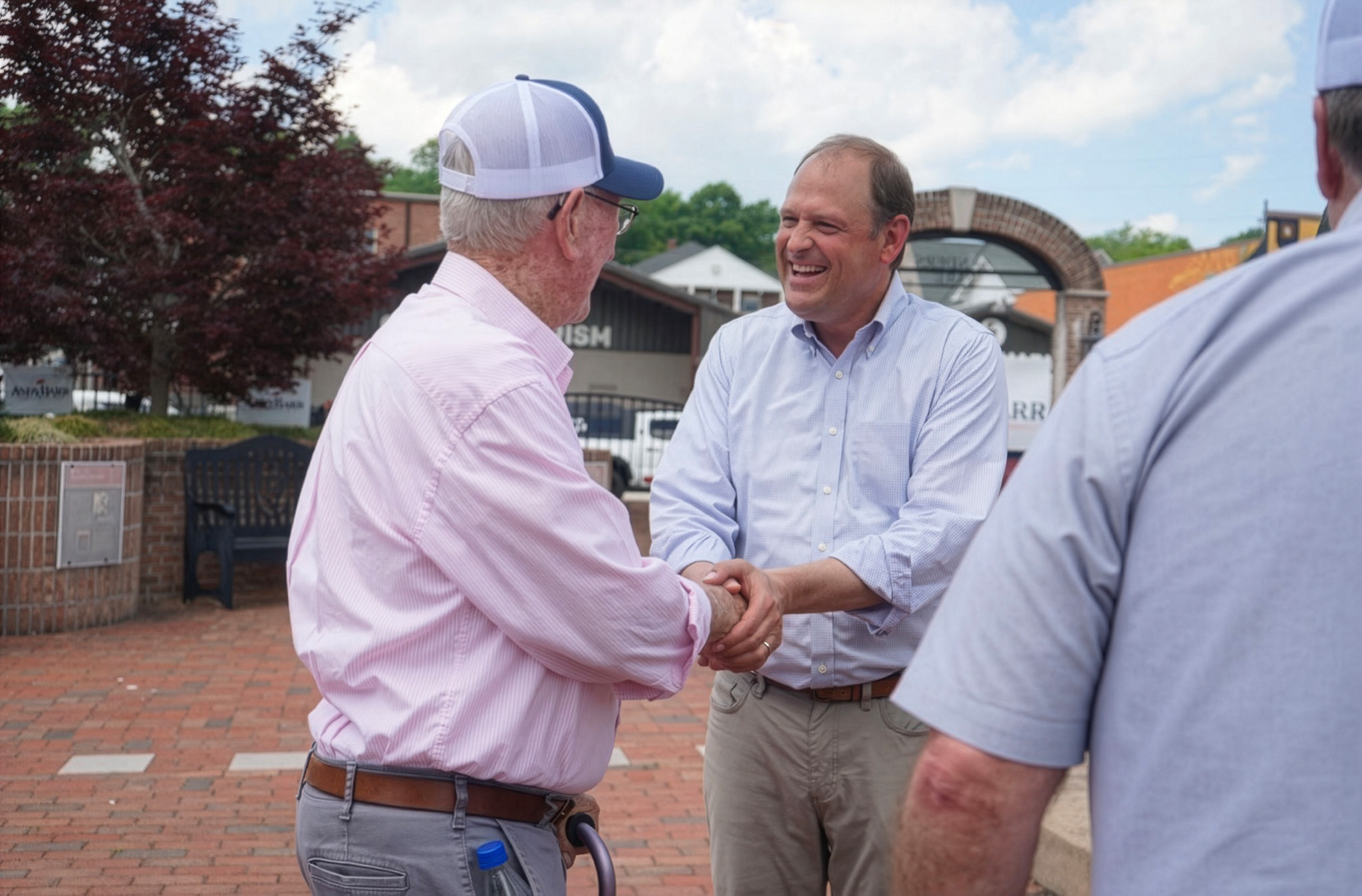
Andy Barr meets with voters. Barr has served seven terms in the U.S. House of Representatives. Photo: Barr campaign
Kentucky Living: What role do you see nuclear energy having in our nation’s future energy mix? Do you support the construction of new nuclear reactors?
Booker: Nuclear energy can contribute to a reliable, low-emission energy mix, and I am open to new reactors, including advanced and small modular designs. However, Kentucky is not in the business of writing blank checks. I believe that any proposed project must first pass an independent Nuclear Regulatory Commission review, secure meaningful input from the local community, establish credible waste and decommissioning plans, and demonstrate reliable, affordable value. Strong state oversight and enforceable contracts should place construction delays and cost overruns on developers and investors, not Kentucky families and small businesses.
Barr: Absolutely. Kentucky families and businesses need reliable, affordable power and nuclear energy should be part of it. Kentucky has powered America for generations, and we have the opportunity to do it again. By embracing coal, natural gas and new nuclear projects, we can lower energy costs, strengthen our electric grid and bring thousands of good-paying energy and manufacturing jobs to the Commonwealth.
2026 KENTUCKY ELECTION CALENDAR
Oct. 5: Last day to register to vote for the general election.
Through Oct. 20: Online mail-in absentee request portal open.
Oct. 21–23 (Wed–Fri) & Oct. 26–28 (Mon–Wed): Excused, in-person absentee voting.*
Oct. 29–31: In-person, no-excuse absentee voting.
Nov. 3: General Election Day • Polls open 6 a.m. to 6 p.m.