Seal ductwork and save
Around 20% to 30% of the air you pay to heat or cool with a forced air furnace is lost through leaks, holes or poorly installed ductwork, according to the U.S. Environmental Protection Agency, resulting in wasted energy and uncomfortable homes.
Leaking return ducts can pull air from the spaces they run through—like attics and crawl spaces—causing you to breathe in dirt, dust and insulation. Gas appliances, like water heaters, dryers or furnaces with leaking return ducts can cause backdraft.
DIY STEPS
If you’d like to seal ducts yourself, start with a visual inspection to determine your duct type: flexible or metal ducts. Ducts should be insulated when they run through unconditioned spaces.
If your metal ducts are insulated, you must remove insulation to properly seal them, then reinsulate. Metal ductwork should be fastened together at each joint using sheet metal screws.
Flexible ducts typically have an inner and outer layer with insulation in between. If the inner liner is brittle and in bad shape, replace the flexible duct. Check for any obvious deformities. Improve airflow with short, straight, taut runs, avoiding sags and excess turns, and ensure ducts are properly supported to prevent joints from separating. Use Panduit straps for flexible ducts—these are heavy-duty nylon zip ties with long-term durability and a tensioning tool.
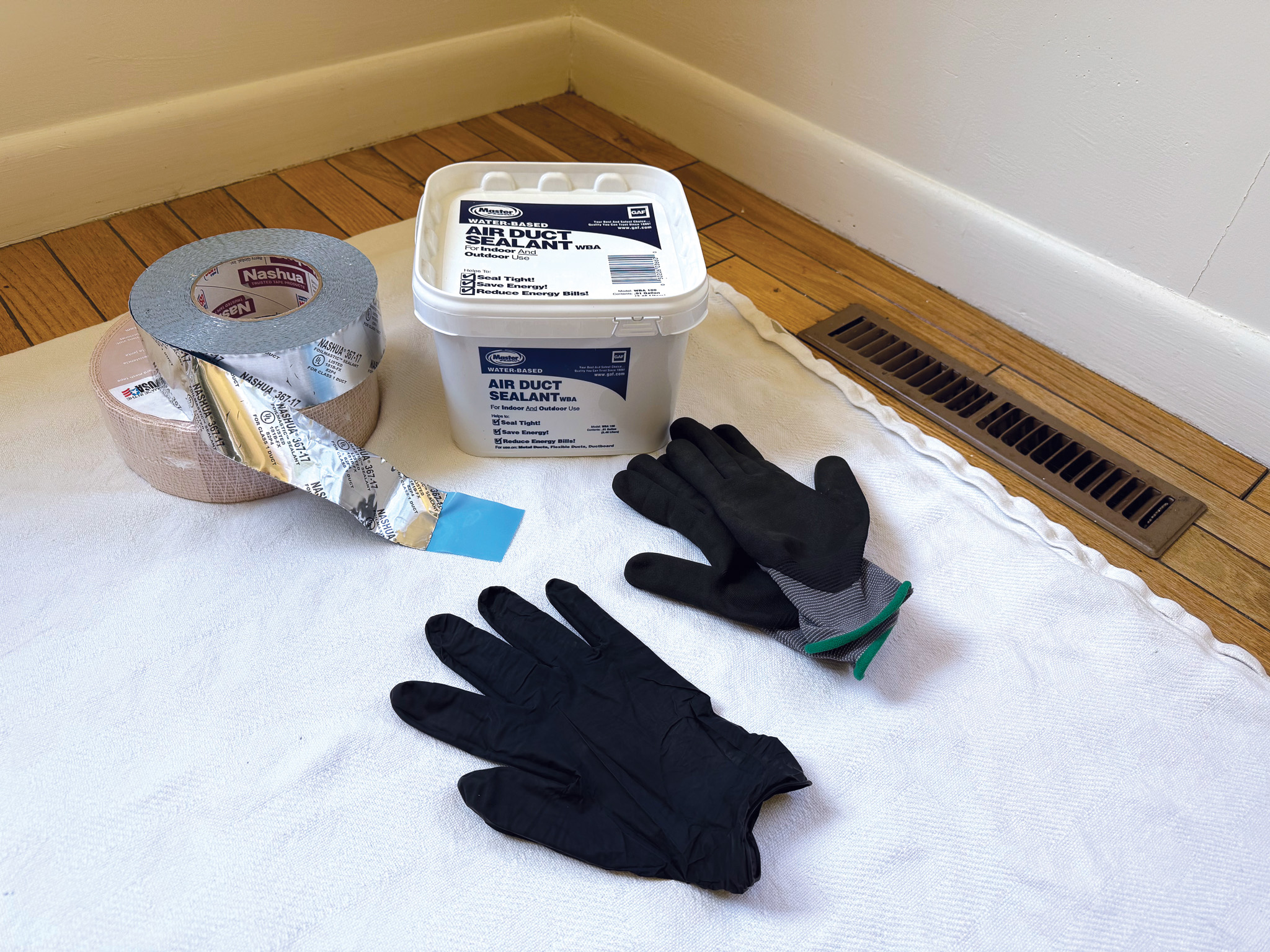
When sealing ducts, use products designed for the job. Seal every joint and seam using duct-sealing mastic—a thick paste that creates a flexible, airtight seal. Mesh tape can bridge larger gaps before applying mastic. Remove register covers to seal joints and seams.
You can opt to use UL-listed, foil-backed tape designed for ductwork in more accessible areas.
BEFORE AND AFTER
Duct sealing is messy, so before you start, be sure to protect yourself with gloves and a long-sleeve shirt. Protect your home with drop cloths.
After air sealing, have an HVAC professional test the airflow during the next maintenance visit. Most companies that install ductwork or heating and cooling systems can seal ducts.