How to spot scams
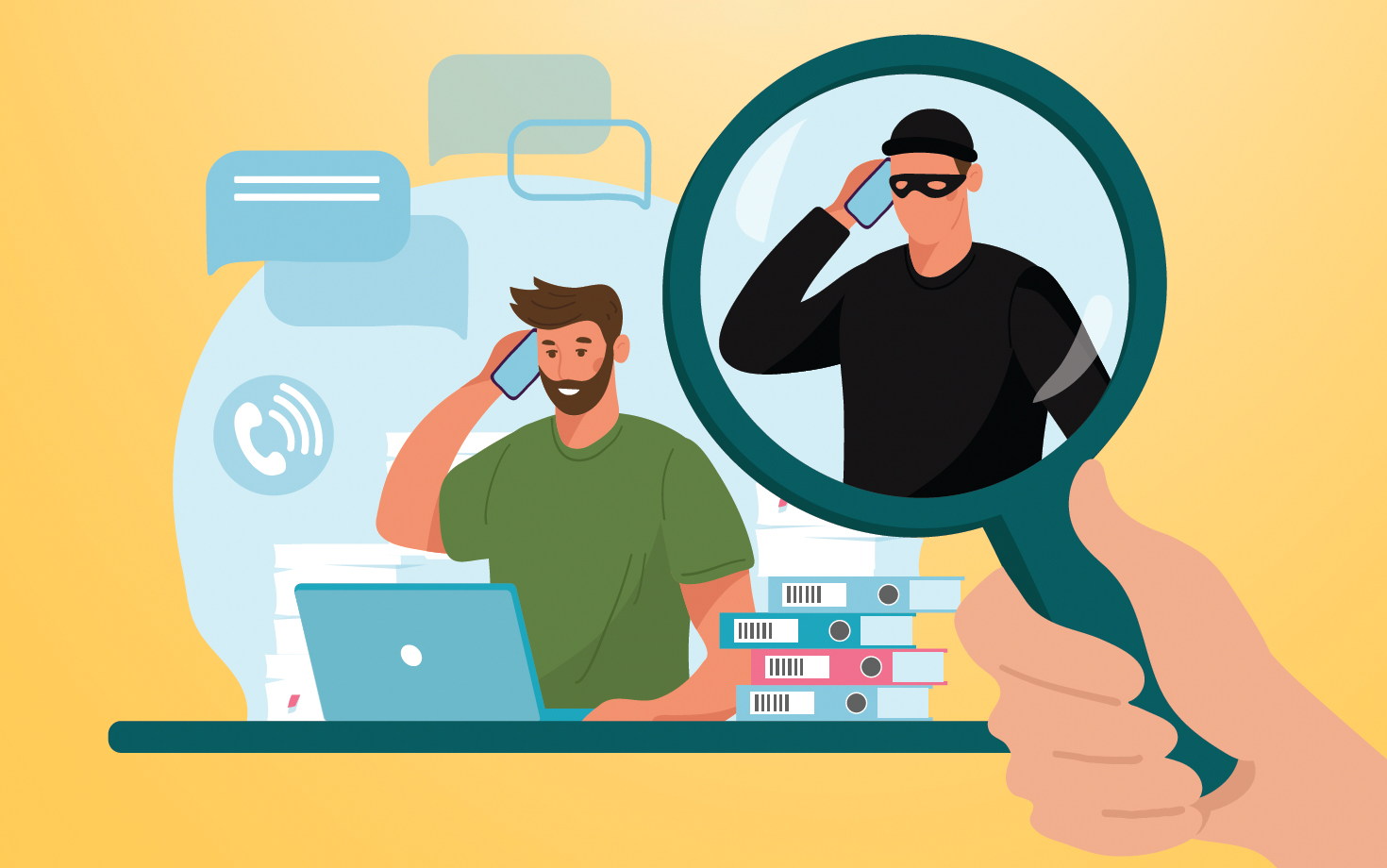
Pause, check, protect—don’t fall victim to scams
When Gayle M.* needed help with a PayPal refund, shesearched online for a customer service number. What she didn’t realize was the number she found was fake—planted by scammers who paid for it to rise to the top of search results.
The scammers told Gayle she had to download an app to get her refund. She did so, using a link they provided. She didn’t realize the app mirrored her phone screen in real time, giving the scammers her bank login details. They moved her savings into her checking account, then changed her password so she couldn’t see either.
Next, the scammers claimed they’d overpaid her refund by thousands and pressured her to send it back—by wire transfer, cash deposited into a cryptocurrency ATM and gift cards. They coached her on what to say if her bank asked questions and contacted her constantly to keep her moving fast. She followed every instruction until her local banker noticed the unusual activity, stepped in, and stopped further loss.
Scams like the one Gayle faced can take many forms: fake customer service numbers, or unsolicited texts and calls that appear to come from companies like Amazon or PayPal, or from your hospital or a government agency. They may claim you made a costly purchase or owe money, pushing you to click a link or call a number. Spoofed numbers can even make a call look like it’s from someone you trust—your boss or bank. Scammers also cast wider nets with social media ads offering too-good-to-be-true deals, or flirtatious messages meant to build trust before asking for money.
In 2025, Kentuckians lost an estimated $120 million to internet scams, an almost 62% increase from the $74 million reported in 2024. Losses are likely much higher, because many people are embarrassed to report—or don’t know how. How can you protect yourself and your loved ones?
Ask questions
When Mel E.* posted a sewing machine for sale on Facebook Marketplace, someone posing as a buyer asked to give her a cashier’s check for $1,500 more than the price she was asking. He wanted her to meet him with $1,000 in cash, along with the sewing machine. He said she could keep the extra money for her trouble.
“Does this sound right to you?” she asked a friend. “A cashier’s check is guaranteed, right? But why would they want to pay more than I asked? It seems confusing.”
Her friend suggested she stop communicating with the buyer and remove the post. That advice saved her from being defrauded with a counterfeit cashier’s check.
The question Mel asked is the right one. And pausing to ask family, friends and official service providers if a message is legitimate is the best step you can take to protect yourself from scams.
“We need to remove the embarrassment surrounding scams and talk about them,” says Jenny McKinney, who is assistant vice president at Fredonia Valley Bank in Lyon and Caldwell counties. “Keeping silent is how they keep winning.”
Tell-tale signs of a tall tale
Professional con artists design scams to be emotional, entrapping and immediate, according to Christopher Cantrell, an FBI agent based in Kentucky. He advises caution if someone contacts you from out of the blue with an urgent problem, pressuring you to take action or make a decision quickly.
“The more we learn to slow down and verify before believing a threat or offer, the better we can work together to stop scammers,” Cantrell says.
Scammers often act friendly and familiar. They convince victims to keep quiet. They use vague reasoning and complicated ways of transferring money, such as converting cash to gold coins or buying gift cards. These vehicles for paying scammers are nearly untraceable and make it impossible to get the money back in most cases.
Consumers need to separate facts from fear. McKinney says if you are not expecting a text or call and the requested actions or information make you feel uncomfortable, you should assume it is an attempt to defraud you. Hang up, block the number, and report the scam to the FBI’s Internet Crime Complaint Center.
“If you have given an unknown caller any personal or banking information, report it, especially to your bank right away. Be proactive. Don’t wait until something happens,” McKinney recommends.
Is it love or leverage?
Emily McCarthy, public information officer for Kentucky’s Public Protection Cabinet, says romance scams are prevalent. In 2025, Kentuckians lost $12 million to scammers impersonating romantic partners.
“Romance scammers prey on people looking for companionship,” McCarthy says. “They create fake profiles on dating apps and social media. They spend time forming what seems to be a genuine relationship, but their end goal is to take your hard-earned money.”
One of the ways scammers build emotional attachments, McCarthy says, is by exploiting personal details shared online, including information about family members, pets, and events like deaths or divorces. She advises people to watch for these red flags in online relationships:
- The unknown new contact moves the relationship forward quickly through a tactic called love bombing: excessive compliments, intense declarations of love, constant communication and sometimes gifts or grand gestures.
- The contact avoids in-person meetings.
- Eventually, the contact has a crisis, such as a medical emergency, urgent legal fee or expenses for travel to meet up, and asks you to send money.
- When asking for money, the contact may try to convince you to lie or not talk to others.
Keeping seniors safe
Robert J.* had filled out Publisher’s Clearinghouse Sweepstakes entry forms for decades. So, when an official-looking letter arrived near his 80th birthday, declaring he had won $100,000, he was excited. The letter instructed him to send two $5,000 checks in the enclosed envelopes and then he would receive his prize money. He and his wife didn’t tell family they had “won.” They didn’t ask if the offer sounded legitimate. They lost much of their life savings.
Gayle, Mel and Robert are not alone in facing scams—it’s an issue that has impacted my own family. Walking closely with my parents through their golden years, we have navigated credit card fraud, text links impersonating legitimate businesses, caller ID spoofing (a technique scammers use to falsify the number or name displayed on your caller ID so it appears to be coming from a trusted source), Facebook ad fraud, Facebook Marketplace phishing and tech support scams. Recovering what scammers stole has taken hours. My parents were fortunate, though—they were able to stop the fraud before suffering a major loss.
While scammers target people of all ages and backgrounds, seniors can be particularly vulnerable because of habits rooted in politeness, such as answering every phone call. The FTC reports that adults ages 18–59 encounter scams and report losing money more often than older adults. However, older adults who lose money tend to lose more per incident.
“Our older customers are respectful,” says McKinney, the bank president. “Making them aware their phone habits need to change is hard. They don’t want to be suspicious of others. But scammers are robbers. You wouldn’t be polite to a robber—you’d keep him out of your house. You don’t have to be polite to callers asking for personal information. It’s important to hang up and call a family member for guidance.”
Experts agree that families should make a fraud-prevention plan as parents age. Talk openly about current scams and take steps like these together to protect their finances:
- Reduce your online footprint by using privacy settings and opting out of data-sharing services.
- Use a unique, complex password for every account and change passwords after a breach.
- Freeze your credit with the three major credit reporting agencies to prevent fraudulent accounts in your name.
- Check refurbished devices carefully. Remove unfamiliar apps or reset the device to factory settings.
- Build safer habits: Don’t answer unknown or unexpected callers, click unsolicited links or connect with strangers on social media.
- Ask for help. Never be embarrassed to check with a trusted family member or professional.
- Restrict or limit phone or financial access if cognition is compromised.
- Promptly report scam attempts to the Internet Crime Complaint Center, or IC3.
The goal isn’t to make older adults fearful—it’s to help families slow down, verify and protect what they have worked so hard to build.
Go to the original source
Receiving an unexpected message from a scammer can be unsettling, especially when they know personal information. FBI Agent Cantrell reminds Kentuckians never to use links, apps or phone numbers provided by an unknown person. Instead, contact the organization the person claims to represent using a phone number or website you find yourself, or visit in person.
“Never send money to a stranger—even to avoid threatened legal action,” he advises. “Professional law enforcement personnel will not ask you to do that.”
When in doubt, talk with a family member or trusted advisor. Log in to the account in question directly, visit your bank or post office, or contact local law enforcement using a number you obtain independently.
Agonizing aftermath
The impact of being scammed goes beyond financial loss. Victims give up time and other assets to protect what’s left. Many continue to receive contact from scammers. Some suffer emotional and mental effects for years.
“By the time the scam is detected—whether it is 10 minutes or 10 days in—the victims are invested. Not just their money,” McKinney explains. “They believe the story the scammer is telling them. Sometimes it takes several attempts for me to help a customer understand that a scammer is lying, that the story holds no substance, and that there is no threat.”
“Scams are cruel, costing Kentuckians their hard-earned resources,” McCarthy says. “Let’s keep working together to report and stop them.”
*Names changed to protect privacy
Kentucky Attorney General’s Office
Federal Trade Commission (FTC):
National Elder Fraud Hotline: 833–FRAUD–11or or 833–372–8311
Safe Online Dating Tips
- Tell a family member or trusted friend when you start talking to someone online and commit to admitting if that person ever asks for money.
- Search the person’s name online to learn about his or her background.
- Reverse-image search their profile photo—stolen photos are often reused under multiple fake identities.
- Don’t share personal information—full name, address, phone number, workplace or children’s names—until you’ve verified background and, ideally, met in person.
- Never send money to someone you’ve never met.
- For a first in-person meeting, bring a friend and meet in public.
- A genuine romantic prospect will respect your boundaries around meeting, sharing information and money.
- Trust your instincts. If something feels off, it probably is.