Kentucky’s capital city
Art, history, bourbon, chocolate and more
YOU’D EXPECT KENTUCKY’S CAPITAL to be drenched in history, but it is not a one-trick pony. Frankfort also offers culture, natural beauty, small-town ambience and some of Kentucky’s best-known distilleries.
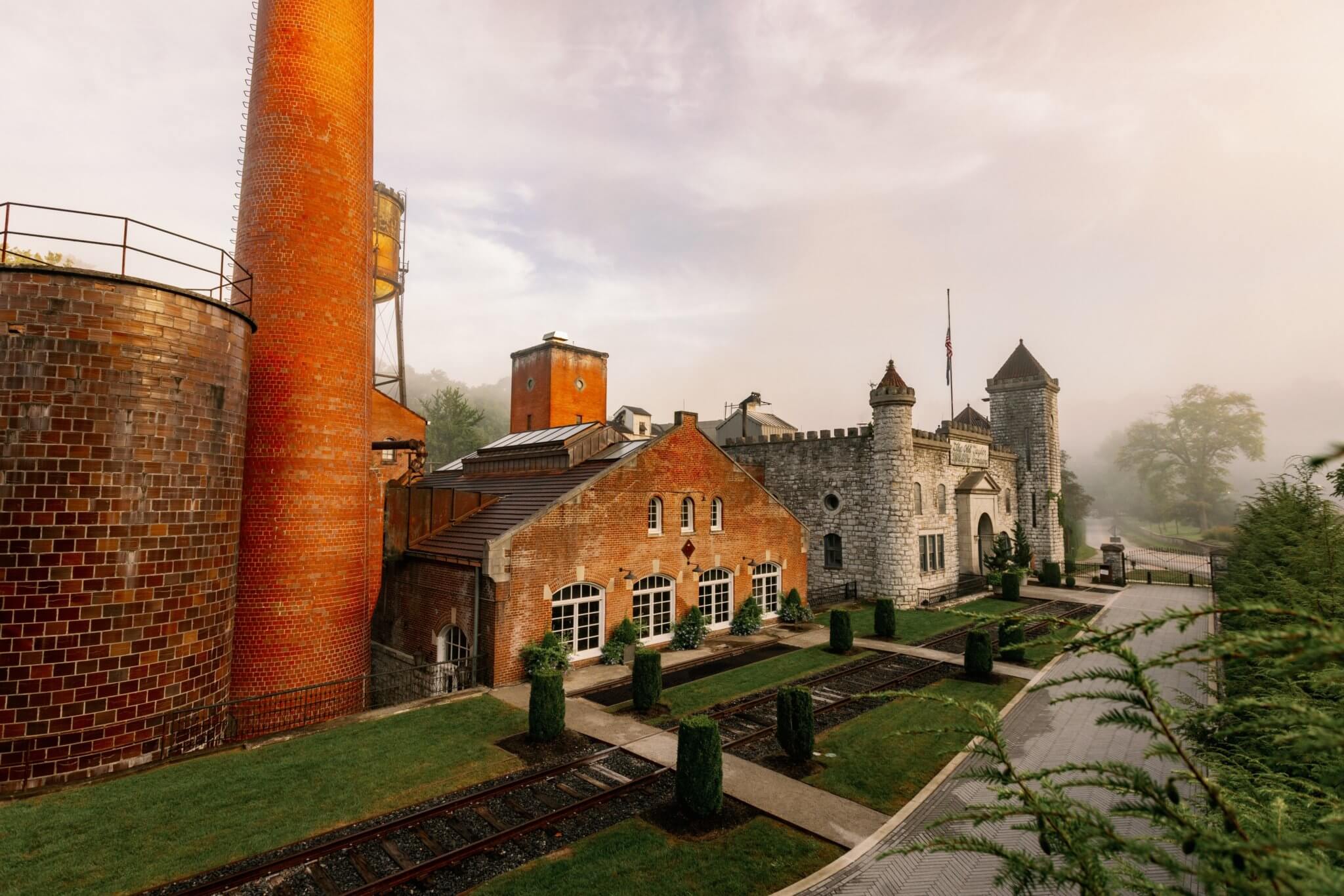
“As the fourth-smallest state capital, Frankfort does something that few state capitals are able to do: blend natural beauty and rich history while enhancing it with small-town charm,” says Randy Newcomb, Visit Frankfort executive director. “Frankfort is also special because it is the heart of bourbon country, and its six distilleries help connect visitors to Kentucky’s most famous craft tradition.”
Frankfort Cemetery: Walk back in history
Established in 1845, Frankfort Cemetery is the final resting place of pioneers Daniel and Rebecca Boone, though the state of Missouri also controversially makes that claim. “A lot of people come here to see Daniel Boone,” says cemetery office administrator Gary Fields, “but there’s a lot of other history here, as well.”
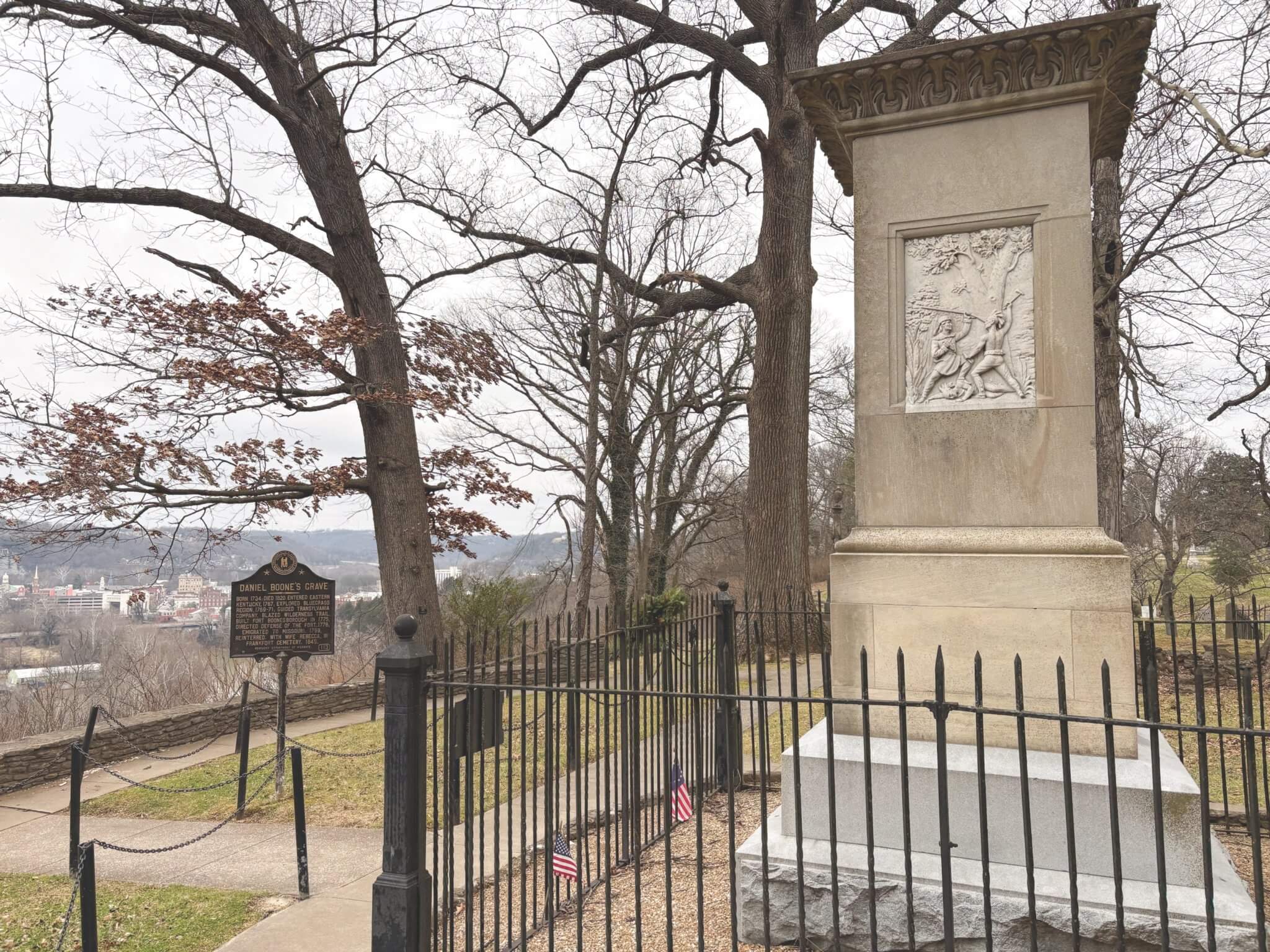
Daniel Boone’s final resting place is one of more than 3,500 known marked graves in the Frankfort Cemetery. Photo: Joel Sams
Overlooking downtown Frankfort, the cemetery encompasses around 100 acres with over 3,500 known marked graves, including those of former governors, statesmen and business owners. Two memorials—one honoring Kentucky soldiers and another dedicated to unborn children—are standouts. The grounds are also home to eight Kentucky champion trees, which means “they’re the largest known documented species of their kind in the entire state,” explains Fields.
Fields encourages visitors to journey back through history—locate an older monument and then go online to learn about the person buried there. “Cemeteries exist so the deceased are gone but not forgotten,” he says. “Every stone there was a person with a story worth remembering.”
Josephine Sculpture Park: Art + nature
“Every path offers a new surprise, every sculpture its own story,” says Zaq Andel, Josephine Sculpture Park’s director of engagement. The sculptures—some nature-inspired, others completely imaginative—sprout along quiet natural corridors and bloom in open meadows, “like the Earth itself is breathing art,” Andel says.
Visitors are encouraged to wander the grounds of Kentucky’s only sculpture park. View over 70 artworks along 2 miles of mowed trails across 40 acres and touch the sculptures, while listening to the birds as sunlight shifts across the bold metal and stone creations. Picnic areas and restrooms also are available. Admission is free.
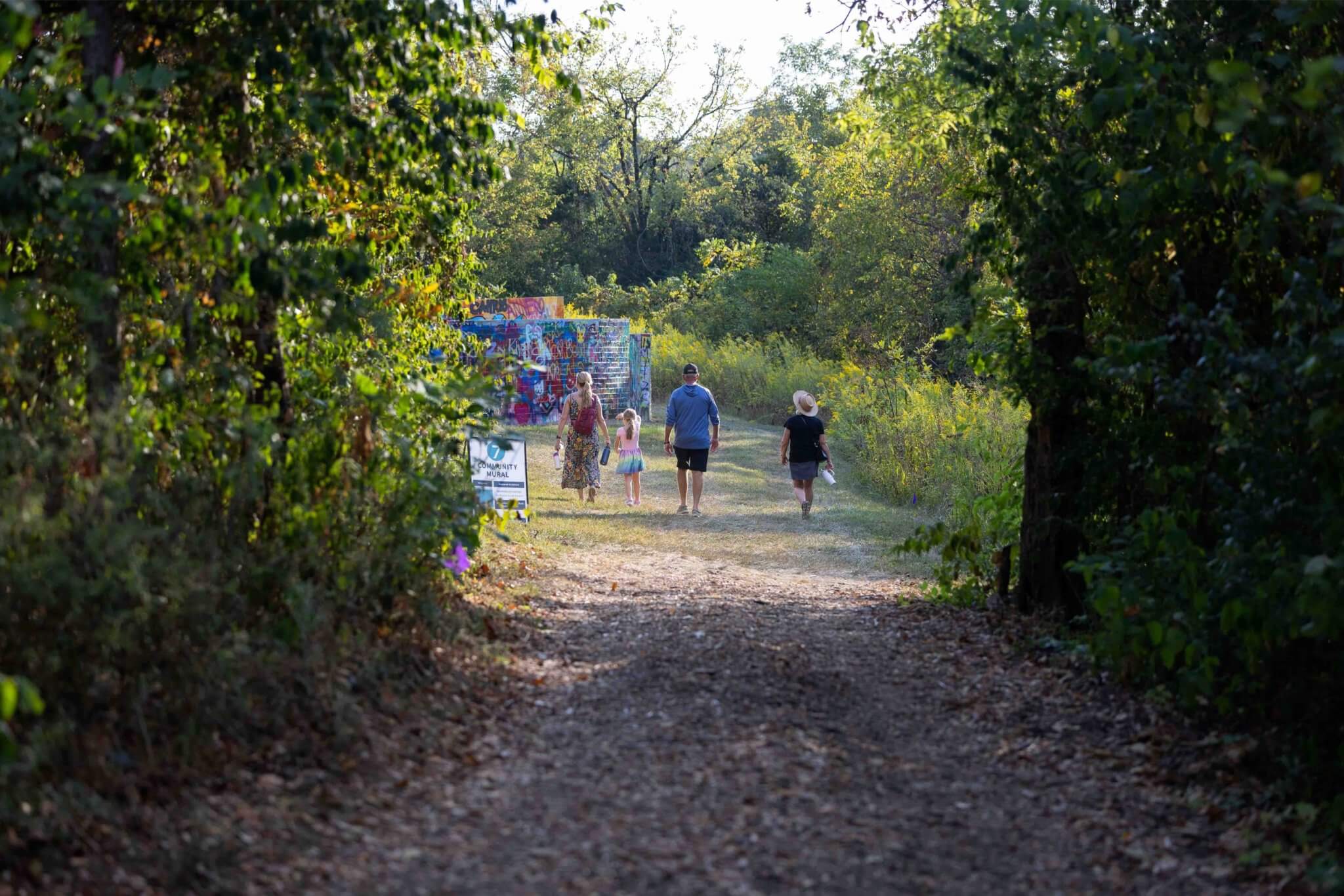
Josephine Sculpture Park is home to more than 70 artworks across 40 acres. Photo: Michaela Bowman/ Lexington Philharmonic
“You won’t find the kind of art here that hides behind glass, meant only to be admired from a distance,” Andel explains. “Instead, you’ll be surrounded by it, immersed in the wild and in the minds of the creative voices whose work lives and grows here.”
Josephine Sculpture Park’s guests curate their own unique journey, Andel says: “Every visit feels different, because the park itself is alive, always changing with the seasons, the sky and the people who explore it.”
Rebecca Ruth Candy: A sweet spot
In 1919, before women could even vote, Rebecca Gooch and Ruth Hanly Booe co-founded their own candy enterprise—Rebecca Ruth Candy. A downturn in candy sales during the Great Depression gave Hanly Booe (by then the sole business owner) plenty of time to experiment in her kitchen. A few years later, she still experimented, this time mixing candy with bourbon to create bourbon balls.
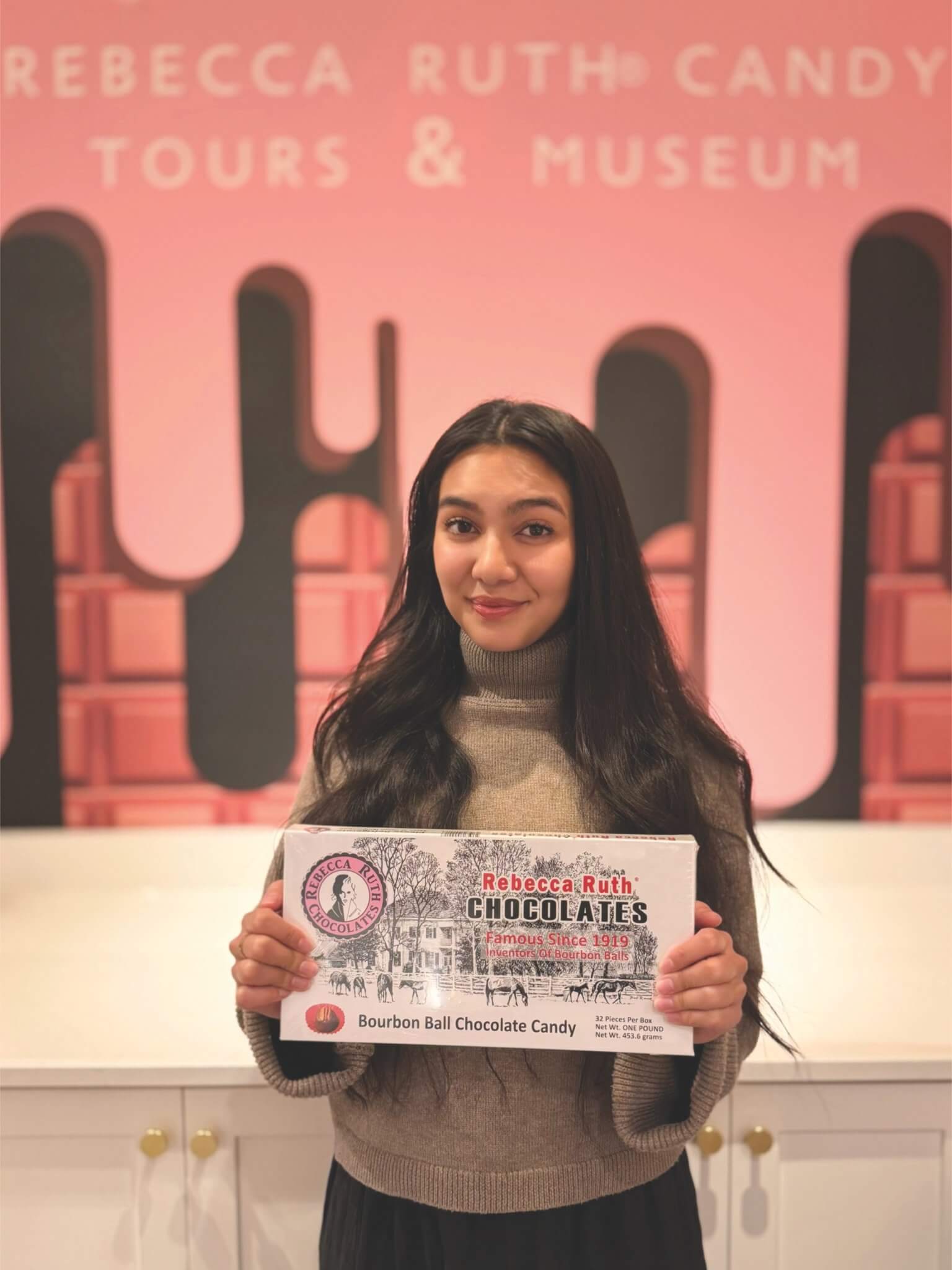
Sarah Booe is the vice president of Rebecca Ruth Candy—and the great-granddaughter of co-founder Ruth Hanly Booe. Photo: Rebecca Ruth Candy
Today, those bourbon balls are just as popular as they were in the 1930s. “It’s a Kentucky staple dessert item,” says Sarah Booe, Rebecca Ruth Candy vice president and Ruth’s great-granddaughter. The fourth-generation, family-owned business now has three retail locations and recently opened a new tour center, complete with windows for viewing the candy-making process. Candy connoisseurs will learn more about Rebecca Ruth’s history and, of course, sample some chocolate.
“Rebecca Ruth Candy has been part of the community for generations,” says Booe. “We invite everyone to come out, enjoy themselves and taste a bit of our Kentucky tradition.”
Salato Wildlife Education Center: Connecting with wildlife
In 2025, Salato Wildlife Education Center celebrated three decades of serving the community. “Salato has grown and changed over the years, but our goal remains the same—to inspire stewardship for Kentucky’s wildlife and promote opportunities for hunting, fishing, trapping and other related activities,” says Jules Foster, Conservation Education Program coordinator.
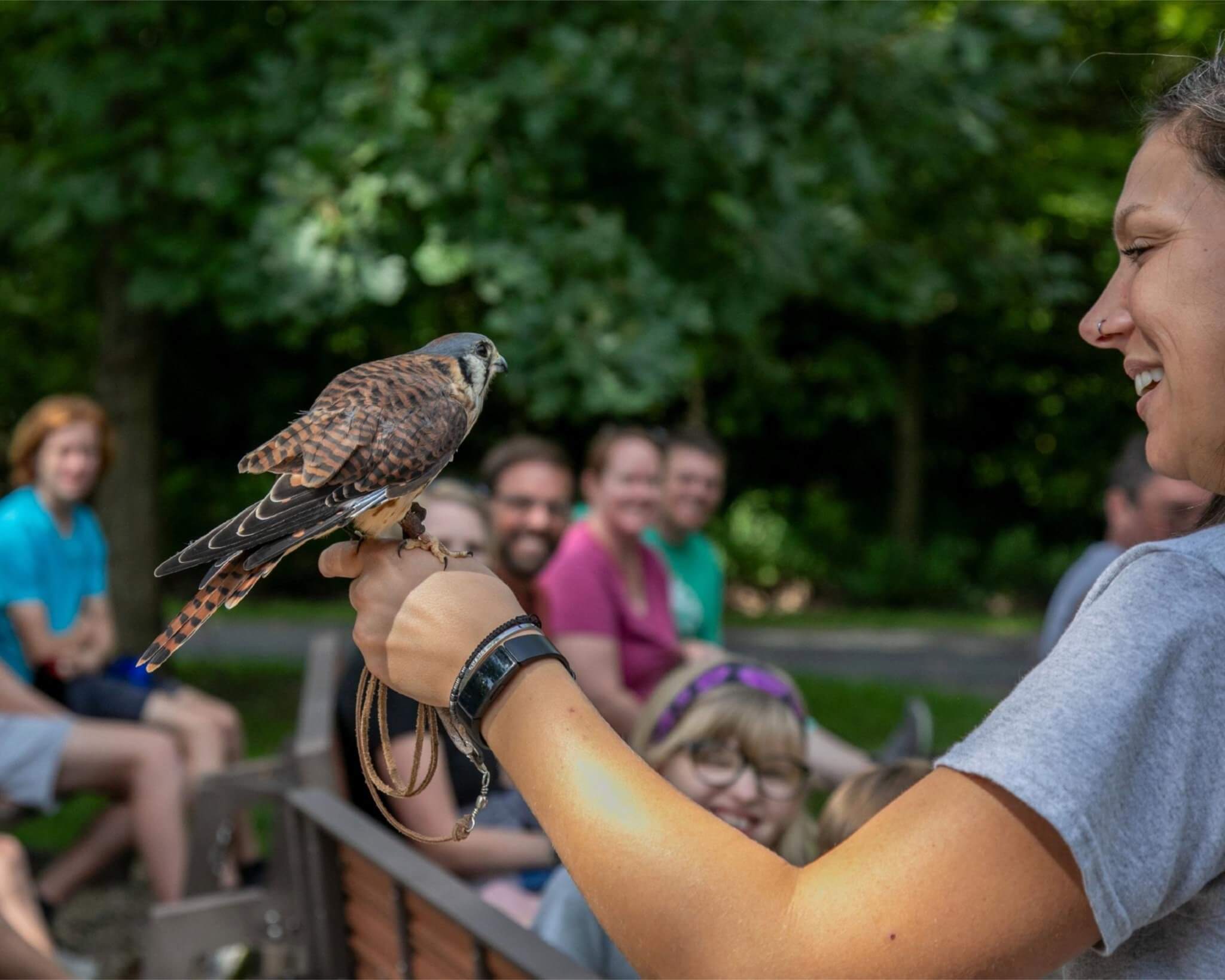
Conservation educator Cassidy Cornett holds an American kestrel during a demonstration at the Salato Wildlife Education Center. Photo: Rachel Cummings/KDFWR
Salato offers exciting animal encounters—stand just feet from a black bear, touch a snake or peer into the eyes of a hawk—all while spotlighting how these animals fit into Kentucky’s natural landscape. The center also is home to some rare animals not typically seen in the wild, like the alligator snapping turtle, alligator gar and the eastern hellbender. Animal programs are offered daily. The center’s grounds include hiking trails, a fishing lake and picnic area.
“If you haven’t been to Salato in a while, or ever, you’ll be surprised by how much there is to see and do,” says Foster. “It’s an easy, affordable way to get outdoors and learn something new about Kentucky’s incredible wildlife.”
Kentucky History Center: Bridging past and present
For history buffs, a Frankfort trip must include the Thomas D. Clark Center for Kentucky History, which locals call simply the Kentucky History Center. It’s part of the Kentucky Historical Society campus that also encompasses the Old State Capitol and the Kentucky Military History Museum.
Exhibits include A Kentucky Journey, spanning our state’s historical timeline. The Hall of Governors pays homage to past elected leaders. Over 3,000 artifacts are displayed, from campaign buttons to full-size cars and cannons. Hannah Litkenhous, Visitor Services manager, says there’s something for everybody to enjoy, adding, “You can really see yourself reflected here.”
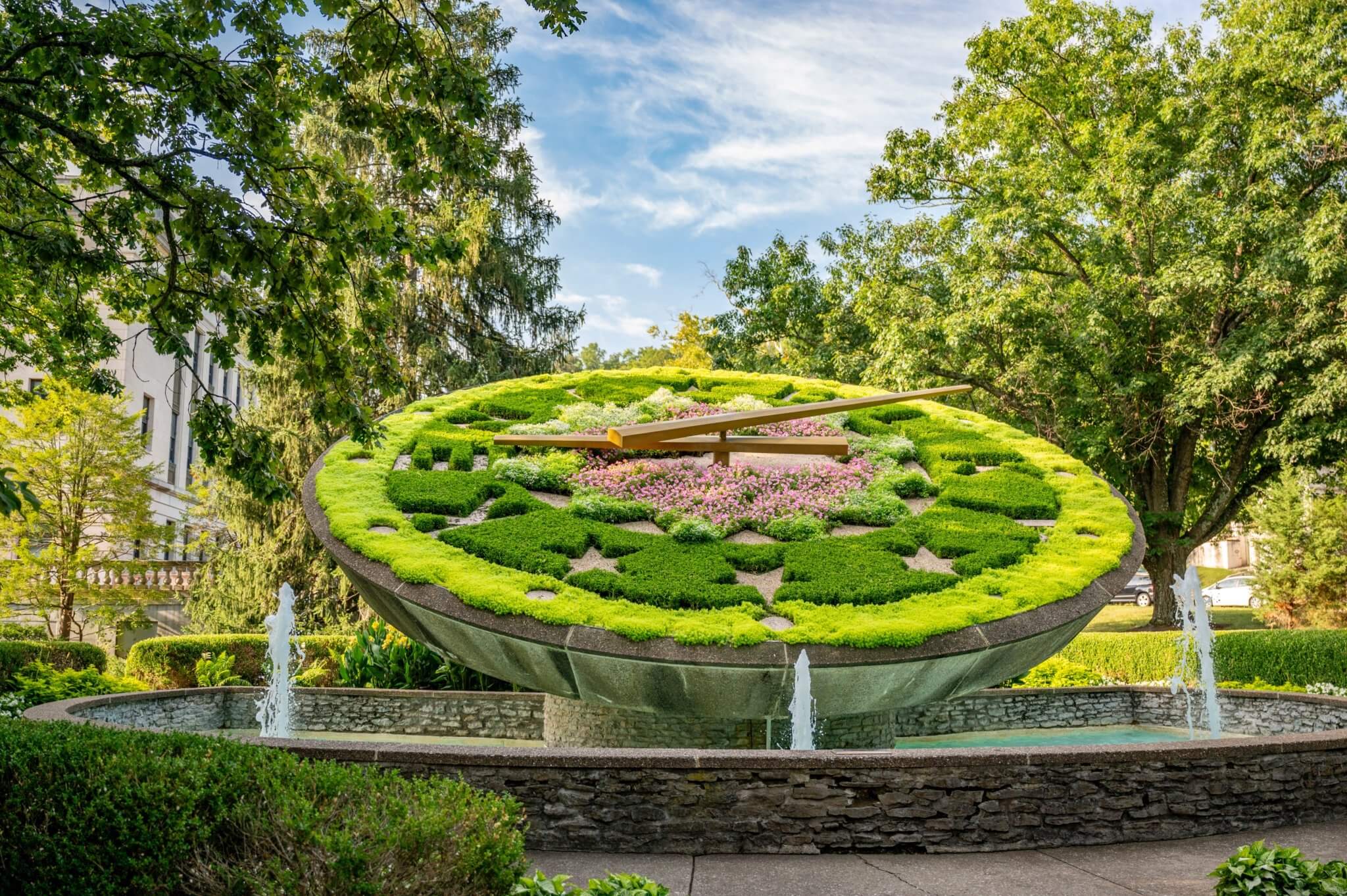
Dedicated in 1961, the Floral Clock showcases thousands of plants that are changed out seasonally. Photo: Visit Frankfort
You can spend an entire day exploring the history campus. The Old State Capitol is a National Historic Landmark and served as Kentucky’s state capitol from 1830-1910. The building that is now the Kentucky Military History Museum was the state arsenal for more than 100 years and a Civil War-era munitions factory. Now, it preserves and explains Kentucky’s military history.
“You just never know what you’ve missed until you come here and see this beautiful jewel that is Kentucky history,” Litkenhous says.
Four sites for Frankfort
YouTube offers a look at Frankfort on several different channels. You can learn more about Buffalo Trace Distillery on their YouTube channel, and dive deeper into Kentucky history by visiting the Kentucky Historical Society’s channel.
For all things Frankfort, check out Visit Frankfort Kentucky on YouTube.
While it’s not a YouTube channel, this webpage for the Salato Wildlife Education Center offers resources for distance learning to teach kids more about wildlife..