Dark parks
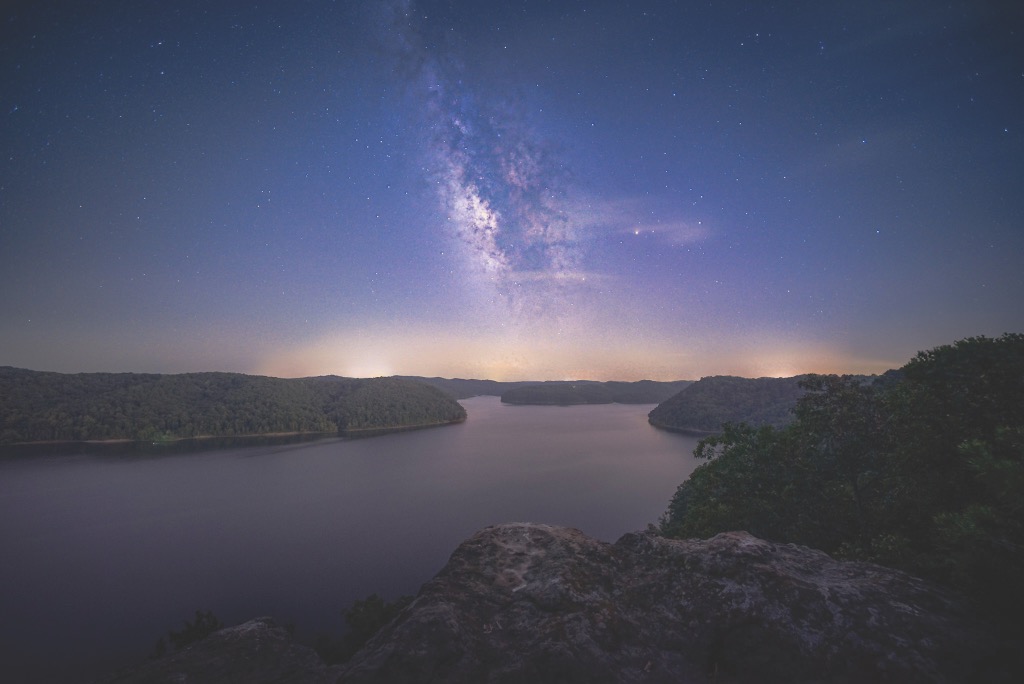
Kentucky stargazing sites inspire awe
THINK THE ADVENTURE in Kentucky ends at sunset? Think again. As the moon rises and nocturnal creatures awaken, nighttime sky gazing begins. Visit one of these parks to immerse yourself in the sights and sounds of Kentucky after dark.
Big South Fork National River and Recreation Area
“McCreary County offers one of the darkest, most serene skies in the eastern United States,” says Michelle Perry, McCreary County tourism director. Devil’s Jump Overlook near Blue Heron Mining Camp is one of the best nighttime viewing spots in the Big South Fork National River and Recreation Area. “It’s pretty much a panoramic view of the whole sky,” Perry says. “It’s really pretty.”
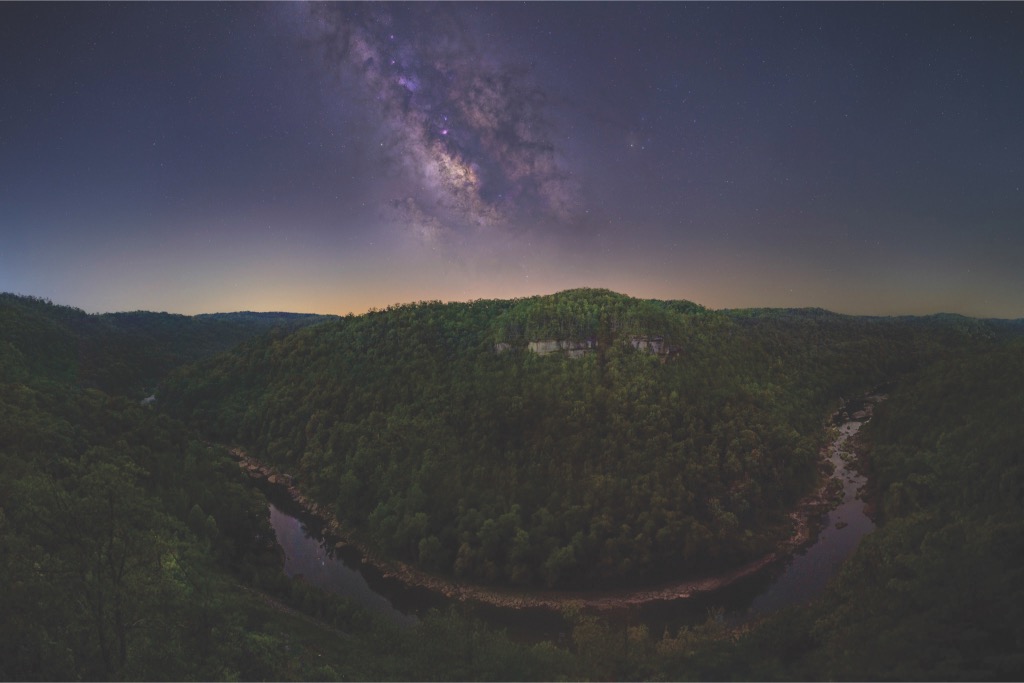
Stars as seen at Devil’s Jump Overlook in Big South Fork.
Devil’s Jump Overlook is paved and easy to access for adventurers of all abilities. It also features a deck with bench seating and views of the bend of the Cumberland River below. For a longer—and more strenuous—twilight hike, Perry recommends the 6.5-mile Blue Heron Loop, accessible from Devil’s Jump, though she advises being prepared and putting safety first.
“While stargazing can be a breathtaking experience, it’s important to stay mindful of your surroundings,” Perry cautions. “Uneven ground, limited visibility and unexpected wildlife encounters can pose real risks after dark.”
Perry says interest in nighttime sky gazing is on the rise, with communities that embrace dark sky principles benefitting from the trend. She also notes that many photographers visit Big South Fork to capture after-dark shots. With less light pollution in the area, Perry says, “It’s really dark, so they can actually see the Milky Way and how extravagant it looks.”
Cave Run Lake
When it comes to nighttime sky gazing at Cave Run Lake, Morehead-Rowan County Tourism Executive Director Joy Brown says the view is “just as magnificent above you as the lake is below you.”
Shallow Flats Wildlife Viewing Area is one of Brown’s recommended Cave Run Lake night sky viewing spots. “You can pull off there anytime, and you see the wildlife of the lake, but you can also walk around if you want, or just sit in your car and see the night sky. It’s just a cool area.”
Lake View Vista is another optimal stargazing area where night sky viewers can pull over in their vehicles.
For a stargazing excursion, Cave Run Lake is centrally located in a region with plenty of opportunities to soak in the sights and sounds of Kentucky after dark. Brown says, “You take yourself into nature in a way that you’ve never experienced before when you see those dark skies.”
Land Between the Lakes National Recreation Area
“Breathtaking.” That’s how Bill Futrell, Golden Pond Planetarium & Observatory lead interpreter, describes the Milky Way. “Believe it or not,” he says, “some people have never seen it.”
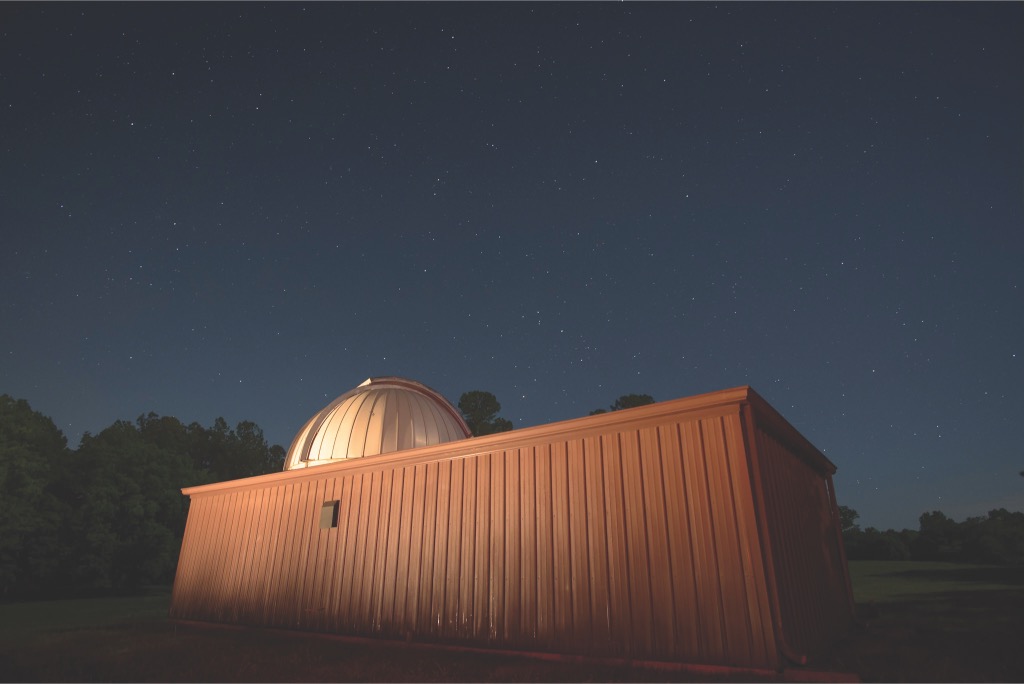
Golden Pond Planetarium and Observatory near Land Between the Lakes is a premium spot for stargazing.
Two ideal Land Between the Lakes locations for spotting the spiral galaxy—plus star patterns, planets and other night sky phenomena—are the South Bison Range (on the Tennessee side) and the visitor’s center patio, complete with electrical outlets for plugging in gadgets. For clearer views of the horizon, Futrell suggests choosing a location near a field or lake cove, with trees in the distance. He also recommends scouting out a good spot to set up any equipment before nightfall.
While people once looked to the night sky for navigation, today’s nighttime LBL visitors are often surprised by how clearly the stars can be seen there. “It’s kind of like something that’s been lost, and we want to try to conserve that here as much as we can so that people can continue to enjoy the night sky,” says Futrell.
Mammoth Cave National Park
While there are many places to stargaze in Kentucky, Mammoth Cave National Park is the state’s only officially designated International Dark Sky Park. It earned the International Dark Sky Places certification in 2021, boasting unobstructed night sky views and minimal light pollution. Exploring the darkness of Mammoth Cave— above ground—makes for an exciting after-dark adventure.
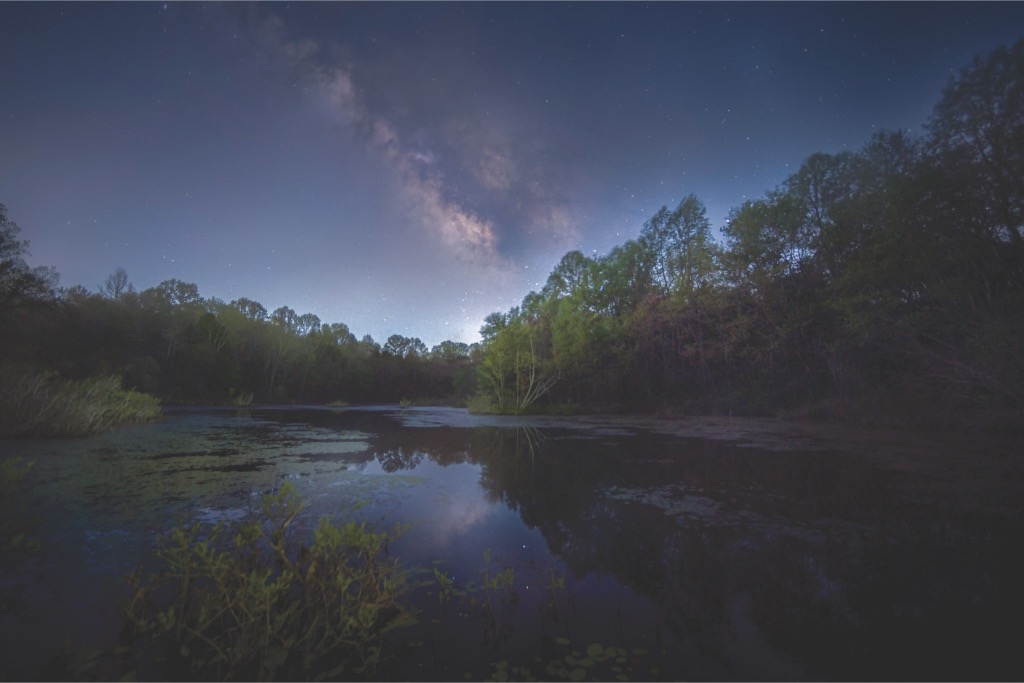
Mammoth Cave National Park is Kentucky’s only certified International Dark Sky Park.
Molly Schroer, an information officer at Mammoth Cave, suggests beginning your trip at the visitor center grounds. “It’s very wide and open, and there’s not a lot of tree coverage,” she says.
Houchins Ferry Campground, Doyel Valley Overlook and Maple Springs parking lot are other go-to sky gazing spots. Another tip? Schroer recommends researching which constellations or night sky objects will be visible during your trip, so you know what to look for and in which direction. The sky is darkest between 11 p.m. and 3 a.m.
When planning a Mammoth Cave sky gazing excursion, Schroer says, “It is worth the trip because there’s more to do and see here than just our amazing cave system. We’ve got a lot on the surface also.”
AMY COBB is the author of two book series for children, Band Geeks and Libby Wimbley.
Editor’s note: Photographer Jason Miller used long exposure and special equipment to capture these outstanding images. Views like this won’t be visible with the naked eye.

Celestial sights—what to look for now in the night sky
Every August, the Perseid meteor shower lights up night skies with a dazzling display of shooting stars. “These shooting stars are actually meteors, which consist of chunks of ice or rock in space ranging in size from a grain of sand to a boulder. Past Perseid meteor displays have seen up to 100 meteors visible per hour in dark locations,” says Molly Schroer, Mammoth Cave National Park information officer.
When it comes to constellations and planets, “Big Dipper, Little Dipper, Boötes, Sagittarius and Pegasus will be rising,” she says. “The planet Saturn will be in the evening sky.”
Bill Futrell, Golden Pond Planetarium and Observatory lead interpreter at Land Between the Lakes National Recreation Area suggests looking for the Summer Triangle star pattern, or asterism, which is pretty much directly overhead during August. (Look for three bright stars—Vega, Deneb and Altair—and connect them together to form a triangle.) Another popular star pattern, the Northern Cross, is within the triangle.
Futrell offers a helpful hint for finding the Milky Way: “Scorpius the scorpion is fairly easy to identify for most people. It looks kind of like a capital J. It’s right in the center of the southern sky, just above the horizon.
“If you can locate the scorpion, and if you can also locate the Summer Triangle, then all you do is connect the scorpion up through the triangle in order to know exactly where the Milky Way is running, even if you can’t see it. Sometimes just knowing right where to focus your vision can make all the difference.”
Night sky viewing tips
Plan ahead for any fees associated with overnight camping, special programs/events, etc. Keep in mind, advance reservations or registration may be necessary.
Before your nighttime excursion, take some time to brush up on your constellation-hunting skills, so you’ll know what to look for.
Don’t forget: your phone, comfortable shoes, bug spray, snacks and water, a flashlight, a jacket or blanket, and a chair. Also, any necessary equipment for night sky viewing, such as camera, computer, telescope and binoculars. Remember to pack extra batteries/chargers..
If applicable, be mindful of each park’s quiet hours and what time gates close.
You might encounter wildlife, including snakes, ticks or bears, in some areas, as well as challenging terrain and steep drop-offs. Take necessary precautions and plan accordingly.
Not sure when to plan your trip? Keep an eye on the weather, opting for a night with less cloud cover. Molly Schroer, Mammoth Cave National Park information officer, advises that “Less humidity actually creates better visibility in the sky.”
Becoming a Dark Sky Park
In 2021, DarkSky International designated Mammoth Cave National Park an International Dark Sky Park—the first and only one in Kentucky. What were some of the requirements to receive this certification? Molly Schroer, Mammoth Cave National Park information officer, explains:
“Mammoth Cave National Park had to evaluate how dark our park was, and we had to be able to see certain dark sky objects, like the Milky Way and other deep sky objects, with the naked eye. We then inventoried all of our outside lighting, and any lighting that was harmful to the night sky (like they were aimed upwards) had to be replaced with lighting that would not pollute the dark sky.
“We had to create a Lighting Management Plan that we now reference for construction projects or program planning to make sure we abide by the Dark Sky lighting requirements. We are also required to complete annual outreach programs to highlight the importance of the night sky to the environment and humans. We do this through our night sky visitor programs and through our website and social media.”
Become a Junior Ranger Night Explorer
Young stargazing enthusiasts can learn to find the North Star, track moon phases, create their own constellation mythology and more by becoming a Junior Ranger Night Explorer, a program developed by the National Park Service. Find out more here.
More resources
To learn more about the effects of light pollution, responsible lighting practices, dark sky conservation efforts around the world and much more, visit DarkSky International.
To find an international dark sky designated place anywhere on the planet, go to this DarkSky resource.
Check out the DarkSky International’s YouTube channel.