Butterfly blossoms
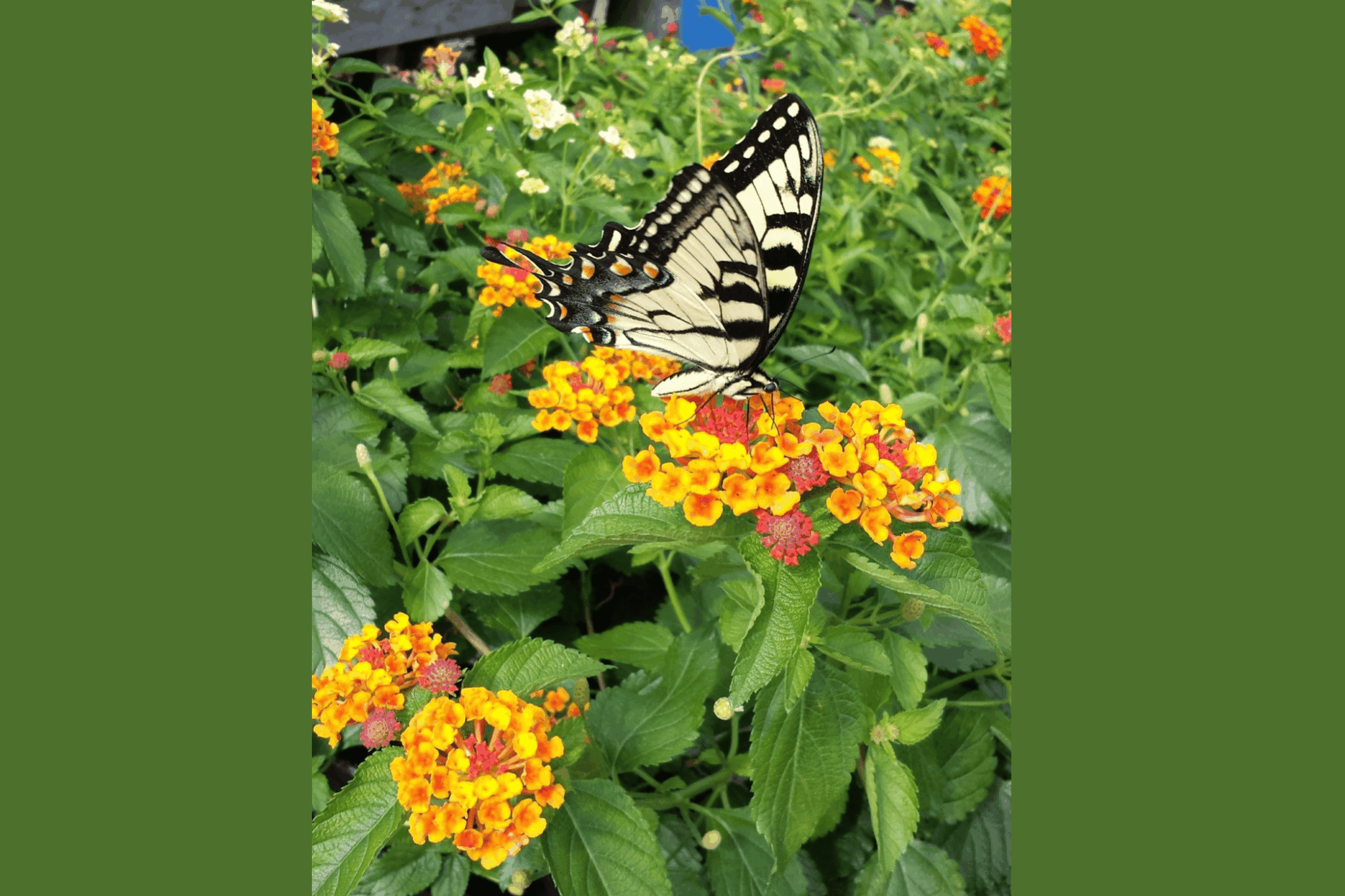
Hardy and colorful lantana
POLLINATOR-FRIENDLY GARDEN PLANTS are becoming more popular each year. Lantana combines pollinator benefits with deer and rabbit resistance, as well as bright blossoms that are highly attractive to butterflies and hummingbirds.
In our area, lantana is grown as a summer annual flower. It can be clumping or trailing, and works well in the ground, a container or a hanging basket. Abundant small, flat-topped clusters of tubular flowers serve as the perfect landing pad for butterflies and pollinators. The clusters of tubular flowers also offer a preferred style flower for hummingbirds to feed on. Its long bloom time makes it a good seasonal support plant for our pollinators.
Flower color can be solid white, cream, yellow, pink, orange or red, as well as multi-colored. Many varieties are now sterile like the Bloomify or Luscious series. Many modern lantana varieties produce very little seed, which is important—because the unripe berries of lantana are poisonous. This also helps in areas where lantana is winter-hardy and can be weedy or invasive.
Lantana grows best in full sun, or with a minimum of six hours of direct sunlight. It is heat- and drought-resistant once established. This vigorous naturally prolific bloomer does not need to be fertilized to perform well. As an annual plant, it can grow anywhere from 1 to 3 feet tall, depending on the variety.
Adding just a few lantana plants to your garden each year will not only boost your summer color show but will also be an important crop of nectar for our winged friends. If you’re not into annual or container flowers, consider adding a few into your landscape or perennial flower border, and you will be rewarded with four to five months of flowering.