James Gang robbery
Columbia bank preserves holdup’s history
THE SCENE IN SOUTH-CENTRAL KENTUCKY that late April morning in 1872 could have been the cinematic opening of a Hollywood western: five well-dressed men—said by historians to have been members of the Jesse James and Cole Younger gang—riding fine horses, side by side, into the Adair County seat of Columbia.
Hands on the courthouse clock were near noon as three of the riders dismounted and entered the Deposit Bank of Columbia. Two others remained out front.
Four local men, including Judge James Garnett, were gathered around the bank’s fireplace. The cashier, Robert Alexander Campbell Martin, was seated at his desk.
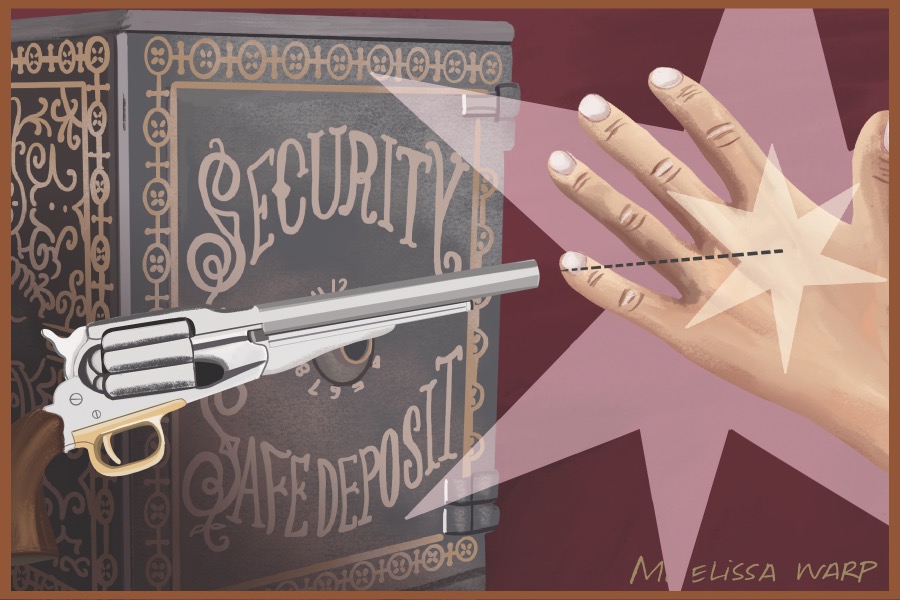
Martin was ordered at gunpoint to open the safe, but refused, and a deadly scuffle followed. Judge Garnett was shot in the hand when he tried to knock the pistol away from one of the outlaws, and Martin was fatally wounded. The robbers escaped with only the money in the cash drawer—about $600.
Michael C. Watson, staff historian and genealogist at the Adair County Public Library research center, says bystanders took cover as the two bandits outside the bank circled the town square at a gallop, firing pistols or rifles while their comrades made their getaway.
Many public roads in that day crossed family farms and there often were gates to open. Watson says the story goes that as the outlaws approached a gate on the farm of William Conover, they saw Conover and a hired hand working in a field nearby and told him to open the gate.
Unaware of who they were, Conover told them to open it themselves—but changed his mind when pistols were leveled in his direction. From that day forward, Conover was known by folks in Adair County as, “Open-the-gate Bill.”
Watson says Jesse James later sent a letter to a western newspaper claiming he was not part of the robbery, though not denying that his gang was responsible. And a local man who worked in the prison system and once crossed paths with Frank James, told of mentioning to James that he was from Columbia, to which he said James replied only, “a terrible thing happened there one day.”
Cashier Martin’s widow, Hester, accompanied his body back to their hometown of Shelbyville, where he was buried in Grove Hill Cemetery.
The desk at which Martin had been seated before he was shot remains on display in the lobby of the Bank of Columbia today. Abby Keltner, the bank’s manager of deposit operations and a consumer-member of Taylor County RECC, says most customers are familiar with the tragic history of the desk, and that a framed account of the robbery hangs nearby.
After the gang had left the area, a Remington .44 caliber pistol—not in working order—was found about 4 miles from Columbia. Some believe it may have been discarded by the outlaws.
Not long ago, a relative of “Open-the-gate” Bill Conover donated Conover’s pocket watch to the library’s research center.