Moonlight schools
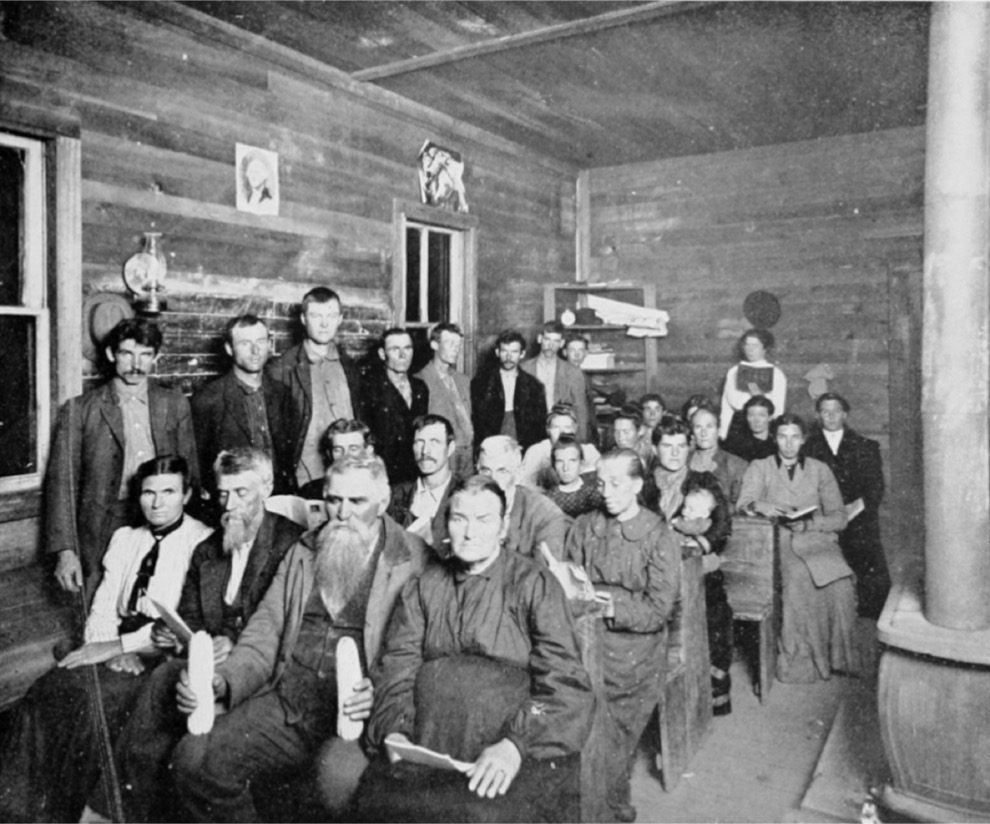
It was a simple plan. Why can’t adults be taught at night in the same school rooms where children were taught their lessons during the day. The second part of the scheme; where to find the teachers willing to leave the comforts of home, and return to the labors they had left a bit earlier. Problem solved: a number of teachers offered their skill and time to teach at these moonlight schools.
When the program first opened on September 5, 1911 in Rowan County, the expectation was numbers would trickle in. But according to Cora Wilso Stewart’s following statement that was found in the article titled “Kentucky’s moonlight schools,” posted by Dave Tabler, “It was expected that the response would be slow, but more than 1,200 men and women from 18 to 86 years of age were enrolled the first evening.” Again, according to Tabler’s post Stewart was heard to describe this first night as “the brightest moonlit night the world has ever seen.” But there was more to come. The following year, the number of enrollees climbed to 1,600, as the program reached a total of 18 counties. In 1913—25 counties, according to the Report of The Kentucky Illiteracy Commission, upon reaching this threshold of 25 counties, the Legislature created the Kentucky Illiteracy Commission. This sign of the Commonwealth’s approval gave legs to the movement and helped carry it forward. By 1914, a total of 60 counties had joined. Right from the start, Kentucky’s program for adults was paying dividends, as 300 of the 1911 enrollees, who were totally illiterate, had grasped the basics of reading and writing. One of those was a proud school girl of 96 years. Another close to 1,000 who had scant education, found improvement since entering the program.
Over the months and even years those making the trek were not only illiterate farmers and their families, but included storekeepers, ministers, and postmasters. Unable to read, one has to wonder how all these illiterate men and women carried on in their various careers not being able to read. Was it their literate children that helped guide them? Men and women stooped over with age also made the journey, in hopes that they become proficient enough in the written word, to read and write letters to and from absent family members. This could be accomplished over the span of 8 to 10 evenings.
Stewart, ever the savvy educator realized the adults would need special reading materials so she issued the Rowan County Messenger. This newspaper was filled with brief sentences and great deal of rote exercises. She found it best to start by focusing on instructing adults to write their own names. Once this was accomplished, the students sensed a new feeling of freedom, and were ready to move on.
As a greater help for moonlight students, Stewart published the Country Life Reader: First Book in 1915. This was followed next year by the Country Life Reader: Second Book. Both volumes contained information useful in one’s daily living routines.
The illiteracy program also spread its moonlight net into the schools, teaching black children. As of 1914, the illiteracy rate among black adults had dropped from 40% to 27%.
Kentucky was the first state in the Country to tackle literacy, which led Stewart to remark in the Nov 18, 1914 issue of The Courier-Journal, “It seems fitting that Kentucky, so long disgraced by her illiteracy, should be the one to give the nation and the world the remedy.” Kentucky could claim its standing as the forerunner to the Moonlight Schools movement throughout much of the Country. The Commonwealth’s educational offerings for illiterate adults spread to many other U.S. states. By 1916, 18 states had adopted moonlight schools.