Tiny shark
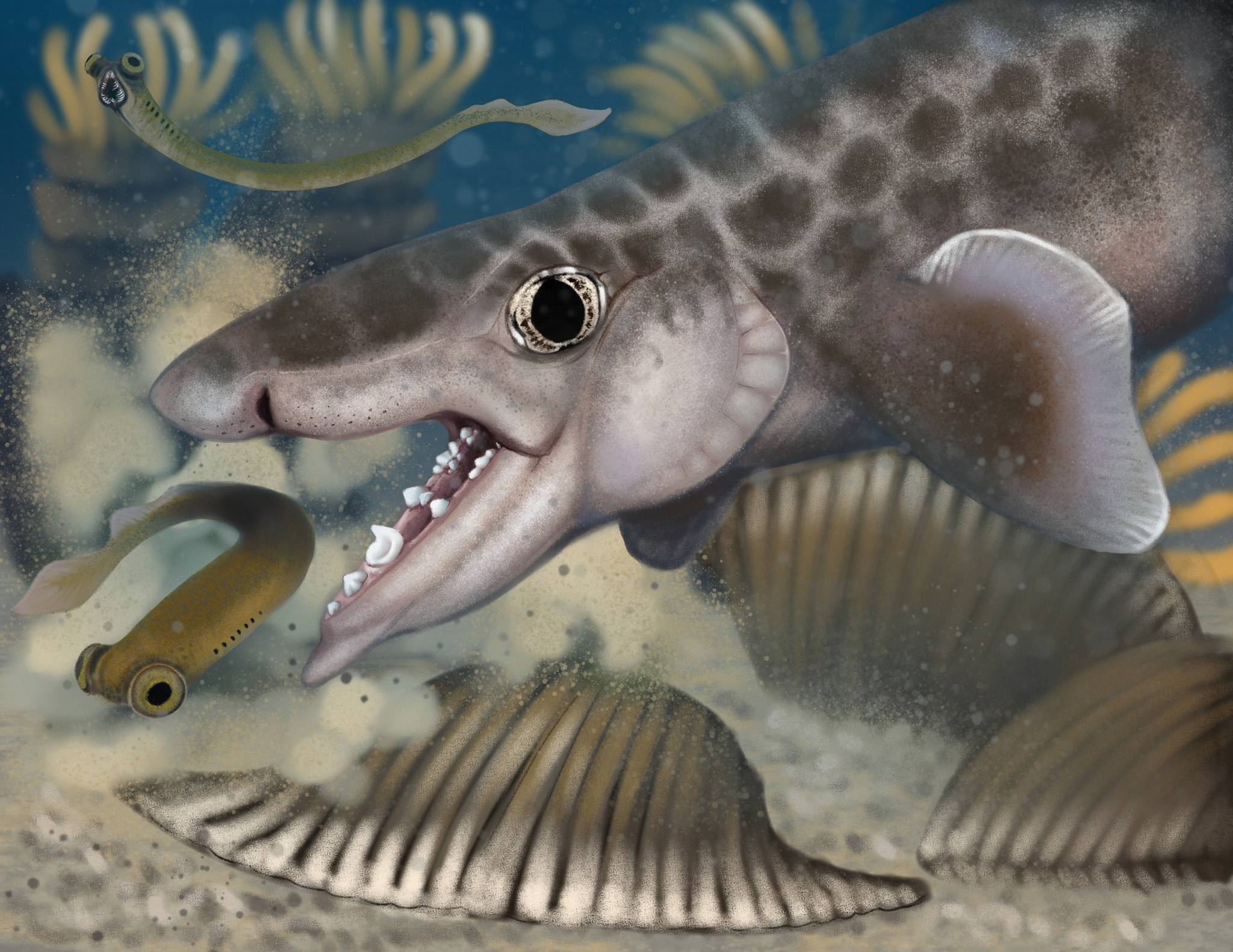
When you think of Kentucky, the first thing that comes to mind probably isn’t sharks. But at Mammoth Cave National Park, shark fossils are more common than the average Kentuckian might realize.
The fossil discoveries are part of a greater paleontological resources inventory, or PRI, that seeks to identify many types of fossils found at the park.
“Through this PRI, though, we have identified over 70 species of sharks and other fish within the cave system walls, and that includes five species that are new to science,” Park spokesperson Molly Schroer says.
In July 2025, a new species of ancient shark, called Macadens olsoni was discovered at Mammoth Cave.
This species features unique anatomy such as a curved row of teeth designed to crush small sea creatures. It is believed to have grown to less than a foot in length and is likely to have preyed on mollusks and worms.
A group of scientists from the National Park Service Paleontology Program, Mammoth Cave and the Smithsonian Institution Paleobiology Department made the discovery.
“[It] is a remarkable addition to our understanding of ancient marine life and underscores the importance of preserving and studying our natural history,” says Park Superintendent Barclay Trimble.
The name Macadens olsoni pays tribute to Mammoth Cave and retired park scientist Rickard Olson. Olson played a pivotal role in documenting shark fossils throughout the cave system.
“This finding not only enhances our knowledge of ancient marine ecosystems but also emphasizes the critical role of paleontological research in our national parks,” Trimble says. “Every discovery connects the past with the present and offers invaluable educational opportunities for students and the public.”