A new story on reading
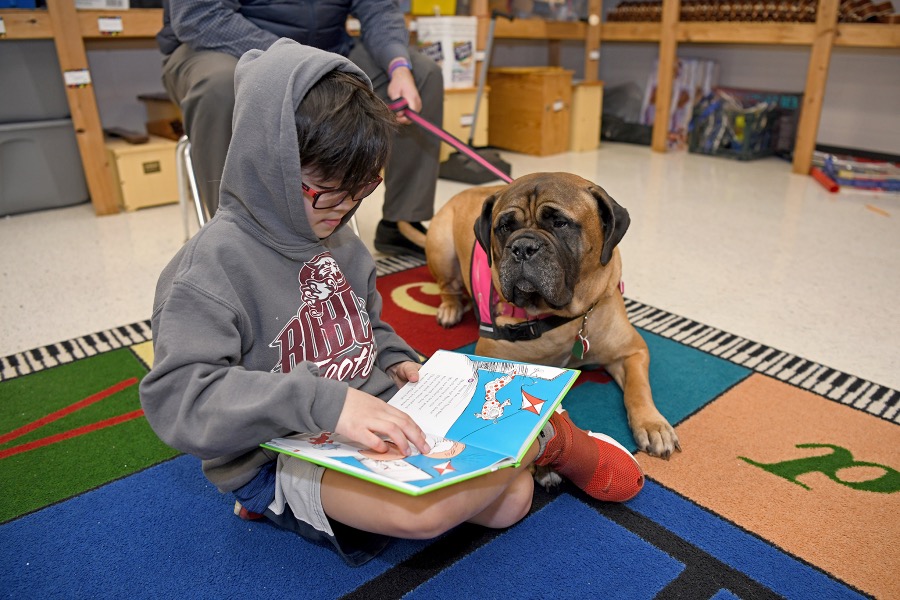
“We had to do something different with literacy,” Christie Biggerstaff says, describing the sea change that has been underway in Kentucky’s public schools since 2022. “We know what we’ve been doing is not working.”
Biggerstaff, who is the early literacy director for the Kentucky Department of Education, is charged with implementing the Read to Succeed Act—a state law enacted in 2022 to address persistently low reading scores in Kentucky’s public schools. Passed with bipartisan support, the act represents the latest turn in the state’s decades-long struggle to improve literacy.
Kentucky was one of the states with scores slightly above the national average for both grades tested—fourth and eighth—in 2022 and 2024, according to the Nation’s Report Card, a term used for the public release of assessment data from the National Assessment of Educational Progress.
Although Kentucky’s 2024 reading scores hovered around the national average for reading proficiency at both grade levels, that meant only one in three of the students met or exceeded what the NAEP considers being a proficient reader in fourth grade (33%) and in eighth grade (29%). Put another way, if teachers have 20 students in a classroom, six of those students might be proficient readers while 14 might need special attention.
“Even the measures that have improved remain far from Kentucky’s long-term goals,” said Brigitte Blom, president and CEO of the Prichard Committee for Academic Excellence. Her comments came in an October 2024 statement responding to the release of year-over-year results from 2023 by the Kentucky Department of Education. Those measures included a 2% increase in kindergarten readiness and a 1% increase in third grade reading proficiency.
Educators warn that it takes time for improvements to show up in the data. However, internal analysis, classroom observations and input from parents confirm a powerful change is underway.
“I’ve never experienced it in my career … where we’re this united, as a state, on this topic,” says Shawna Harney, chief academic officer for Kenton County Schools.
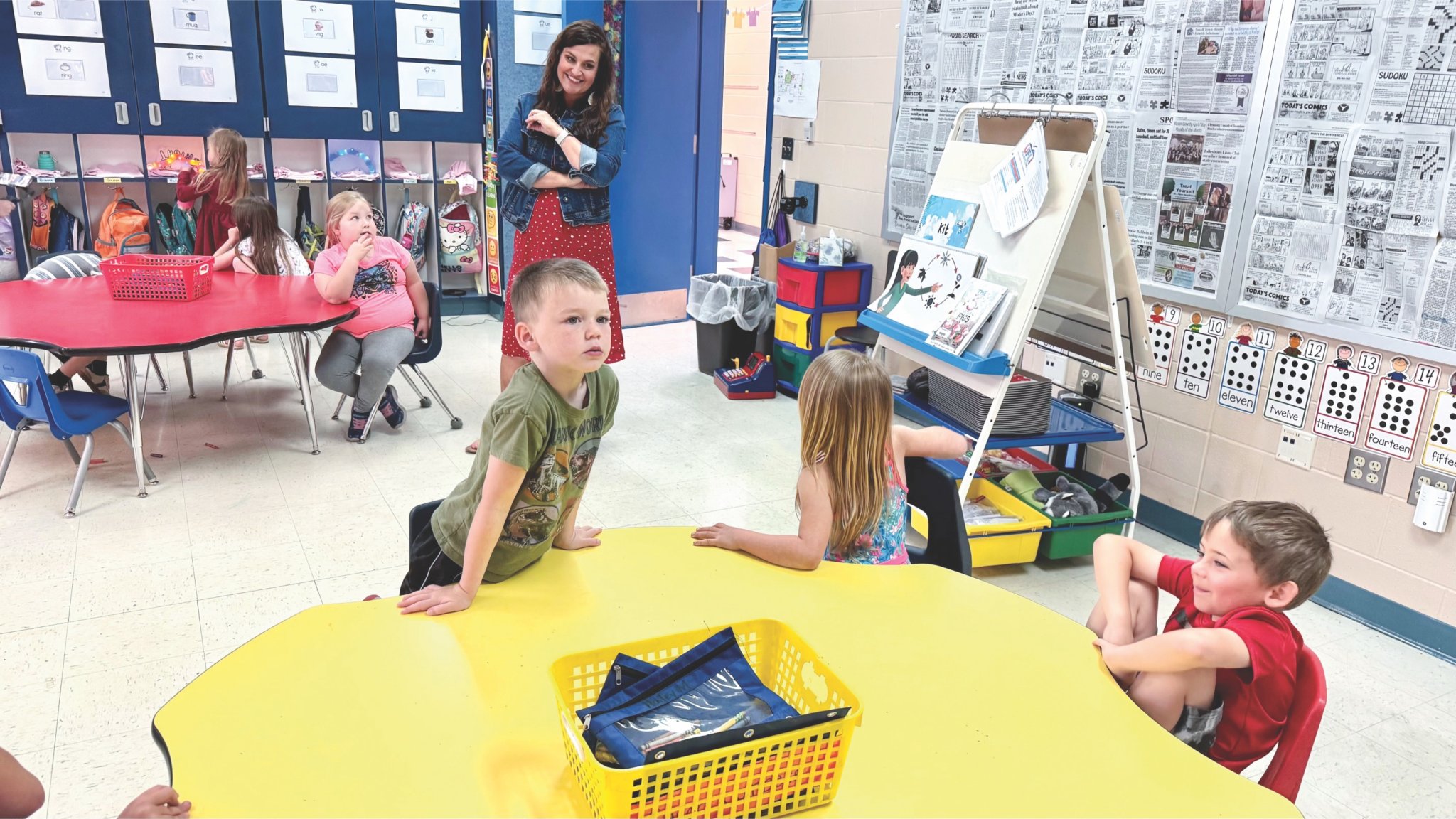
Though literacy trends are moving upward, they’re a long way from reaching Kentucky’s long-term goals. Photo: Prichard Committee for Academic Excellence
Reading the room
The new approach to reading is a lot like an old one.
Before the 1950s, most students in the United States learned to read through a structured approach that prioritized phonics—recognizing the sounds represented by letters. But in the decades following, educators de-emphasized traditional phonics instruction and adopted new frameworks that focused on visual word recognition, context clues and comprehension. Later, a model called balanced literacy sought to integrate both approaches. But critics say it didn’t go nearly far enough.
“It still left a lot to chance,” says Tina Withorn, a reading consultant with Boone County Schools. “It said it would course correct, but clearly, according to our data, it did not.”
During the pandemic, school closures made the existing literacy problem worse. But remote learning led to an unexpected benefit. Parents were suddenly immersed in their kids’ learning environment—and they were not happy with how their kids were being taught.
“It was a lot of ‘What word do you think that is? What’s the first letter? What is the story about?’” Withorn says.
These questions are part of a cueing system that teachers themselves were taught to use. Withorn says teacher training claimed this approach was backed by the current evidence—but it was not.
A body of research known as the science of reading has instead pointed educators back to the basics of reading, emphasizing systematic instruction in sound recognition, phonics, fluency, vocabulary and comprehension.
Parents who saw their kids struggling during the pandemic pushed back against the balanced literacy approach. At the same time, a hit podcast by journalist Emily Hanford brought the topic to national prominence. And when Kentucky passed the Read to Succeed Act in 2022, Biggerstaff says “it was the perfect storm,” and many Kentucky educators were already on board with the changes the new law required.
“I really haven’t had to battle districts or schools or teachers or administrators,” she says. “The challenge has been giving them all the information, the support, the resources, the help they need.”
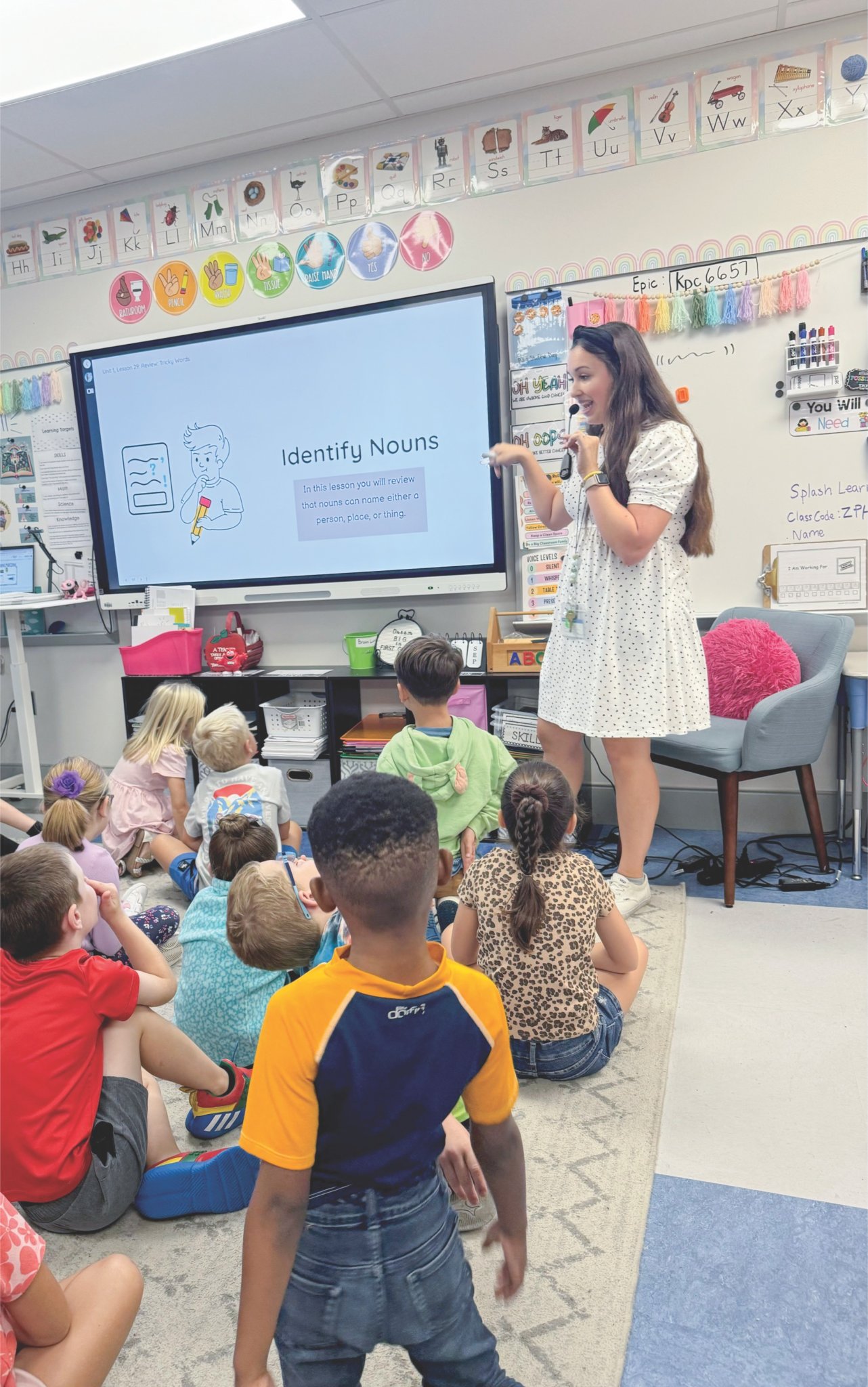
Piner Elementary teacher Delanee Brown teaches her first grade students about nouns. Photo: Kenton County Schools
A new approach
Kentucky’s Read to Succeed Act requires evidence-based instruction that is aligned to the science of reading, turning the tide on the discredited balanced literacy approach.
Since the law was enacted, schools have implemented new requirements for reading instruction, interventions to help struggling students get up to speed, teacher training, library programs, high quality instructional resources and ways to engage parents to help their children.
The Department of Education opened Kentucky Reading Academies to provide training in Language Essentials for Teachers of Reading and Spelling for K-5 educators and administrators. Beginning in the 2024-2025 school year, new teachers were required to pass a test to certify that they are proficient in the evidence-based science of reading methods before entering the classroom.
In Boone County, the state’s third-largest district, the changes have been stark.
“In our K-5, we’ve shifted instruction completely to structured literacy practices,” Withorn says. Instead of using leveled readers, which focus on words with similar sounds, students are using decodable readers—books with spelling patterns that have been explicitly taught.
The biggest change, however, might be a unified statewide approach to literacy— something that was previously lacking.
“There’s unity in instructional practices,” says Kenton County’s Harney. “There’s unity and understanding how reading should be taught. … We’re very appreciative of the legislators who have supported this, and our state department has done an outstanding job, in my opinion, of leading this statewide.”
In 2025 the Kentucky state legislature continued to address the reading crisis with bills to improve teacher professional development, expand access to advanced coursework, reduce classroom distractions and restructure how education funding is reported.
According to Withorn, research shows it takes three to five years before testing data reflects positive results from the kinds of changes Kentucky schools have implemented. State assessments don’t test kindergarten through second grade, where the quickest gains will be reflected.
But in the meantime, she says, other signals confirm that literacy education is pointed in the right direction:
“We really need to focus on the qualitative data from teachers, parents and librarians who are saying, ‘My kid’s never been more engaged about reading, my kid’s never been more engaged about literacy.’ We have teachers across the district that are saying, ‘I’ve been teaching 25 years, and I’ve never had first graders reading this well.’
“This is the most important work, and we’re just going to have to focus on the qualitative data, … and that our kids are loving learning right now, and loving literacy, while we stay the course.”

How to help your child to read
If you are a parent, or maybe a grandparent, with a young child in your life, you should be aware of the first deadline for reading proficiency—third grade.
That’s when the focus shifts from “learning to read” to “reading to learn.” So it’s never too early to advance a student’s literacy.
Here are some tips from reading specialist Linda Whiteley, now retired in England after 35 years in public education in America. She served as an assistant school superintendent for elementary education and a supervisor for student teachers in elementary and secondary schools. Here is her advice:
Align home with school
The last thing you want to do is confuse a child who is trying to “break the code”—that is, decoding letters, then words, then sentences. That means you must talk with the child’s teacher to understand what’s happening in the classroom, then reinforce those methods at home to shore up weaknesses. Ask to observe a reading lesson for language cues and methods the teacher uses.
Read aloud to the child
Find a comfortable setting that can be your regular reading spot at home. Focus on phonics. Let’s say you’re reading The Cat in the Hat by Dr. Seuss. Show the word “cat,” then ask the child to say each sound: c-a-t, then blend them to say “cat.” Also focus on “sight words,” or commonly used words, so your child can build mastery. Sight words, such as “and” and “the,” don’t always follow “sounding out” patterns, so they need to be memorized.
Switch letters to build words or piece together a sentence
For switching letters, you might use magnetic or form letters, flashcards or maybe just markers on a whiteboard. That way, you can introduce the “–at” family: cat, bat, hat, rat. Ask the child to change the first letter to make new words as they say the sound, emphasizing the ending. A fun game is to write out a sentence, such as “I see a black and white cat,” cut up the words, mix up the order, then see if your child can assemble the pieces to re-create the sentence. Ask the child to read the sentence aloud, pointing to each word.
Combine reading with writing, drawing, even theater
As you help children to learn to read, ask them to write words or draw pictures or even act out the word’s meaning to demonstrate comprehension of the text. This will help children to make sense of the text-picture-word association connections, especially for early readers. To help add the word “cat” to a child’s word bank, you can ask the child to draw a picture of a cat and write the word below it. You might even ask the child to act like a cat.
Let the child choose the book, then play “I Spy” for fun
Allow children to choose books on topics that interest them. To find out what content will resonate with them, ask what would they like to know or learn more about. As you’re reading, pause and say, “I spy a word with a ‘c’ like in cat. Can you find it?” Make reading fun and interactive.
Volunteer and be a buddy
If your school is holding a book fair or doing a book drive, volunteer at such events to show your interest in reading. Become a class reading buddy or offer to be a guest reader in the classroom. Do whatever you can to foster in your child a love for books.
More to learn
Journalist Emily Hanford changed the national conversation on literacy through her podcast, Sold a Story. Listen to the podcast here.
For reading tips, activities and video instructions for parents and guardians from the Dolly Parton Imagination Library, click here.
For a list of summer reading programs and other resources on the Kentucky Department of Education website, click here.
For a list of educational YouTube channels, click here.
For a master list of sight words to help your child learn, check out the Dolch Sight Word List or the Fry Sight Word List. For sight words by grade level and a little history, click here.