Five-alarm fire
National energy monitor’s message to Kentucky co-ops
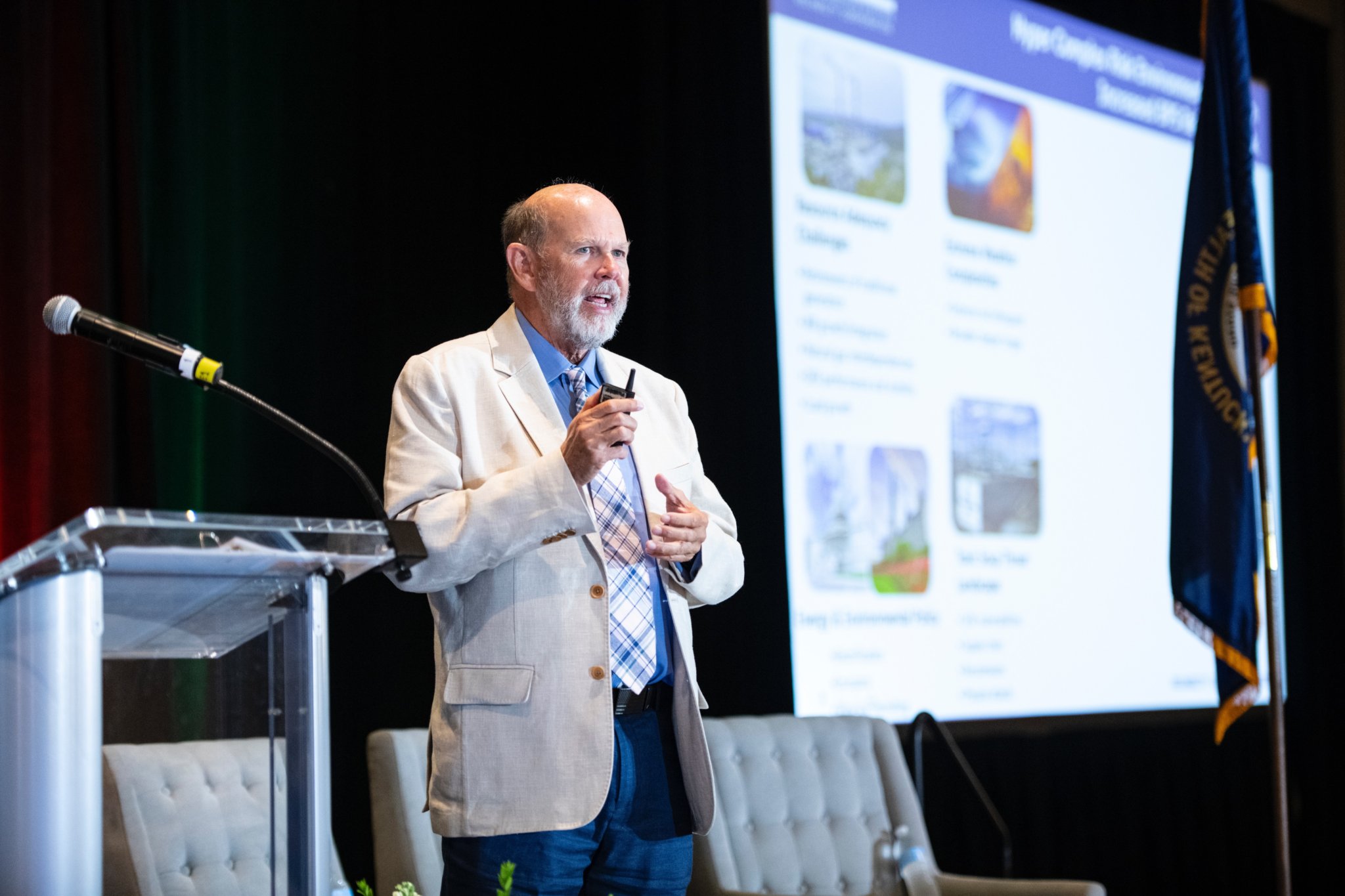
WHEN YOU FLIP A SWITCH, you expect the lights to come on. But as electric reliability expert Jim Robb told the Kentucky Electric Cooperatives 79th Annual Meeting in August, that expectation is under growing strain.
Robb, president and CEO of the North American Electric Reliability Corporation, calls the situation a “five-alarm fire.” Electricity demand is surging like never before, yet new power plants and transmission lines aren’t being built fast enough to keep up. “The math doesn’t work,” he says.
Balancing act
As he oversees NERC’s mission to assure the reliability and security of the North American bulk power supply system, Robb describes energy policy as a three-legged stool: affordability, reliability and environmental impact.
“Where we get into trouble, I think, is when we overweight one of the legs of these stools because it’s always to the detriment of the other two.
“For example, we could have a really cheap electric system, but it probably wouldn’t be reliable and would probably have an environmental impact we don’t like. We could have an incredibly reliable system, but we probably couldn’t afford it. And again, it may not have the environmental impact that we like.
“We could build an incredibly clean electric system. But it almost certainly wouldn’t be affordable, and it probably wouldn’t be reliable.
“So as a policymaker, we’re always trying to figure out what’s the right mix of these three elements and try to advance on all three of them together. And that’s very, very hard.”
In recent years, coal, nuclear and older gas plants have been retired at a rapid pace. While Robb says that wind, solar and batteries are important additions, they don’t provide the same steady backbone of always-available electricity. On calm, cloudy days, even vast fleets of renewable energy can deliver only a fraction of their potential output.
Meanwhile, natural gas now fuels nearly half of the nation’s electricity. Flexible and relatively clean, gas is essential—but pipelines often can’t deliver enough fuel in extreme cold or even during summer heat waves.
New pressures
On top of supply challenges, demand is skyrocketing, Robb says. Reindustrialization, population shifts and data centers powering artificial intelligence are driving unprecedented growth. “It’s like adding 100 cities the size of San Francisco to the grid in just 10 years,” he explains.
“It’s an enormous amount of power and there’s very little chance of us being able to meet that without some substantial change to how we think about bringing resources and infrastructure to market.”
Extreme weather is compounding the stress, with winter storms, heat domes and droughts threatening both electricity demand and supply. And looming in the background: cyberattacks, ransomware and physical threats to substations.
A call to action
Robb urges policymakers and utilities to act decisively. His prescription:
- Coordinate federal and state policies that put reliability and security first.
- Build new power plants and transmission lines faster, while keeping existing resources online where possible.
- Pair renewables with natural gas to balance variability until long-term storage becomes viable.
- Invest in fuel storage and infrastructure to withstand extreme weather.
- Shift planning from meeting peak demand on a single hot day to ensuring 24/7 reliability, year-round.
Kentucky is not an island
Kentucky’s electric cooperatives are already grappling with these realities—managing natural gas supplies, preparing for data center growth and investing in reliable infrastructure.
But Kentucky is not an island. What happens in neighboring states and across the country can directly affect co-op members here.
“Electrons don’t care which state or even which country you’re from—they’re going to flow according to the laws of physics,” Robb says. “The more we can figure out how to harmonize policies across these regional footprints, the better off we’re going to be.”