Queen of the climbers
Flowering clematis is garden royalty
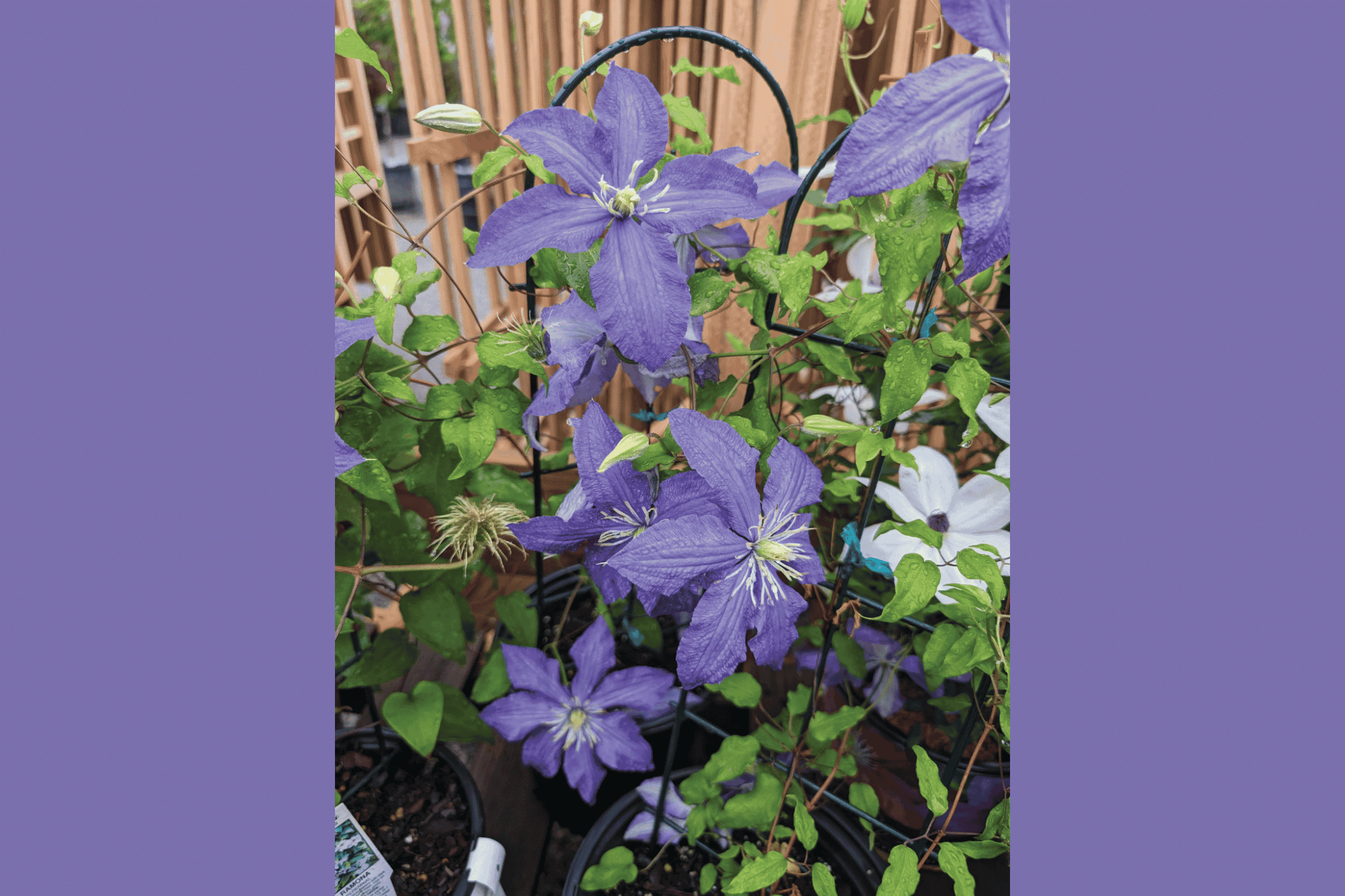
KNOWN AS “queen of the climbers,” flowering clematis is a captivating addition to your garden. Because of the diversity in clematis types, it is important to know what type you want before purchasing or pruning.
Clematis can flower early, mid or late season, and some types flower more than once. They can have large, showy flowers, or delicate, nodding flowers. They can also be upright or non-vining, compact vining or vining up to 10 feet.
Flower colors can range from white, pink and burgundy to purple, yellow, light blue and dark blue. Full sun produces more flower buds and stronger flower color. For best performance, plant clematis in an area where the root system is sheltered or protected by other plants, but the foliage is in the sun.
Clematis prefer a well-drained site, but can benefit from watering when the weather is dry. Always mulch around clematis to protect the delicate stems at the base and to help cover and protect the surrounding soil.
Once you have selected your perfect clematis, always take note of what pruning type or group it belongs to. Type 1 flowers on old wood, where typically pruning is not needed. If you do prune, do so only lightly, right after flowering. Type 2 flowers on old wood and then again on new wood. These types are considered re-bloomers. Prune them only if necessary and very lightly in early spring. Type 3 flowers on new wood and should be pruned in late winter or early spring before new growth begins.
Clematis flowers are attractive to pollinators and butterflies, and they are rabbit resistant. You can train them on a trellis or fence or simply let them sprawl down a slope or over a stone wall. By selecting several types of clematis, you can have beautiful, showy flowers in the garden from spring to fall.