Bear with us
Sightings no longer rare in Kentucky
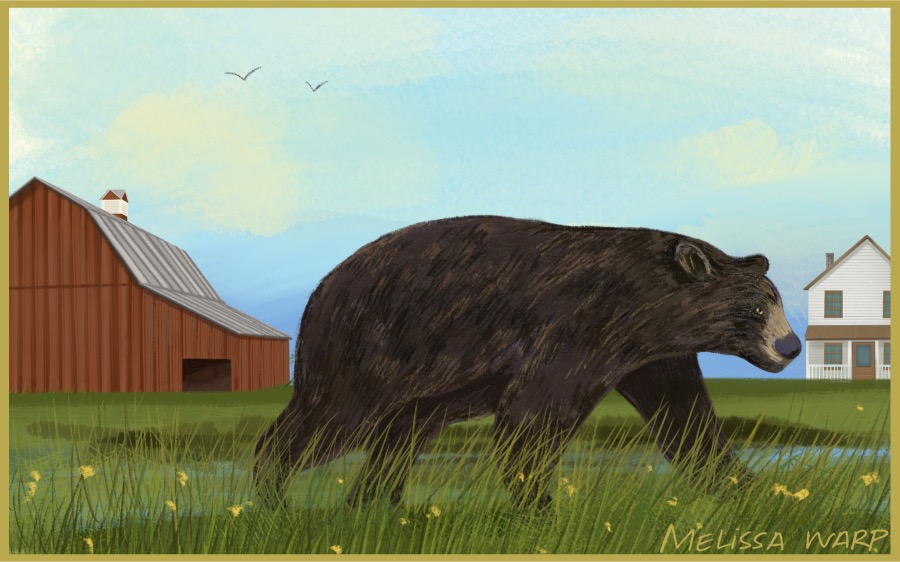
NOT LONG AGO my barber showed me a photo he’d taken of a bear crossing the front lawn of a home he owns on the outskirts of Frankfort. Another friend saw a young black bear crossing his property near Interstate 64 in rural Shelby County.
Such sightings are no longer rare in Kentucky, where John Hast, the bear and elk coordinator with the Kentucky Department of Fish and Wildlife Resources, handles an average of some 700 calls a year about black bear sightings and other visitations.
“They are expanding,” says Hast, “but it’s hard to preach the gospel of bears without having one in your neck of the woods.”
Many residents of eastern and southern Kentucky counties may have grown accustomed to bear sightings over the past 10 years, as bears re-colonize Kentucky along the Virginia, West Virginia and Tennessee borders, but in the summer of 2020 a black bear showed up on the campus of the University of Kentucky in Lexington.
“It was right there by the UK hospital,” Hast says. “I never thought I’d see that happen. But it came and visited for a couple of days, and disappeared overnight without really causing too much of a stir.”
Last summer, a bear wandered across Livingston and Crittenden counties in far western Kentucky before crossing the river and later re-entering Kentucky in Fulton County. A drone used for spraying crops showed a bear crossing a soybean field in Daviess County south of Owensboro, and numerous sightings are reported each year around Lake Cumberland and in the Forkland area southwest of Danville in Boyle County.
In addition to eastern Kentucky, the core breeding range is now believed to extend from Cumberland and Clinton counties on the Tennessee line, through Casey County, into the timbered portions of Madison and Rockcastle counties, then northward to Lewis and Greenup counties. Hast estimates the statewide black bear population to be from 1,200 to 1,500.
Most bear sightings occur from summer through fall, and most are of young males that are passing through the area in search of a new home range and mate after leaving their mothers. Hast knows of one bear that traveled across two central Kentucky counties in one day.
Bears forage on a variety of berries, acorns, insects and plants, and sometimes on corn before the ears reach maturity. Hast urges beekeepers to protect hives with electric fences.
For those who may be concerned about a bear encounter, he shares a memory from his days of living in the Harlan County community of Lynch, where one of his neighbors was a nurse who left for work before daylight.
“About 6:15 every morning I would hear pots and pans banging,” he says. “To keep from having a bear encounter, she kept some pots and pans by the door, turned the lights on, and started banging pots and pans on the way to the car.”
More information on bears in Kentucky, including bear hunting regulations, may be found on the website bearwise.org.