‘Praise the Lord and pass the ammunition!’
World War II anthem’s ties to Kentucky
Even before it served as the inspiration for the first popular song of World War II, the phrase uttered by Howell Forgy at Pearl Harbor had become something of legend.
On Sunday morning, December 7, 1941, the 33-year-old Navy chaplain mulled over his sermon in his bunk on the U.S.S New Orleans. In the moments before Japanese planes attacked Pearl Harbor, Forgy thought about his congregation—First Presbyterian Church in Murray, Kentucky, where he had served as one its first pastors before graduating from Murray State Teacher’s College and enlisting in 1940.
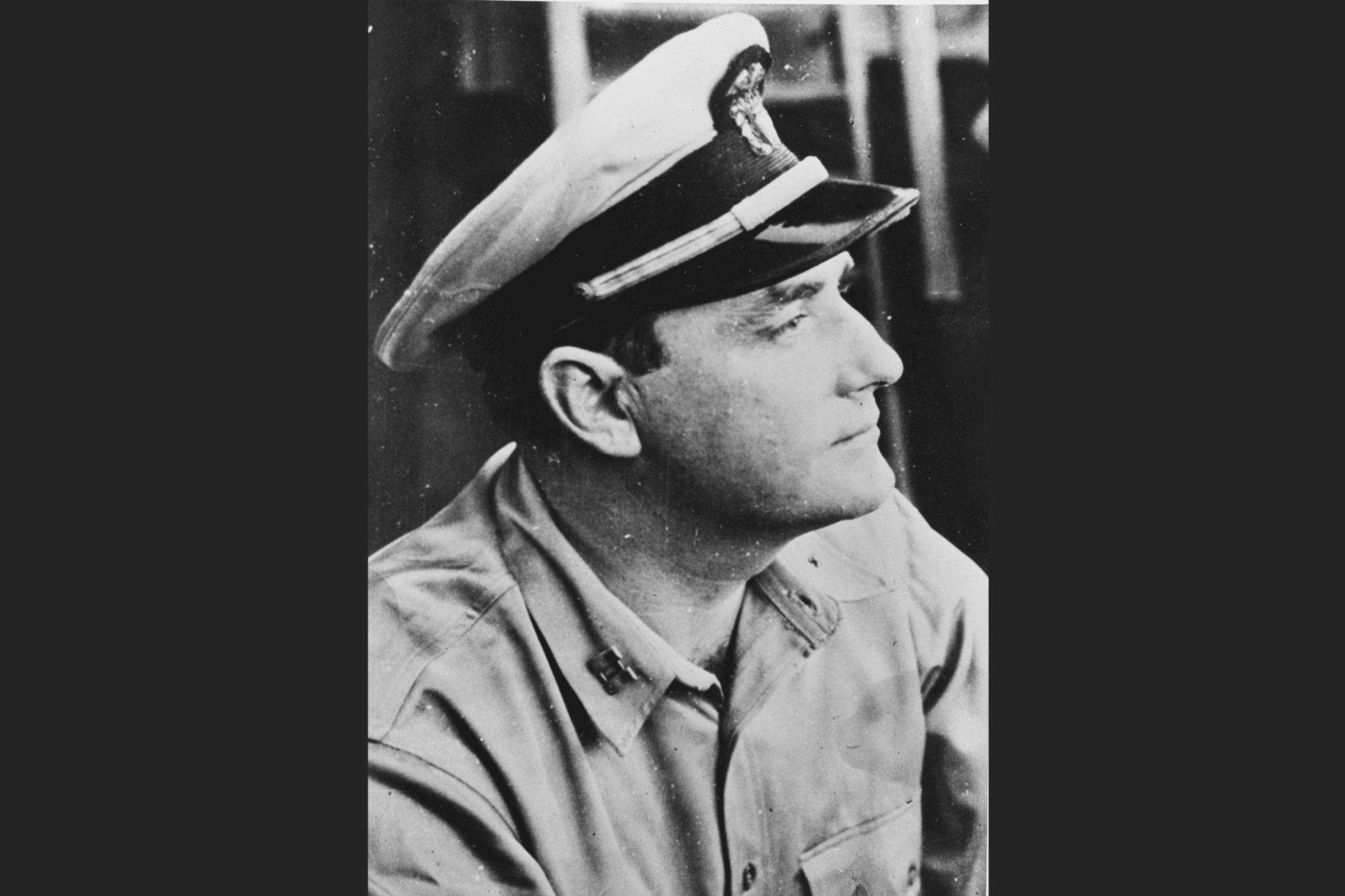
Then Lieutenant Howell Forgy in a 1942 U.S. Navy photo
Under repair, Forgy’s ship lacked the power to hoist ammunition from below deck after the surprise attack began. The ship’s crew instead passed the heavy shells by hand, with Forgy extolling the bucket brigade, “Praise the Lord and pass the ammunition!’”
In the fog of war, the quote quickly generated the myth that a Navy chaplain put down his Bible and manned an anti-aircraft gun after both the chief gunner and gunner’s mate were killed in action.
“The chaplain took his place at the gun and soon he scored a direct hit on the enemy,” the Birmingham News reported.
The fabricated storyline inspired the lyrics by Frank Loesser:
Up jumped the sky pilot, gave the boys a look
And manned the gun himself as he laid aside The Book, shouting:
Praise the Lord, and pass the ammunition!
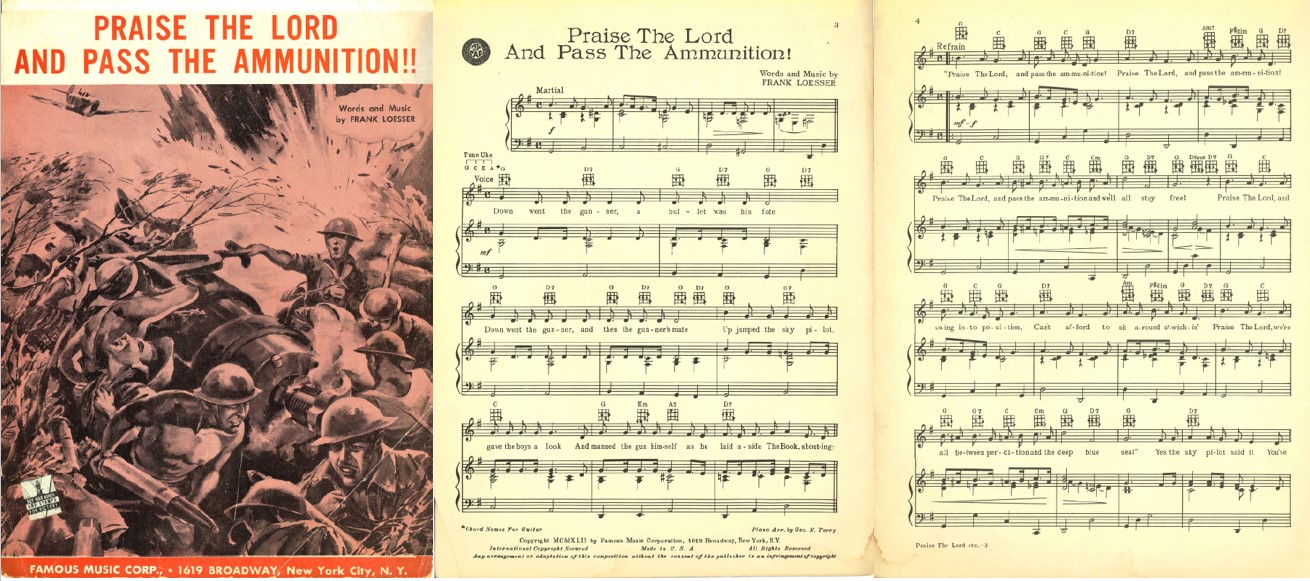
Original sheet music courtesy Joyce Arnold Music Collection.
The song became an overnight sensation in August 1942 after airing on bandleader Kay Kyser’s radio show.
When the original song sheet attributed the phrase to Captain William Maguire, the veteran Catholic naval chaplain emphatically denied he had “manned a gun” and told reporters he did not recall saying “Praise the Lord and pass the ammunition.”
Months after the song’s debut, the Navy ultimately allowed the crew of the U.S.S. New Orleans to talk to reporters and reveal Forgy’s identity.
“Variously attributed to many chaplains, the real author was revealed today as Lieut. (senior grade) Howell Forgy, 34, strapping ex-football player from Haddonfield, N.J.,” the Associated Press reported on October 31, 1942.
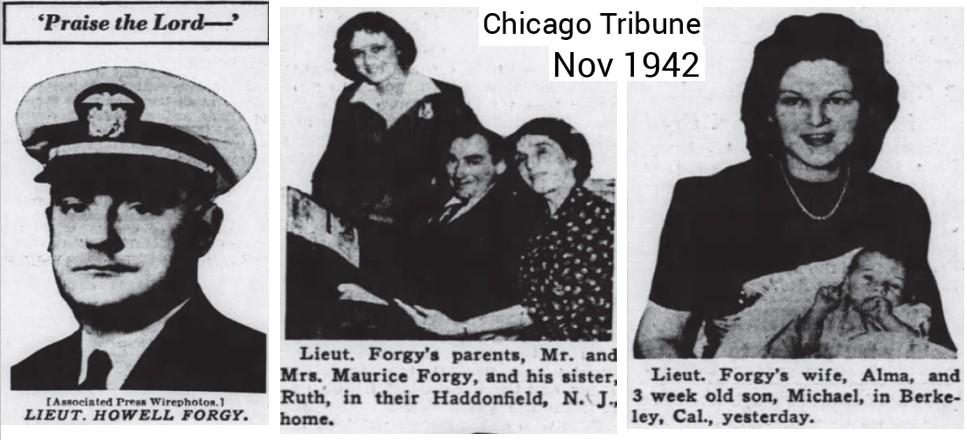
“Suddenly we saw a Japanese plane fall in flames,” Forgy told the AP’s J. Norman Lodge, who said Forgy exclaimed, ‘We got one of those S.O.B.’s’”
“The boys were getting dog-tired,” Forgy recalled. “All I did was slap them on the backs and smilingly said, ‘Praise the Lord and pass the ammunition, boys.’ I guess I used unchaplainlike language, because afterward on the well deck of our cruiser I overheard a couple of boys say, ‘Chaplains can cuss like a bo’sun’s mate when they have to.”
“I suppose the phrase came to mind because I’ve always liked the theology of the Old Testament which is based more or less on the theory that the Lord helps those who help themselves,” Forgy told the New York Times.
A veteran of seven major battles in the Pacific, the chaplain told the Times that “I learned more basic religion in my first five minutes under fire than I did in my seven years in the seminary and in preaching.”
“It’s a remarkable story,” says historian Berry Craig, author of Kentuckians and Pearl Harbor: Stories from the Day of Infamy. Forgy, Craig says, exemplifies the “ordinary people who suddenly found themselves in the midst of a cataclysmic historical event.”
Forgy authored his memoirs, “… And Pass the Ammunition,” in 1944, and retired in 1946 with the rank of Commander. After the war, he returned to ministry in California, where he died in 1972—but his legacy in Murray lives on.
“He was pivotal in helping the church establish a physical presence,” says Rev. Brittany Sutherland, current pastor of Murray’s First Presbyterian Church.
In 1939, Forgy instituted a drive and erected the first unit of the church complex, a student fellowship hall, across from the campus of Murray State College. He was installed as pastor on October 10, 1939, and enlisted in the Navy in September, 1940.
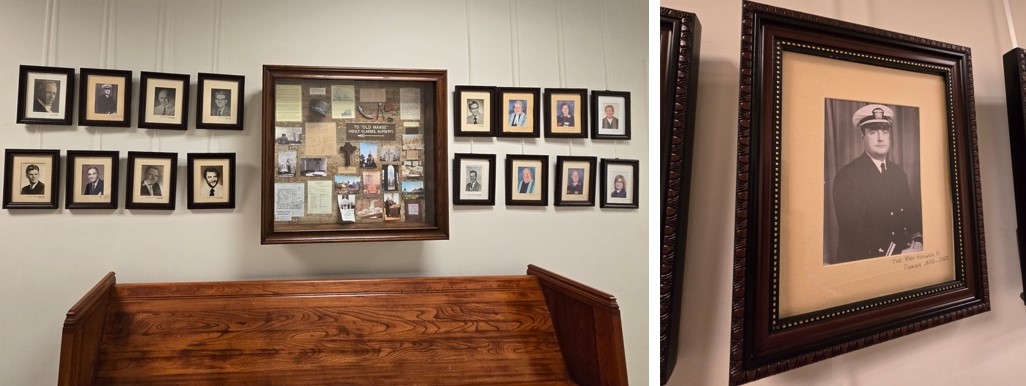
Among the photos honoring former pastors in the church’s hallway, Forgy is seen in his Navy uniform.