Keeping farms farming
New federal law helps Kentucky landowners transfer farmland while keeping it in production
Imagine you’re a 67-year-old Kentucky farmer. You’ve spent your entire adult life tending the same acres your father once did. You’d like to retire soon—maybe buy a camper, visit the grandkids more often—but there’s a problem: selling your farmland would trigger a hefty capital gains tax. You’ve held the land for decades, and its value has appreciated significantly. Selling now would mean giving up a big chunk of your life’s work to the IRS.
So you hold onto the land, even though you’re ready to pass the torch. And meanwhile, your neighbor’s son—who’s been renting nearby ground—is looking for a chance to buy in and start his own operation. The opportunity is there, but the tax penalty gets in the way.
That’s the kind of real-life scenario U.S. Senator Mitch McConnell had in mind when he introduced the Protecting American Farmlands Act earlier this year.
“American farmers, especially those in Kentucky, are grappling with a steady decline in available farmland,” McConnell explained. “Now more than ever, we must preserve our agricultural land and keep it in production for the next generation of producers.”
Signed into law by President Trump on Independence Day as part of the One Big Beautiful Bill Act, the measure aims to curb the loss of farmland by removing tax barriers that discourage land transitions.
“Senator McConnell has long been a champion for Kentucky agriculture,” said Eddie Melton, president of Kentucky Farm Bureau. “This legislation is a testament to his commitment to the American farmer and the future security of America’s food supply.”
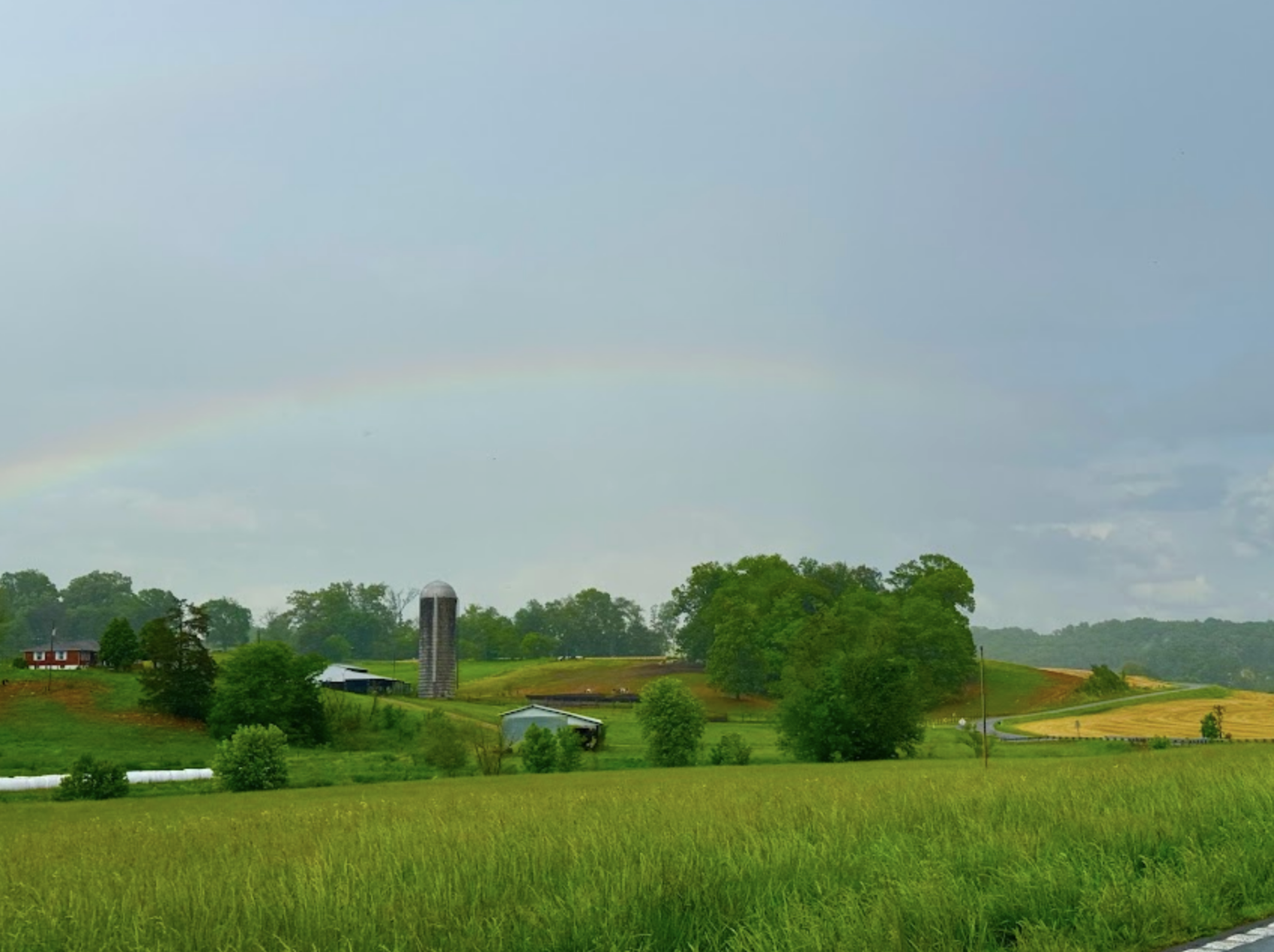
A rainbow gleams after a thunderstorm in Monroe County, Kentucky.
Photo: Joe Arnold
A new option for retirement planning
At the heart of the law is a capital gains tax deferral and potential exemption. If a landowner sells farmland to a buyer who keeps it in agricultural production for at least ten years, the seller may defer the capital gains tax for up to four years—or potentially avoid it altogether through a qualified retirement rollover, depending on final IRS guidance.
The seller can also choose to roll the profits from the sale into a retirement savings account, such as an IRA, offering greater flexibility and liquidity for retirement planning.
Expressing appreciation to McConnell for championing the bill, Kentucky Commissioner of Agriculture Jonathan Shell said it addresses a key barrier facing aging landowners.
The legislation “provides capital gains tax relief to keep farmland in production and ensure it remains in the hands of active farmers—not lost to development or foreign interests,” Shell said.
Kentucky Farm Bureau’s role with legislation
McConnell said he was proud to partner with the Kentucky Farm Bureau on the legislation.
The organization’s Farmland Transition Initiative (KFTI) found that many farmers delay selling land because of capital gains tax concerns. The result: older farmers hold land they no longer wish to manage, while young farmers struggle to find acreage.
According to the 2022 USDA Census of Agriculture:
- Kentucky has lost 546,000 acres of farmland in the last five years—nearly 290 acres per day.
- The number of farms dropped from 86,541 in 2002 to 69,425 in 2022.
- The average age of a Kentucky farmer is now 57.1, and over 1.3 million farmers nationwide are at or beyond retirement age.
“This is a crucial first step in providing America’s farmers capital gains relief while incentivizing keeping farmland in the hands of active farmers,” Melton explained. “This will provide farmers with another tool when looking to transition their land while also addressing the drastic loss of farmland across the country.”
Photo: Joe Arnold
What the law does
The Protecting American Farmlands Act includes several key provisions:
Capital Gains Deferral: Farmers can defer capital gains taxes for up to four years when they sell qualifying farmland to an active farmer who maintains agricultural use for at least ten years.
Retirement Rollover: The proceeds from the sale can be rolled into a qualified retirement savings account, such as an IRA, offering a new retirement planning tool for long-time landowners.
Eligibility Requirements:
- The land must have been in agricultural use for at least ten years prior to sale.
- The buyer must be an active farmer and must continue agricultural production on the land for a minimum of ten years.
Accountability Measures: Buyers who fail to meet the ten-year requirement could face consequences—such as tax penalties or loss of benefit eligibility—subject to further rulemaking and IRS enforcement.
Preserving Kentucky’s Heritage
For many rural families, farmland is more than property—it’s identity, history, and livelihood. Supporters of the legislation say that by helping smooth transitions from one generation to the next, the new law will support both farmers and the rural communities they sustain.
“This legislation aligns directly with efforts to preserve Kentucky’s agricultural legacy,” Commissioner Shell said, “supporting the next generation of farmers and strengthening rural communities.”
Federal agencies are expected to issue additional guidance to clarify how the tax deferral, retirement rollover, and enforcement provisions will work in practice.
The legislation is a “big win for farmers across the country,” McConnell added, “and one that will help plant the seeds of farming generations to come.”