‘An important opportunity for people like me’
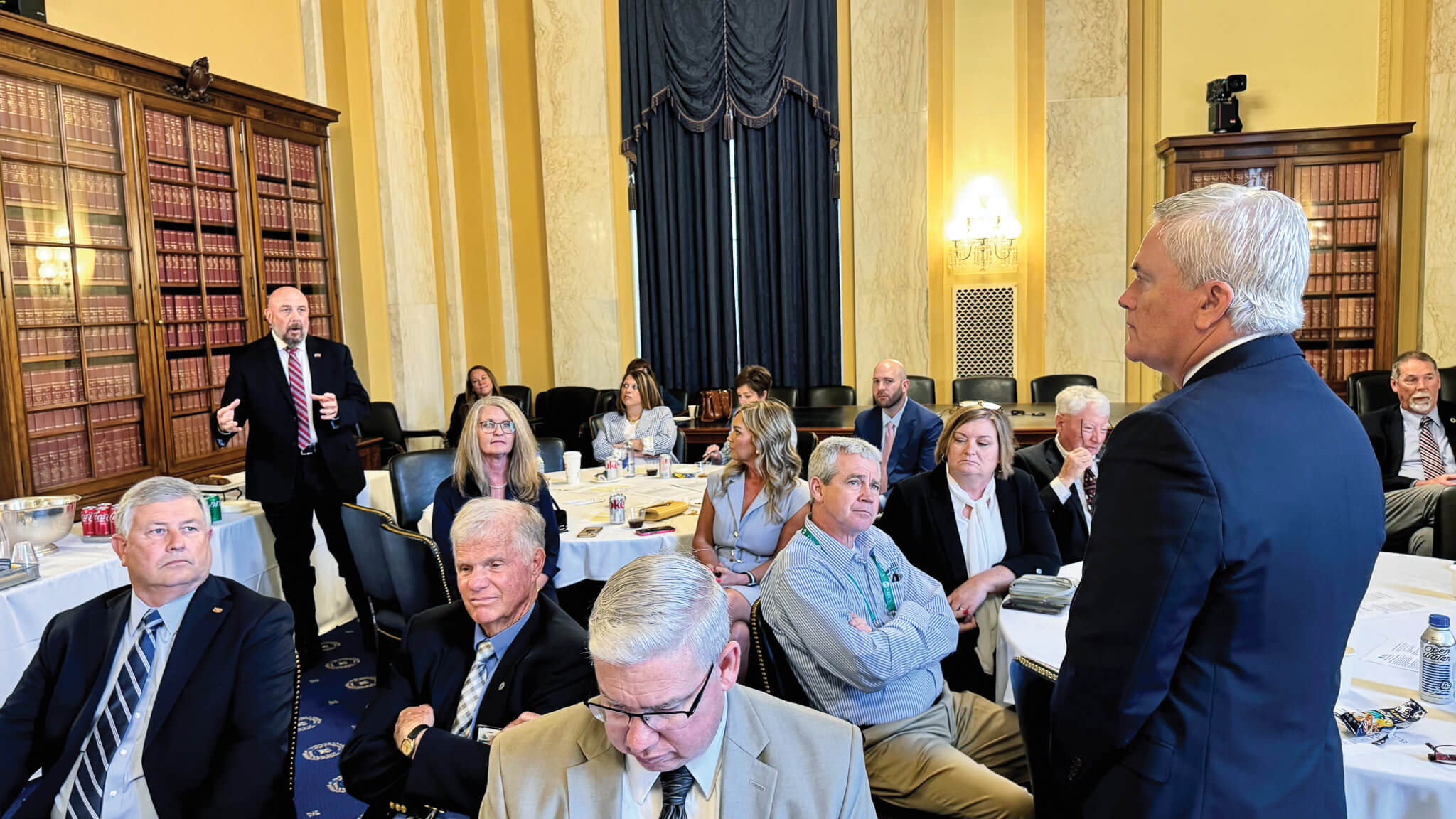
Kentucky co-op leaders meet with members of Congress
AS HE WAITED IN the security line to enter the Russell Senate Office Building in Washington, D.C., Jimmy Futrell turned to take in the view of the U.S. Capitol, the top of the dome poking above the trees while taxis and buses signaled the morning commute on Constitution Avenue.
“This may be just another day for the people who work here,” the longtime Pennyrile Electric board member said, “but this is an important opportunity for people like me to come to Capitol Hill and make sure they understand how decisions made here affect the people at the end of the line.”
Futrell was among dozens of Kentucky electric cooperative leaders who met with Kentucky’s congressional delegation to advocate for policies that improve the ability of co-ops to provide reliable and affordable electricity.
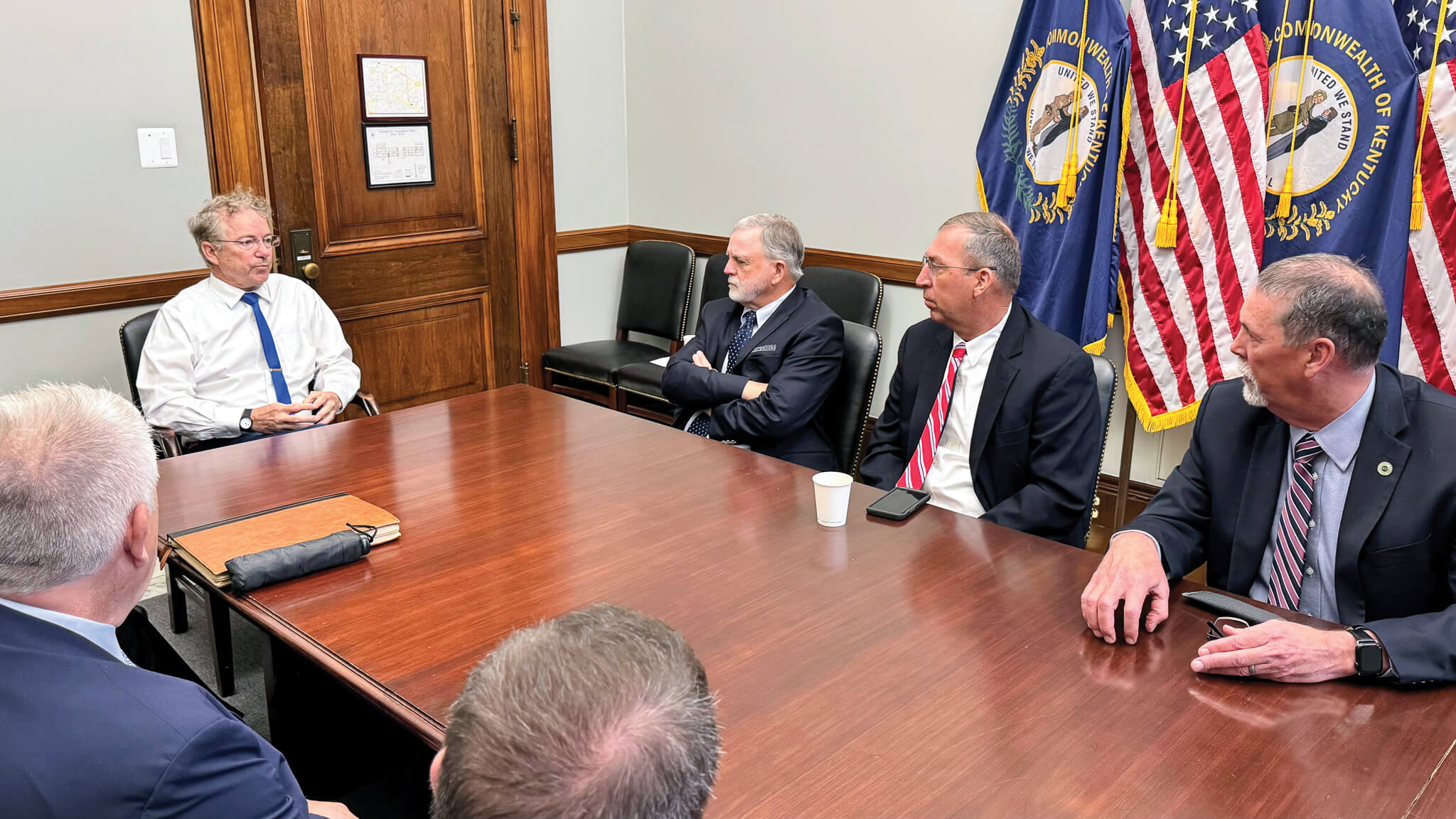
From left, in his Capitol Hill office, U.S. Sen. Rand Paul hears concerns about the need for FEMA reform from Warren RECC Board members Dennis Ingram and Chris Gravil, and Big Rivers President and CEO Don Gulley.
The meetings were part of the National Rural Electric Cooperative Association’s annual Legislative Conference, which brought more than 1,500 electric cooperative leaders from across the country to the nation’s capital. Their message was clear and consistent: not-for-profit, consumer-owned electric cooperatives need practical federal policies that protect reliability, control costs and recognize the realities of serving rural communities.
“We are not speaking for a corporation or investors,” Futrell says. “We are speaking for our member-owners who are our neighbors, our local businesses, our schools, our farms and communities.”
FEMA Public Assistance Program
One of the most urgent issues involves the Federal Emergency Management Agency’s Public Assistance Program, which is the primary source of federal disaster recovery funding for electric cooperatives after major storms and natural disasters.
FEMA assistance helps co-ops restore critical infrastructure without placing the full financial burden on local members. But co-op leaders say delays, complex documentation requirements and inconsistent processes can slow recovery and strain rural communities.
Marty Littrel, president and CEO of Blue Grass Energy and secretary-treasurer of the NRECA Board of Directors, says modernizing FEMA is about protecting members from costs they cannot control.
“When a disaster destroys poles, wires and substations, electric cooperatives move immediately to restore power because our members cannot wait,” Littrel says. “But when FEMA reimbursements are delayed for months or years, the cost of recovery does not disappear. It can place pressure on local rates and on families and businesses least able to absorb it. Reforming FEMA is about making sure recovery is faster, fairer and more predictable.”
Rural Utilities Service financing
Kentucky co-op leaders also urged Congress to increase support for the U.S. Department of Agriculture’s Rural Utilities Service Electric Loan Program. RUS financing helps electric cooperatives build and maintain the infrastructure needed to serve rural areas, especially as electricity demand grows.
Tim Sharp, president and CEO of Salt River Electric, says RUS loans remain one of the most important federal tools for rural electric reliability.
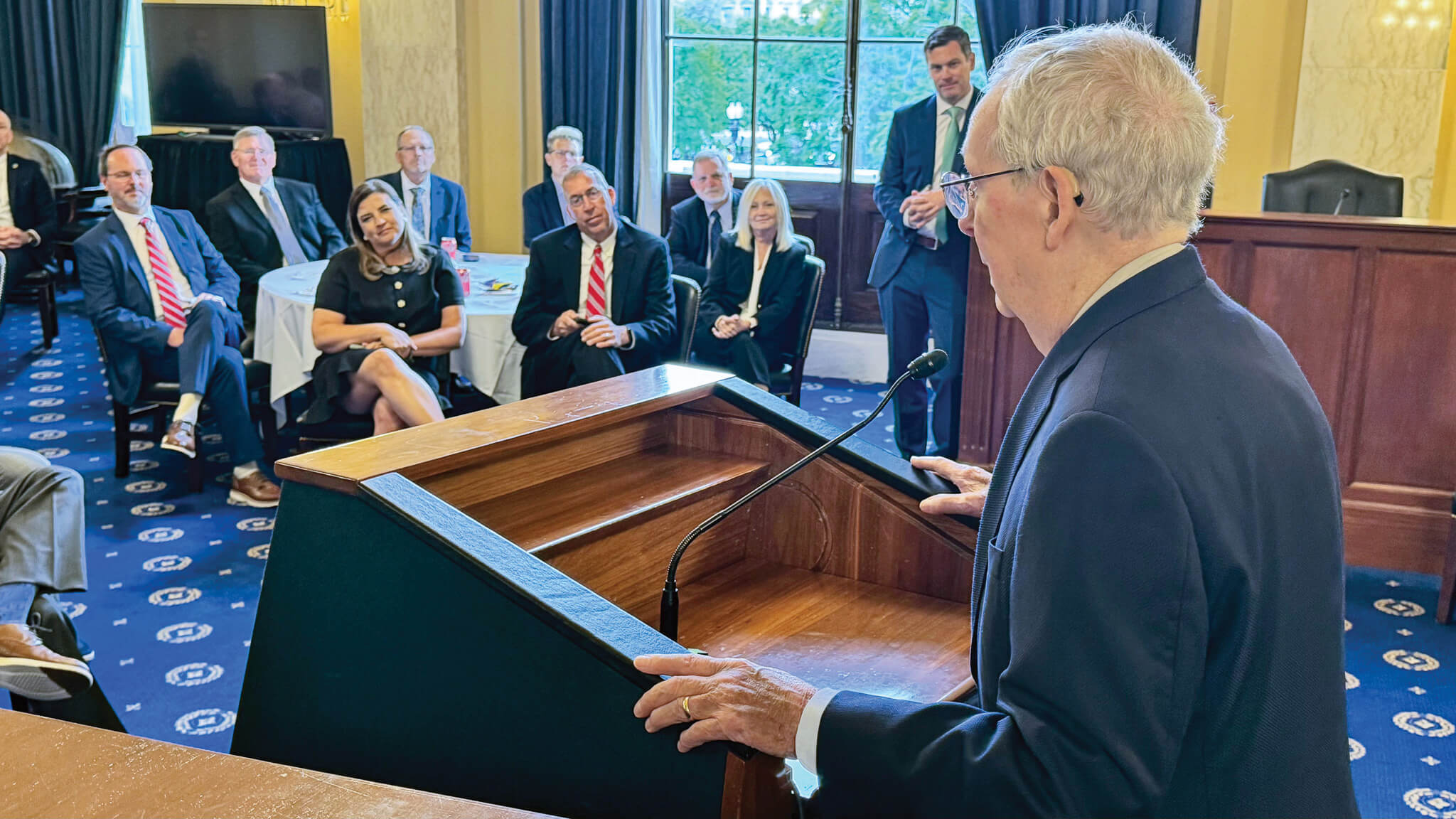
In his final Capitol Hill visit with electric co-op leaders before leaving office after seven terms, U.S. Sen. Mitch McConnell saluted the cooperative program.
“RUS funding is not a handout,” Sharp told lawmakers. “Electric cooperatives repay these loans with interest, and the program has a long record of helping rural communities build essential infrastructure. As demand grows and equipment costs rise, access to dependable financing helps co-ops make the investments our members need without creating unnecessary upward pressure on rates.”
Co-op leaders also discussed the need to streamline federal permitting processes for electric transmission, generation, grid maintenance, reliability work, wildfire mitigation and vegetation management. Lengthy reviews, litigation and regulatory uncertainty can delay projects and increase costs for consumer-members.
Through each meeting, Kentucky’s electric cooperative delegation emphasized a simple principle: reliable and affordable electricity does not happen by accident. It requires planning, investment and policies that reflect the needs of the communities co-ops serve.