Dove season is an outdoors tradition
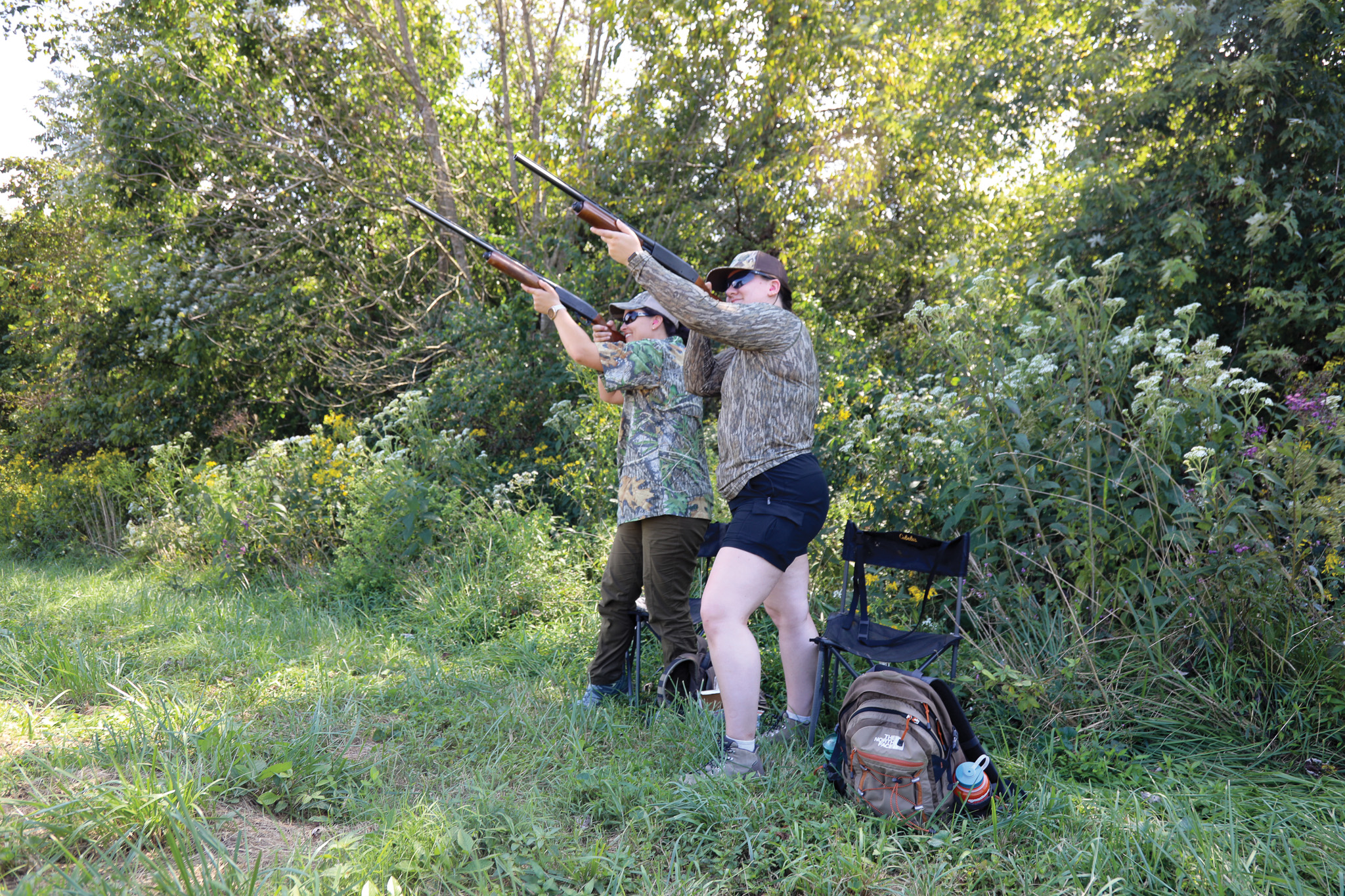
Zach Neikirk began sitting in a dove blind with his Dad and his Dad’s friends even before he was in kindergarten.
“I’d basically be the ‘bird dog’ and run out and get the birds, and I’d carry around a toy gun and pretend I would be shooting them,” Neikirk says.
Now 38, the Lexington man hunts doves every year in Clark and Madison counties. Except for the five years he lived in Atlanta, he hasn’t missed an opening weekend.
“It’s a lot of action, and a lot of fun,” Neikirk says. “It’s by far my favorite game animal, (and) it’s not even close.”
Such passion is typical in Kentucky, where even in a state rich with outdoors tradition, dove hunters are known for their zeal. Whether they hunt on private land or on public land offered through state programs, many descend on dove fields with family and friends year after year for gatherings that are as much social events as hunting expeditions.
Tim Dayley of Versailles, who has hunted doves for at least 42 of his 60 years, hunts regularly with friends and his dog across Woodford County. He remembers a memorable September when the then-limit of 12 birds seemed there for the getting every day.
“We had about 10 different farms that we’d shoot, and it just worked out that almost every day, somebody had birds (flying),” Dayley says. “No kidding, it was something like 27 of 30 days. … It’s all fun. It’s all social.”
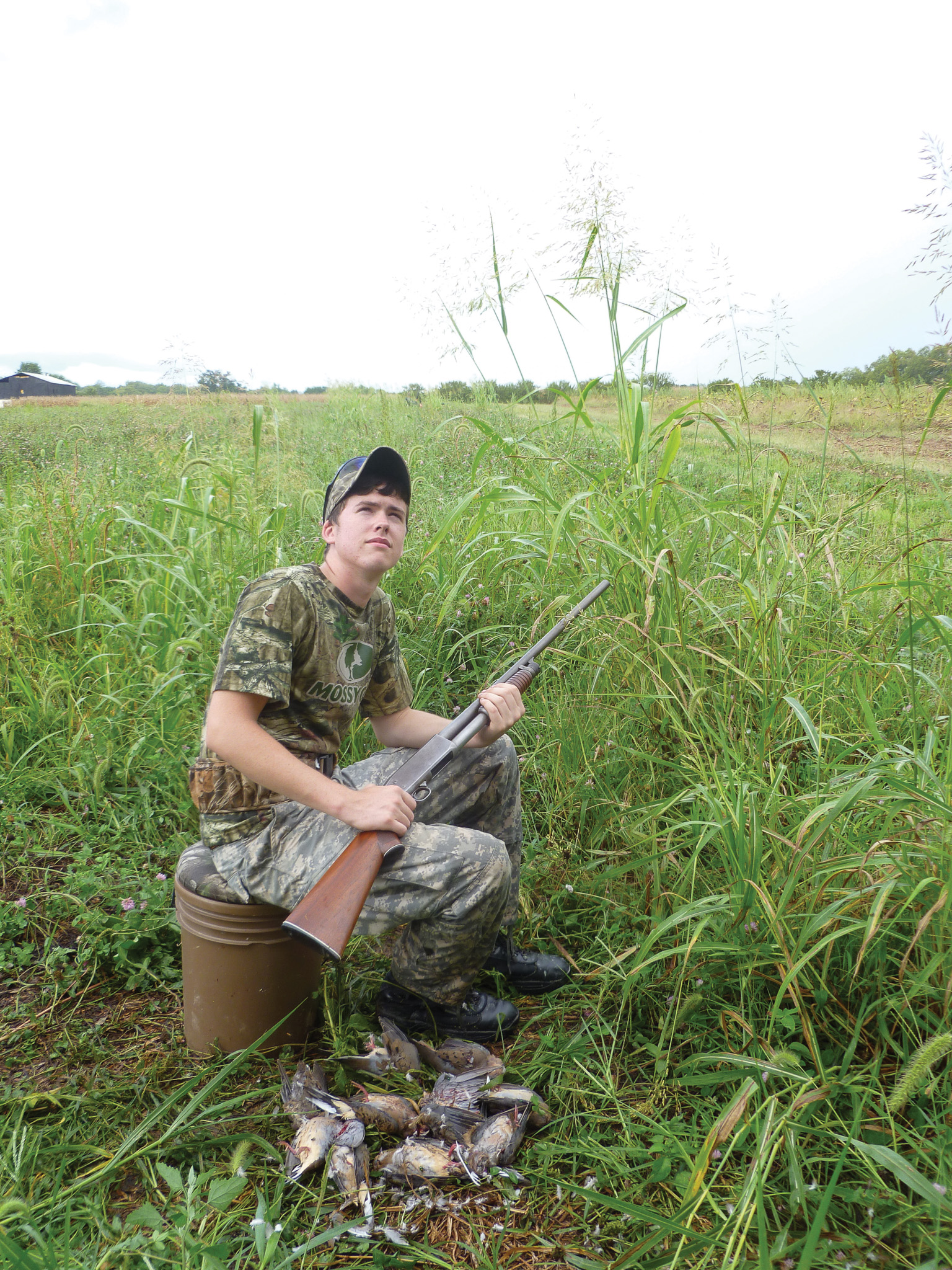
Clinton Hill looks to add to an already successful hunt. Photo: Rick Hill
An enduring tradition
Dove hunting is popular for many reasons: The birds are small and quick, so the shooting can be fast, furious and fun. It’s also accessible to newcomers because the required equipment and techniques aren’t particularly complex, plus the birds are easy to clean and simple to cook, and the meat itself is a delicacy.
Then there is the strong social aspect, even during the hunt itself. Unlike deer and turkey hunting, which require stillness and silence, you can hunt alongside friends and mentees, and even your hunting dogs, on the dove field.
And finally, while technically not the first hunting opportunity to open each autumn, dove season’s traditional opening day—this year was September 1—is considered by many in Kentucky to be the symbolic kick-off of fall hunting.
“It’s the day everybody is waiting for,” says Wes Little of Berea, who is both a hunter and a wildlife biologist with the Kentucky Department of Fish and Wildlife Resources. “It’s one of my favorite things. I try not to miss it.”
Little, who hunts doves five or six times a year, admits sheepishly that he once ate an entire limit of dove breasts (“I was miserable”). Last year, he began taking his daughters.
“It’s very much about the gathering, getting to be with people, more than about killing doves,” Little says.
John Brunjes, who coordinates the state wildlife agency’s migratory bird program, says dove hunting on its face is actually “pretty easy.” The weather is typically comfortable, he says, hunters don’t have to hide quietly in a camouflaged location but can interact and talk, and mentors can actively coach while standing or sitting next to a new hunter.
“I can’t imagine a better get-into-hunting (endeavor) than dove hunting,” he says. “Compared to other kinds of hunting, it’s not a particularly daunting thing, other than you have to find a place to go.”
Brunjes says about 20,000 people spent 58,900 days hunting doves in Kentucky In the 2023-24 season, the last for which numbers are available. That’s down from a peak of 50,000 hunters 25 years ago, he says.
Those hunters reported killing 386,000 birds during the year, an average of more than 19 birds, or 6½ per session. More than 90% of doves are killed in September, Brunjes says, with 60% killed in the first two weeks.
Kentucky’s hunter success metrics rank among the best in the nation, Brunjes says, where the estimated mourning dove population was 346 million in 2023. That includes 89 million birds in the region that includes Kentucky, down from 102 million in 2007, probably because of loss of habitat and bad weather during nesting seasons.
“But there are still a lot of doves out there,” Brunjes says. “It’s the most abundant game species we have.”
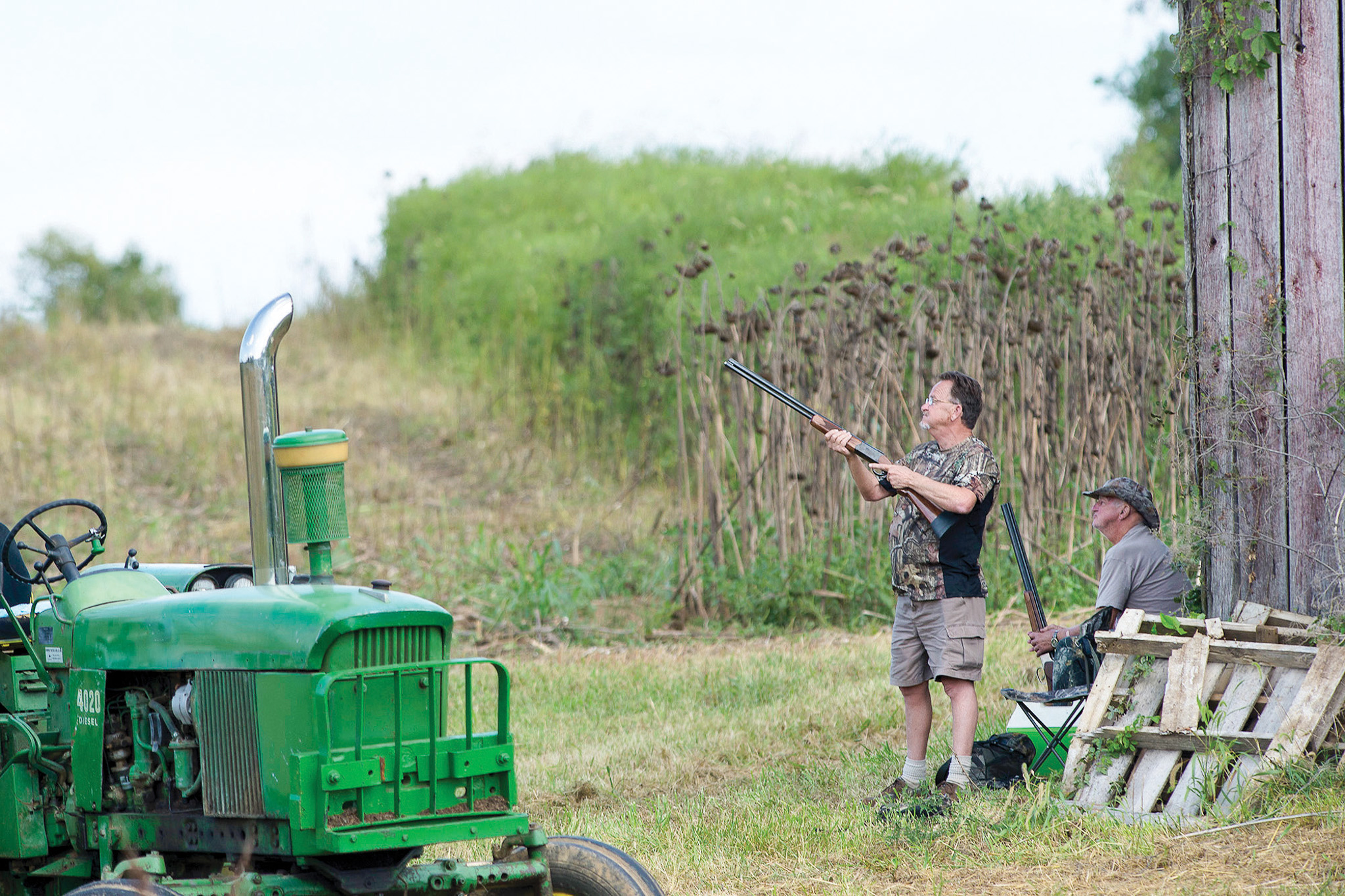
Dove hunters enjoy mild weather on the edge of a sunflower field. Photo: John Brunjes
Meals and memories
Doves are also among the tastiest game species.
Some hunters eat the whole bird (breasts, wings, legs), but most use only the dove’s breast meat.
Recipes abound, although many hunters keep it simple: marinate the breasts, cut them in chunks, wrap them in bacon, pin them with toothpick and grill or bake. Some people add water chestnuts and jalapeño slices and cream cheese.
“Few things are better than a grilled dove breast wrapped in bacon,” says Brunjes, who began hunting doves as a kid with his Dad in the late ’70s and early ’80s.
Little, who likes to make dove egg rolls, remembers hunting with his grandfather. Now he’s building memories with his two young daughters: On a youth quota hunt last year in Grant County, his older daughter shot while her younger sister retrieved birds.
Dayley says dove meals are 50% of the attraction. The other half is his yellow lab, Grace.
“I love working my dog and probably wouldn’t hunt as much if I didn’t have it,” he says. “As far as the shooting goes, you could get as much thrill at a sporting clays range, but then you add the dog work and (that) you get to enjoy the meat.”
Many hunters’ experiences have evolved as access to private land has gotten more challenging and as mentors have gotten older.
Neikirk has strong memories of big feasts and intense hunts with the friend group involving his Dad, David, on land available through David’s connections. Sometimes they hunted over harvested fields with their waste grain. Other times they hunted along fence rows and tree lines on unused horse pastures.
Last year, however, Neikirk found himself hunting with a co-worker near a sunflower field and alone on a state-managed field. As often as not, he’s eating the dove breasts by himself, for dinner or with eggs for breakfast.
“I might go out and get seven—seven’s a good number,” he says.
But he still sees larger, tight-knit groups. “On opening day especially, people have full-on tailgate lunches at the dove field, using last year’s doves,” Neikirk says. “It’s part of the culture and camaraderie.”
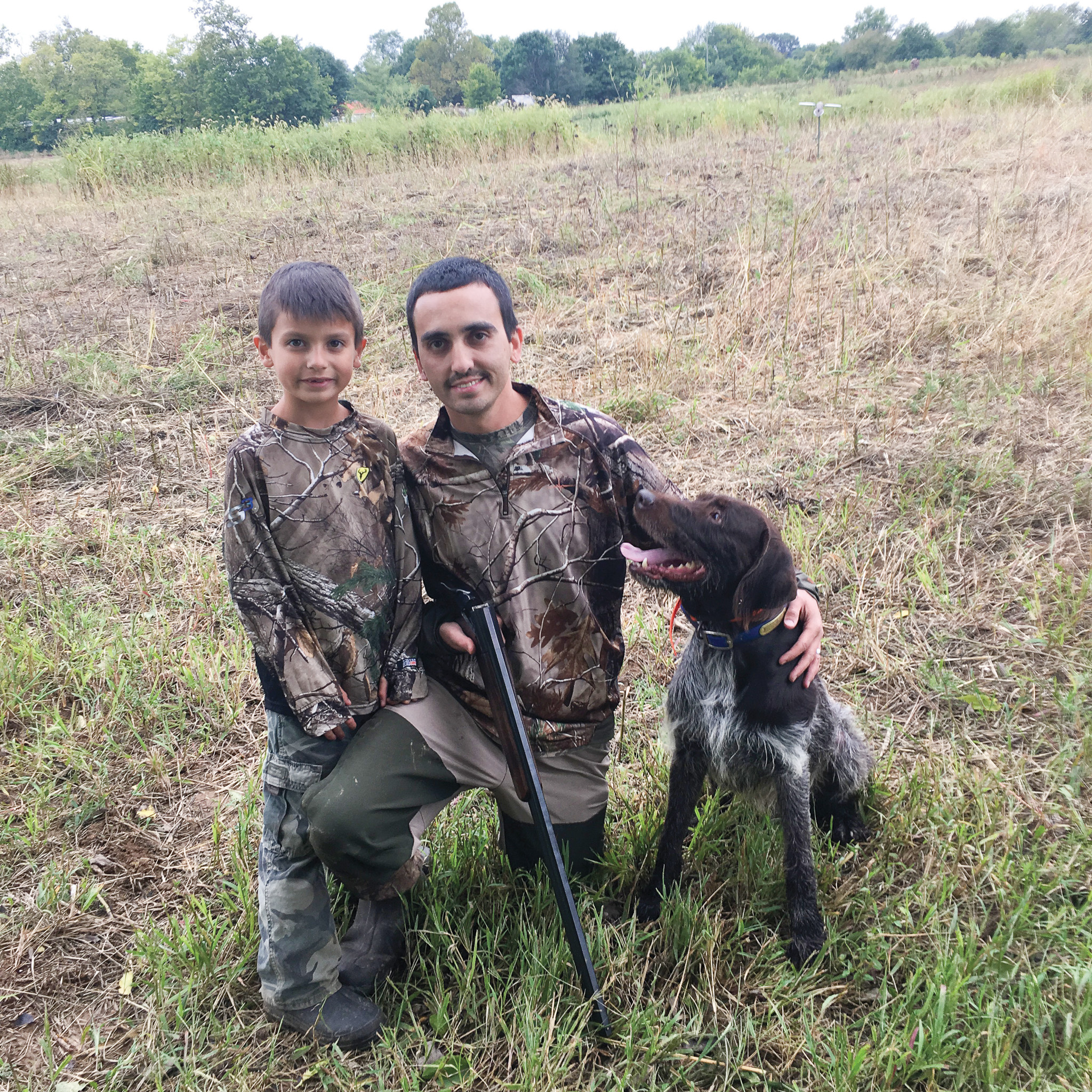
Mentor/youth quota hunts provide special opportunities for less experienced hunters to enjoy a high-quality dove field. Photos: Brian Clark
Learn to hunt dove
The Kentucky Department of Fish and Wildlife Resources offers a comprehensive guide to dove hunting, from habitat to hunter safety to cleaning and cooking.
Finding a public dove field
Check out the state wildlife agency’s interactive map of public dove fields.
The dove field patrol
This video from Kentucky Afield offers safety and regulation guidance for game wardens as they patrol dove hunting fields.