Planting for wildlife
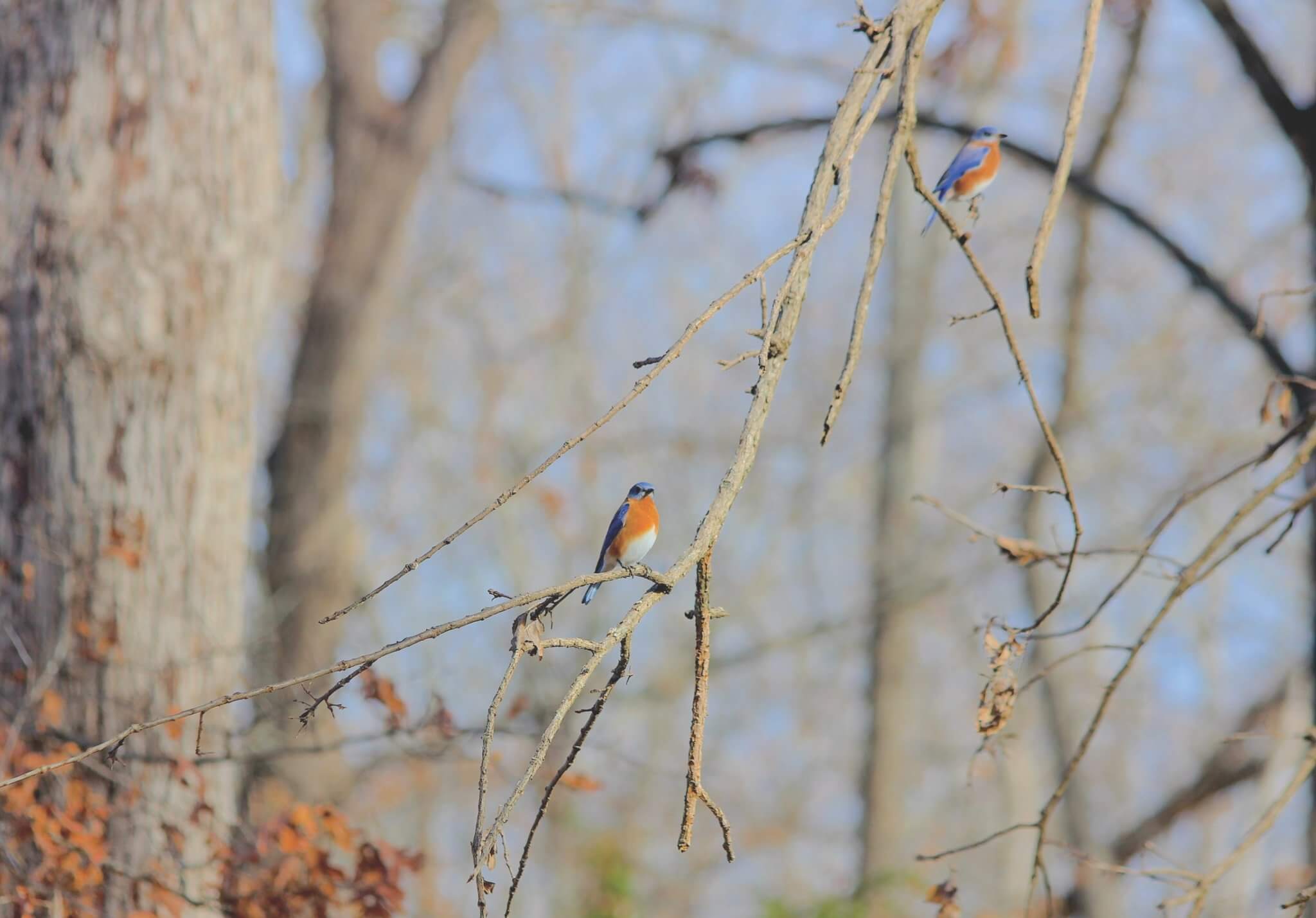
Create your own backyard oasis
IF YOU LOVE TO WATCH WILDLIFE, then you should consider planting your yard to attract animals and birds. You don’t need a large area to draw wildlife if you plan and plant accordingly. Stick to native plants and create a wildlife oasis right outside your window.
Kentucky has many native wildflowers, shrubs and trees that attract many types of wildlife—even those just passing through. While deer and turkey are great to watch, they usually need larger areas than most people have. But anyone can plant for birds, bees and butterflies.
I recently decided to create an area in my yard to attract my favorite birds, like warblers, bluejays and woodpeckers. I also want to offer food for pollinators like bees and butterflies. Bird feeders and nesting boxes are a great way to attract birds but planting habitat that the birds need for cover and food will keep them around longer.
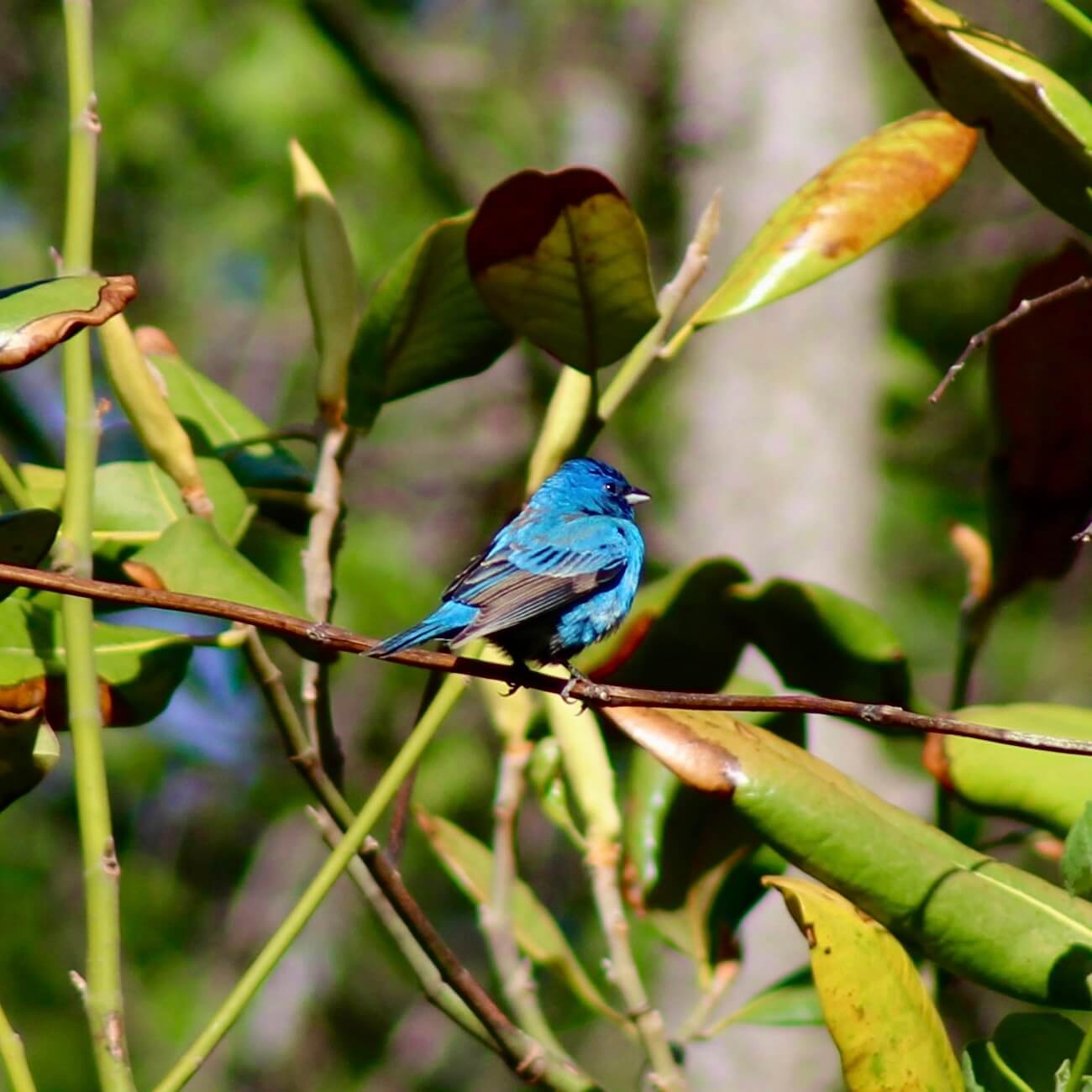
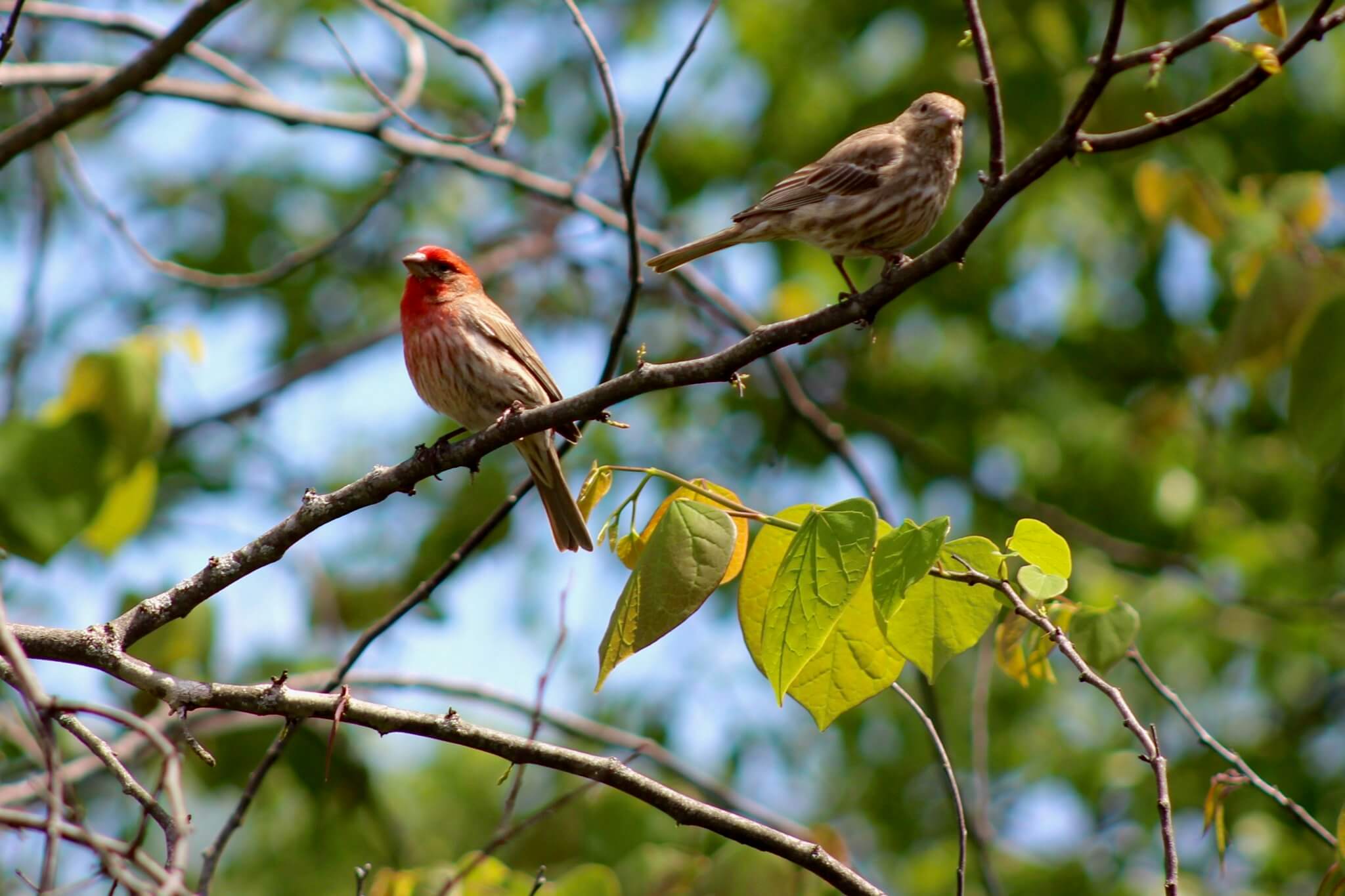
(L): A male Indigo Bunting perched on a sunlit branch, its vivid blue breeding plumage standing out against fresh green foliage. (R): A pair of House Finches share a branch—one with red facial and chest coloration and the other in brown, streaked plumage—amid early‑season leaves. Photos: Michael Harris
One of the most effective ways to support habitat is also the simplest—choose an area for habitat and stop mowing. I did this a few years ago, mowing a portion of our yard just once annually. It’s a shady area, and grass struggles to grow, but the native wildflowers and weeds thrive. After a couple of years, some large, blossoming wildflowers have emerged. Eventually, I saw a monarch butterfly on one of these flowers and did some research. This is where my excitement blossomed into planting my yard specifically for wildlife.
We found that letting our yard grow on its own not only reduced mowing chores but also made it beautiful all year long. It’s amazing how fast wild plants will grow when left to nature. It is also surprising how fast wildlife can locate the plants that are vital to them. By allowing plants to grow naturally, you will quickly see more wildlife in your yard.
You can also give your habitat a boost by planting the right things, including wildflowers, cover thickets, native warm-season grasses, cool season grasses and monarch plantings. You can even plant specifically for one of my favorite birds, the prothonotary warbler. Find links to more information on each of these plantings at KentuckyLiving.com.
Sketch out your plan, beginning with the area that you want to plant. You can go all out with plants—but you can also let your yard grow wild and see what develops first, then add plants to increase wildlife appeal. Whatever you choose, planting with wildlife in mind will create outstanding viewing opportunities—and tending to a wildlife garden is one more way to enjoy Kentucky’s great outdoors.