Field-tested stocking stuffers
Forget the oranges, walnuts and peppermint candy canes— when it comes to filling the Christmas stocking of someone who enjoys the outdoors, the options are numerous and diverse. And they go way beyond a bag of split-shot sinkers, a box of .22 rifle shells, a colorful bandana and a blue enamelware coffee cup.
For unique ideas, we asked outdoors experts what gift under $25 they’d put in the stocking (or next to it) for someone who fishes, paddles, backpacks, hikes, bird-watches, forages, shoots or pursues other outdoors-related activities.
A QUALITY CUP OF JOE
Luke Behler has spent his life outdoors.
After all, he served in Afghanistan, fought forest fires in Idaho, and has hunted red stag in New Zealand, elk in the Rocky Mountains, moose in Alaska, blacktail deer in Prince William Sound and caribou in Alaska’s Brooks Range. And to relax and recharge, Behler and his wife, environmental scientist Mallory Allgeier, like to kayak, hike, camp and ski.
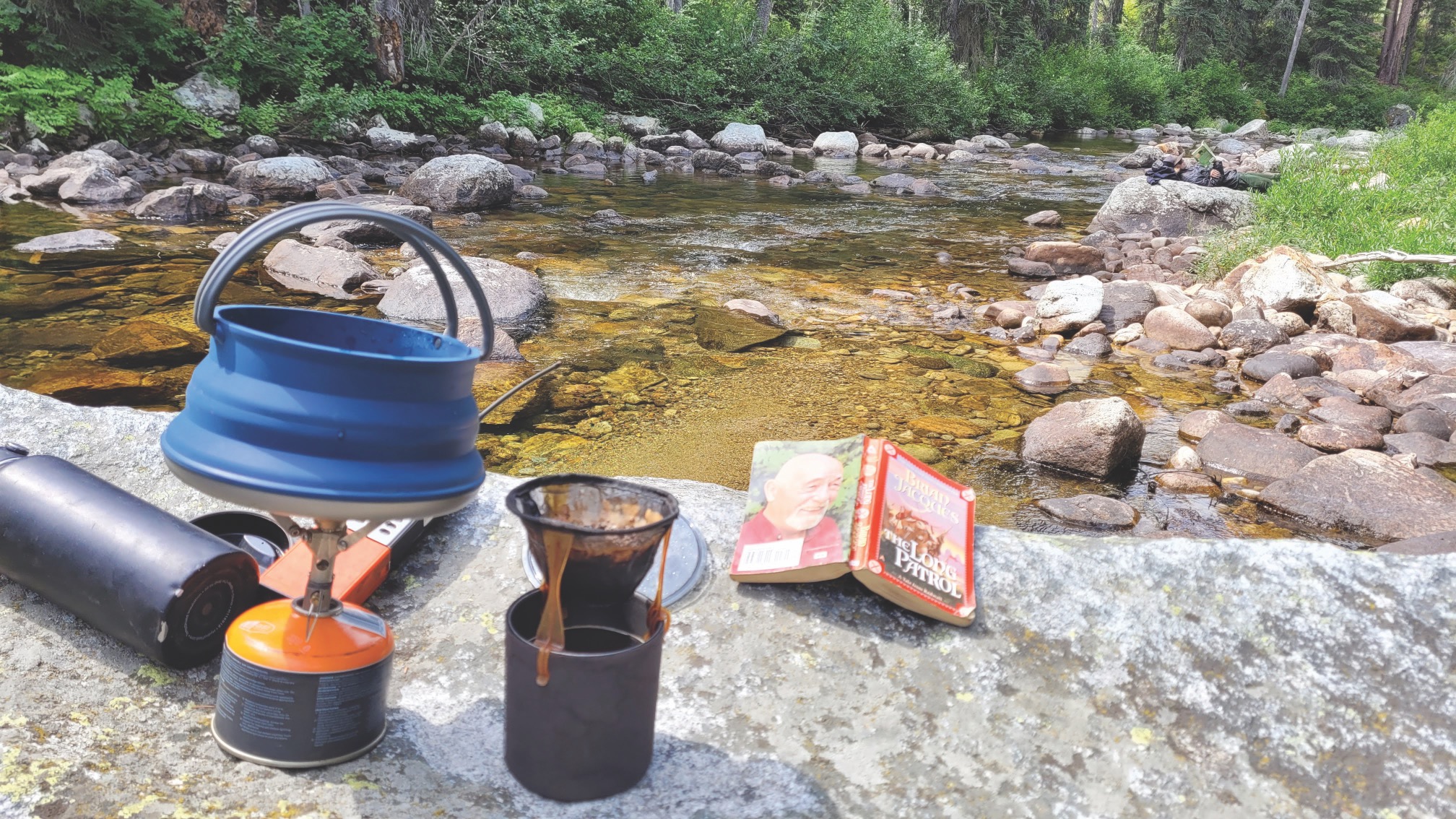
“My wife and I got tired of instant coffee, so we began grinding our coffee ahead of time,” says Behler, who grew up in rural Boone County. Photo: LUKE BEHLER
Rather than carry a heavy pot or French press, Behler and Allgeier use a GSI Ultralight Java Drip Coffee Maker, which packs down small and weighs little. Made of pour-over mesh with three extendable legs, it fits over a cup or thermos, and gravity does the rest. It costs $12.95 from GSI and even less from retailers like REI and Dick’s Sporting Goods.
“It’s great for the house, and great for the trail,” says Behler, who offers a tip: “Pack out your used coffee grounds, or you WILL find bears in camp.”
LURING THEM IN
Fishing lures rival embroidery floss, crayons and miniature toy cars for color choices, flash and variety. Veteran angler Tim Stein of Independence makes it easy for you.
For almost 50 years, Stein has been a member of the Northern Kentucky Bass Busters, which holds 10 fishing tournaments a year in lakes and rivers around the commonwealth, including two at night.
In the spring and fall especially, Stein uses a Strike King Red Eyed Shad crankbait (Orange Craw color), which can be bought at Cabela’s for $8.99 or $9.99.
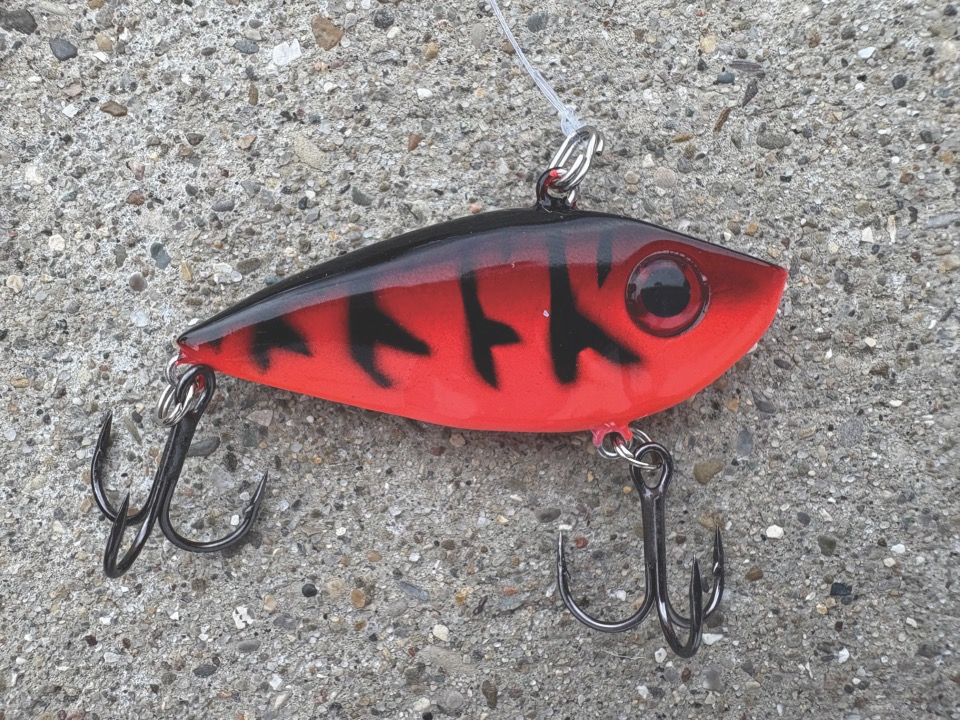
“I have won probably a dozen tournaments on that particular bait,” says Stein, who also wrote the outdoors column for The Kentucky Post. Photo: TIM STEIN
At night, Stein uses a double-blade spinner bait (the larger blade is gold, the smaller is red) wearing a chartreuse, orange and brown skirt with a chartreuse trailer. His spinner baits are homemade, but he says his lure is similar to a War Eagle Double Colorado Spinnerbait, which Outdoor America sells for $7.69.
“It doesn’t matter where you’re fishing,” Stein says. “That’s dynamite.”
BANISHING BLISTERS
Blisters are the bane of hikers and backpackers. But you can prevent blisters from developing by wearing hiking shoes that fit and anti-friction hiking socks.
Nichole Nimmo of Canmer, in Hart County, likes to pair toe-sock liners with a moisture-wicking cover sock. Nimmo is a nature/backpacking videographer who has hiked thousands of miles throughout the eastern United States and is a guide and a “sweeper”—the person bringing up the rear—for rookies doing the Sheltowee Trace Association Hiker Challenge.
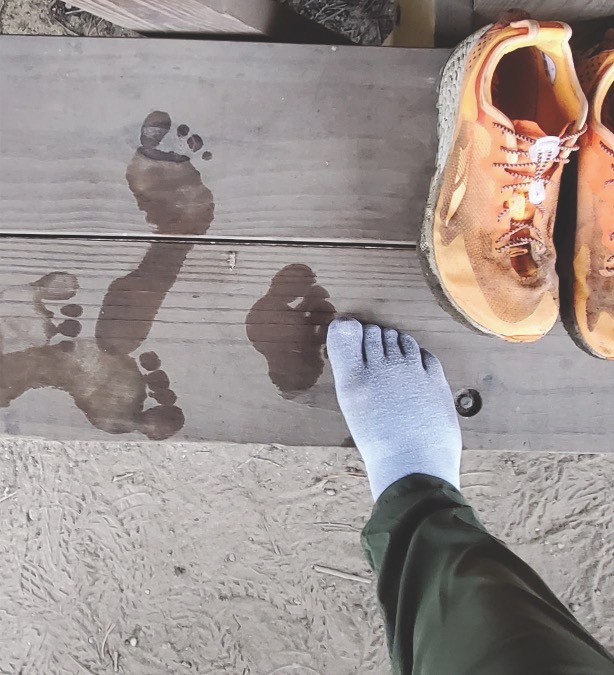
“Correct fitting hiking shoes are important, but socks matter just as much,” Nimmo says. “I recommend Injinji brand toe socks or toe sock liners to reduce blisters. Injinji socks are non-cotton, moisture-wicking socks that create a layer around each toe to reduce friction between toes.” Photo: NICHOLE NIMMO
The toe socks can be found at www.injinji.com from $11 to $24.
FIGHTING STICKTIGHTS
You can avoid the poison ivy and yellow jacket nests. But anybody who’s ever tromped through Kentucky fields and forests knows there’s no dodging burs. Whatever you call them—burdock, cockleburs, sandburs, sticktights or beggar’s lice—chances are your clothes are covered with them after a day in the field.
That’s when Jean Ellen Spieles of Garrison in Carter County uses a Burz Off, which is sold on Amazon for as little as $12.42.
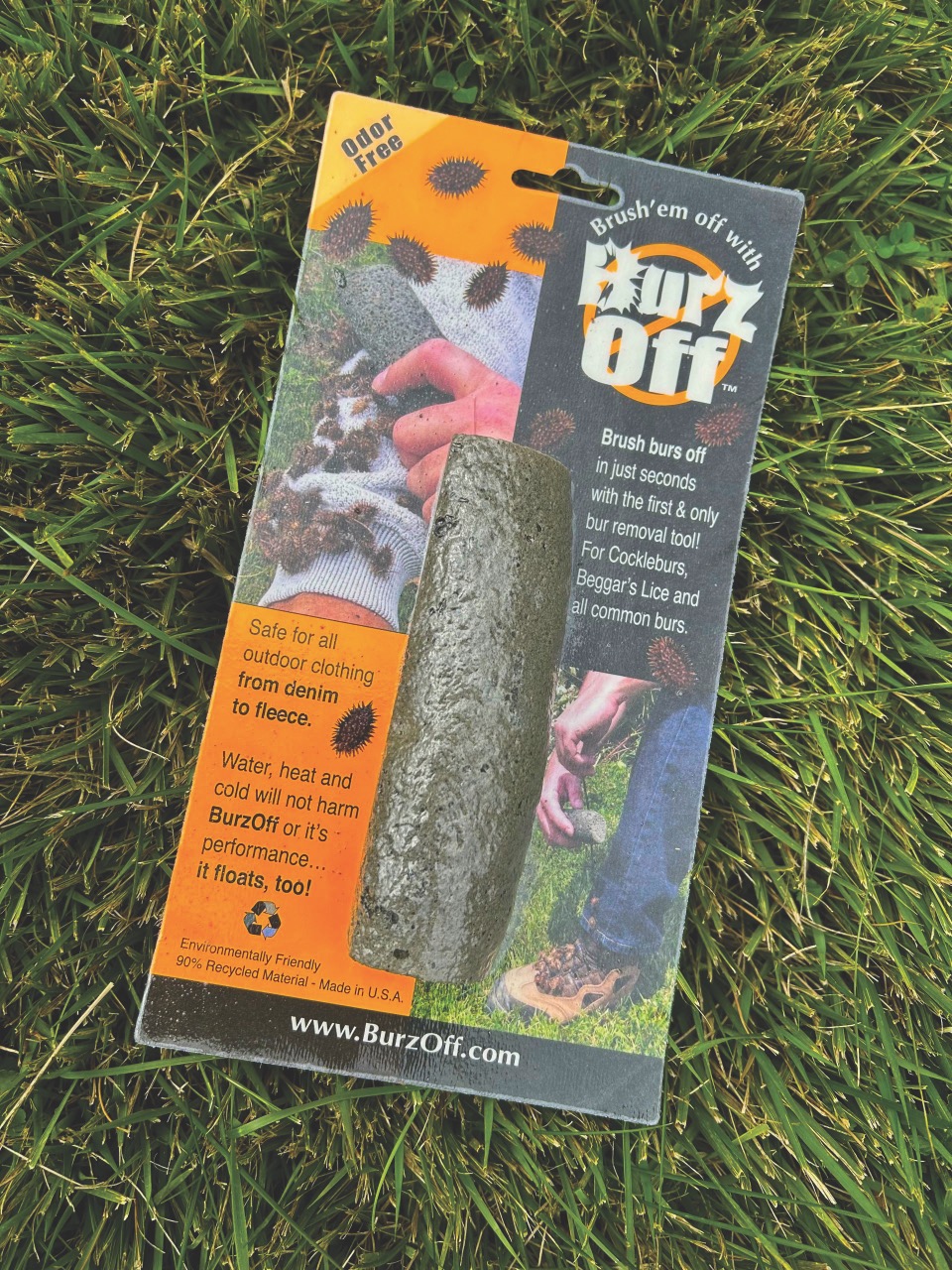
“It’s for removing burs from clothing, which hikers, photographers and hunters would love,” says Spieles, a hunting instructor for the Kentucky Department of Fish and Wildlife Resource’s Becoming an Outdoors Woman program. “I use it all the time and it works like a charm! Photo: DAN HASSERT
NEVER A DULL MOMENT
Dull knives are dangerous and frustrating. But if you don’t have the skill or the patience to sharpen one, Billy Finke of Park Hills suggests a portable handheld knife sharpener, like an AccuSharp, available at Walmart for $9.99.
Now 59, Finke started cutting up meat at age 14 at the family-owned Bill Finke & Sons butcher and market in Fort Wright. The number of deer alone he’s butchered— for customers and himself—number in the thousands. He likes to use Victorinox boning knives, and he’s constantly grabbing an AccuSharp to touch up their edges.
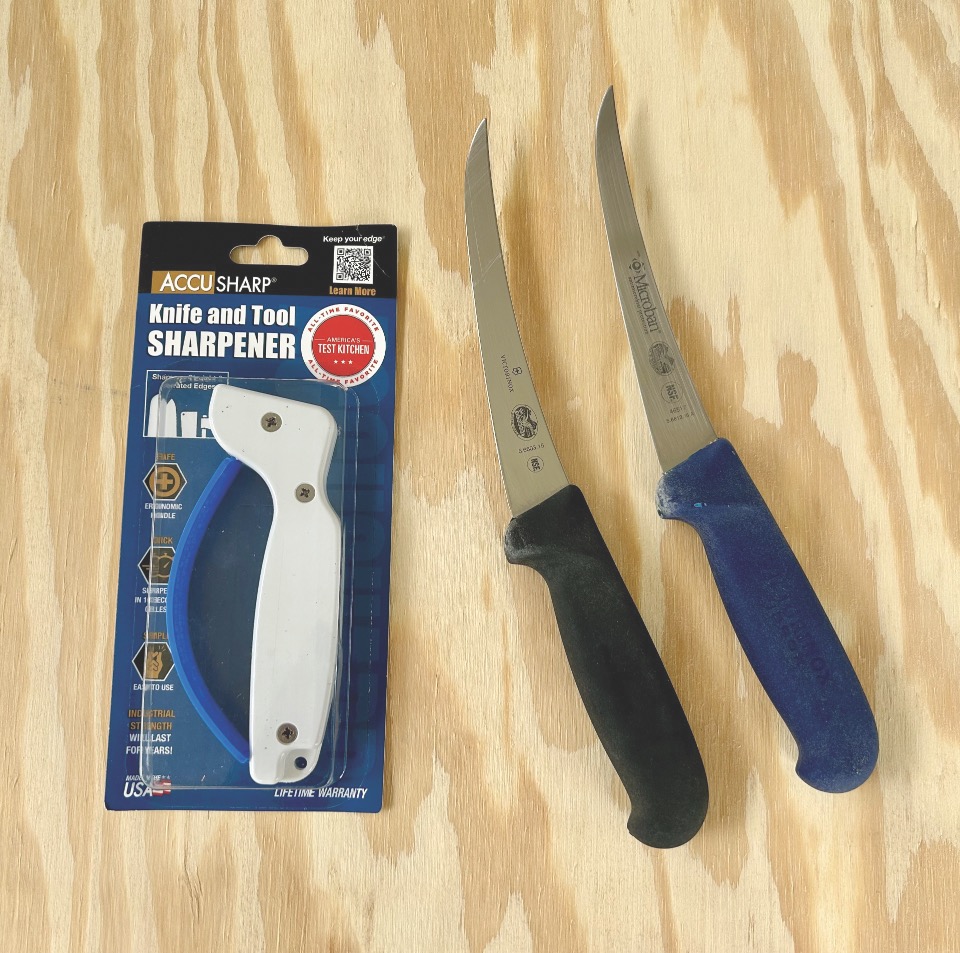
“I’m an impatient person,” Finke admits. “I need it sharp now. I can’t wait five minutes (to use a stone).” This sharpener “gets it done, and I love using it. I have two in the store and two in my house.” Photo: DAN HASSERT
INSTANT WARMTH
Sitting in a deer stand or duck blind waiting for an animal to harvest or photograph can be a cold experience. So can sleeping in an unheated tent. Fortunately, a no-fuss dose of warmth is but a shake away.
Commonly sold under the Hothands or Grabber brands, single-use, air-activated heat packs are designed for your toes, hands and lower back. Just remove their bright orange plastic wrapper and shake them up for hours of warmth.
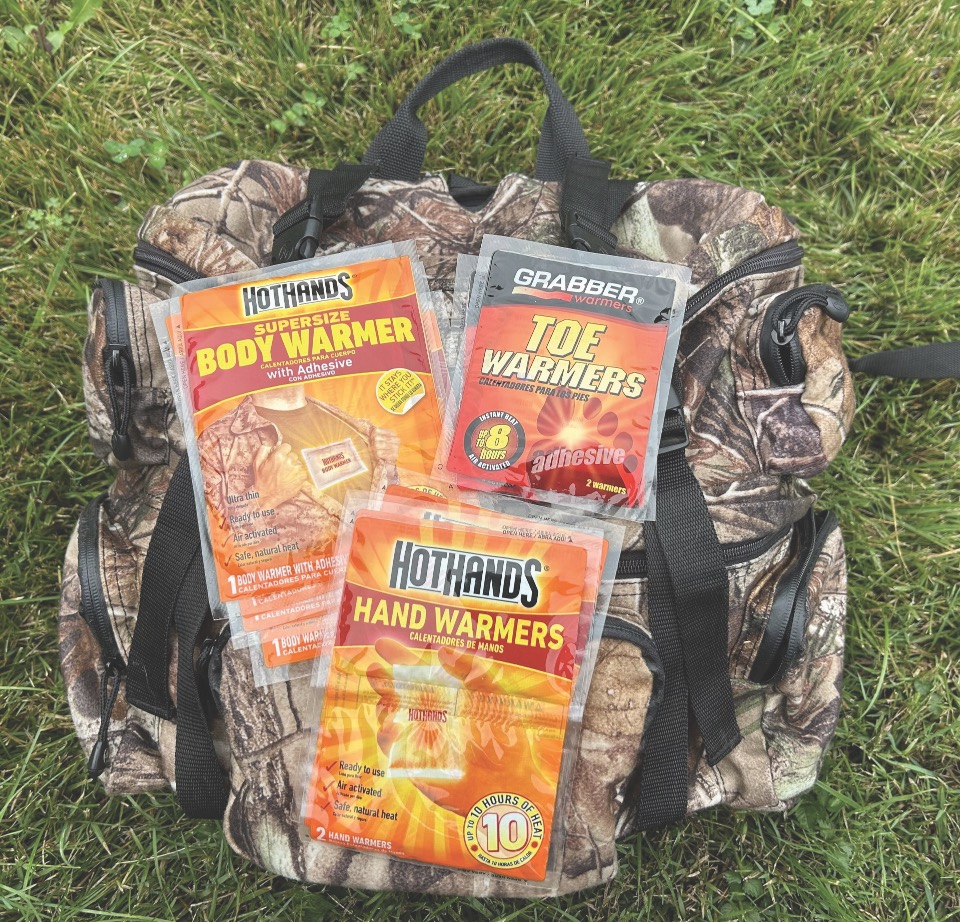
“In my family, everybody gets Hothands for Christmas in their stockings,” says Courtney Goodman of Hickman. “I don’t know anyone who hunts who hasn’t used these at some point.” Photo: DAN HASSERT
Goodman is a hunting training officer who oversees 30 western counties for the Kentucky Department of Fish and Wildlife Resources and teaches in the department’s Becoming an Outdoors Woman program.
She’s also an avid outdoorswoman who hates being cold. So she tucks the toe warmers on top of her feet in her roomy boots and has thrown a body warmer in the bottom of her sleeping bag in the Colorado mountains.
The heat packs are sold singly or in multi-packs almost anywhere, including big retail stores, outdoors stores and highway gas stations. A 10-pack of hand warmers at Walmart, for example, costs $7.48.
Just don’t put them against your bare skin, Goodman says, because “they will burn you.”
LET THERE BE FIRE
Whether you’re paddling or backpacking, “a campfire is what gets the stories going, dries wet socks and keeps you warm when it’s freezing out,” says paddler and backpacker Mark Neikirk of Crescent Springs. But when the woods are wet, getting that fire going—and keeping it going—can be a challenge.
Neikirk, who has led nearly 50 canoe trips in the Canadian wilderness and is close to completing the Sheltowee Trace Association Hiker Challenge, recommends the V-3 Pocket Bellows by Epiphany Outdoor Gear, available for $14.99 from the manufacturer and cheaper elsewhere.
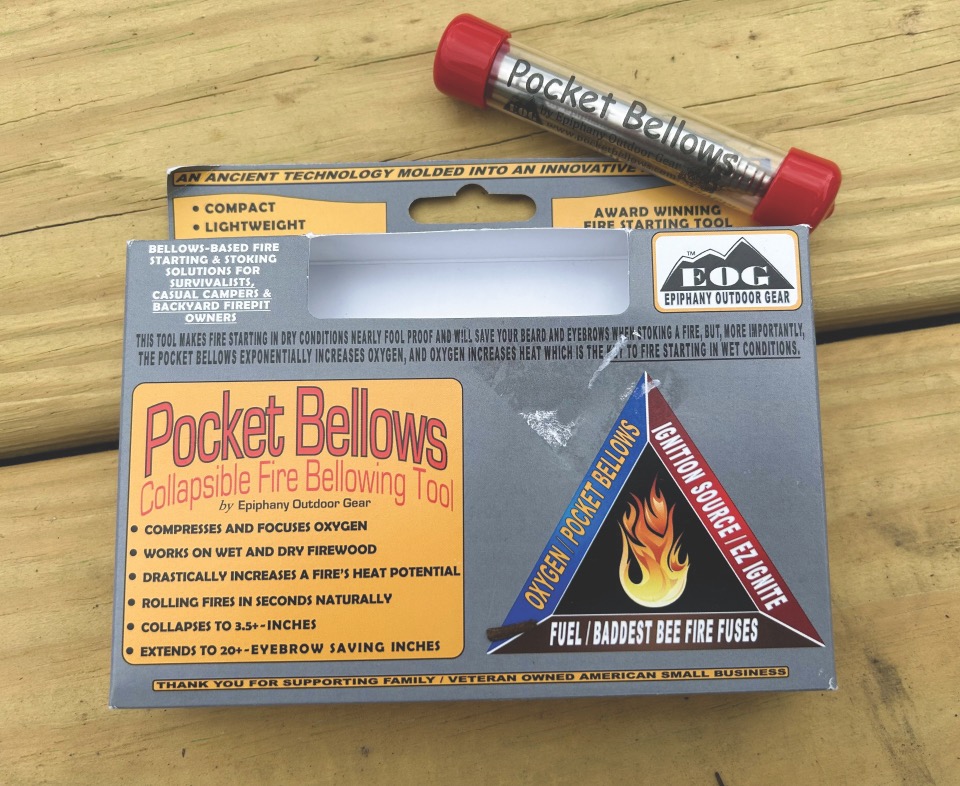
“It’s a magical tool if you’re trying to get a fire going—if you’ve got a coal or an ember, you can pretty much get it into flame,” Neikirk says. “It beats the heck out of getting on your hands and knees and blowing and blowing with your face right next to coals.” Photo: DAN HASERT
Your lungs and eyes will thank you, too.
EFFICIENT GRILLING
Alex Cline dislikes tasting chemicals in his food. So when the Shepherdsville man cooks or smokes fish and game on a grill, he uses lump charcoal, instead of briquettes, and he starts the charcoal using a charcoal chimney.
The device is a metal cylinder with a handle and ventilation holes in the sides. You load charcoal into the top and light from the bottom using crumpled newspaper or other tinder.
“If you are cooking on a grill or smoking meat on a charcoal grill, this is absolutely essential,” says Cline, a conservation educator for the Kentucky Department of Fish and Wildlife Resources who is an instructor in the Field to Fork and Hook and Cook programs.
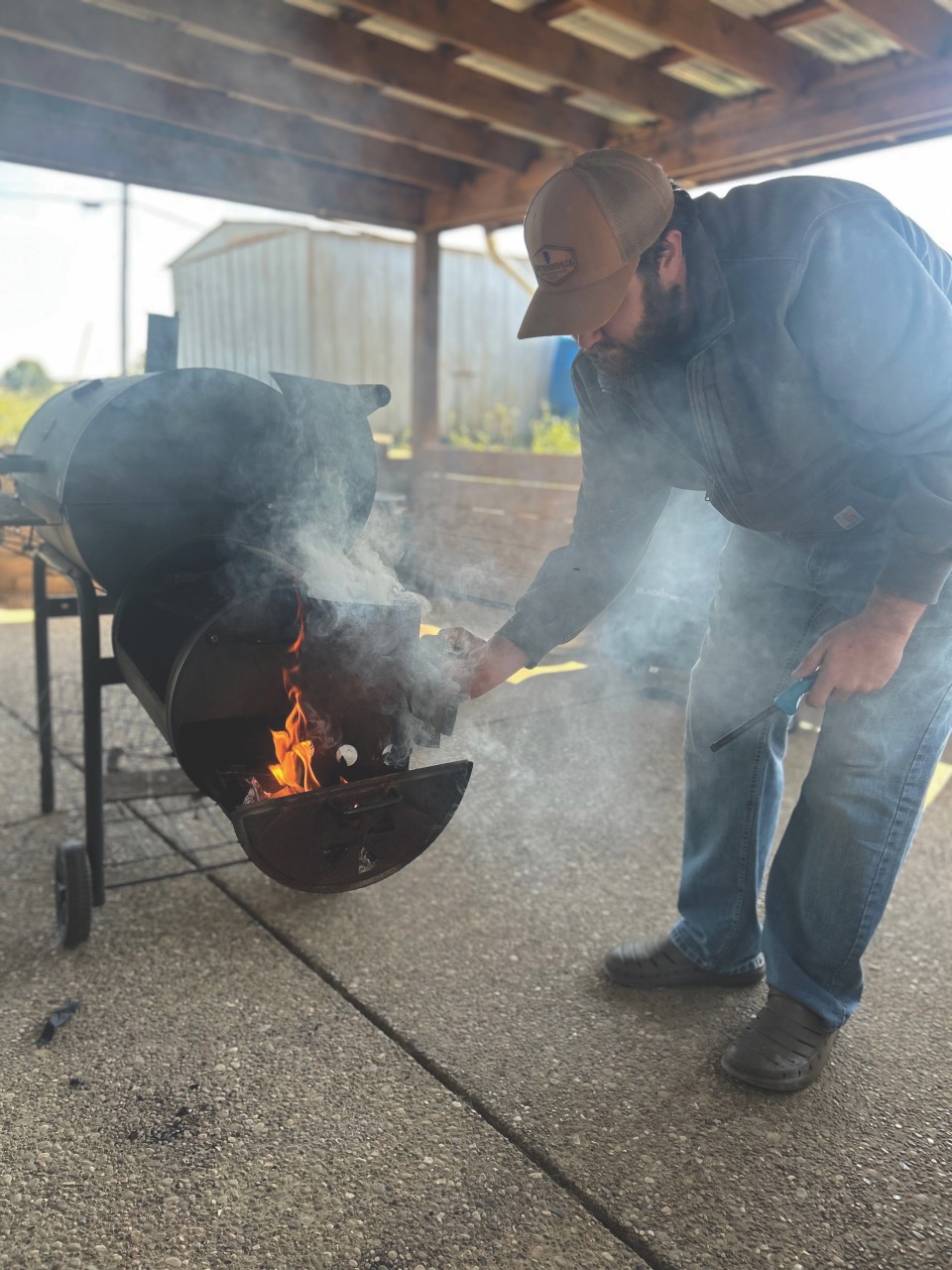
“It’s the most efficient way to get charcoal started. You don’t use lighter fluid and get chemicals (infused) in your food. … And in a pinch, you can use it as a grill itself,” he says. Photo: ALEX CLINE
Both Lowe’s and Home Depot sell the Kingsford Quick Start Charcoal Chimney Starter (like Cline owns) for $14.98; Ace Hardware sells the Weber Steel Chimney Starter for $19.99; and Walmart sells the Expert Grill Charcoal Starter for $10.97.
Cline recommends using heat-proof gloves when you lift the device and spread the coals.
PROTECTING YOUR GUT
When it comes to water, backpackers face two uncomfortable facts: Water is heavy (a gallon tops 8 pounds), and that “pristine” mountain stream is anything but pure, as any microbiologist or chemist will warn you.
Kentucky Afield Editor Dave Baker solves both challenges with the LifeStraw personal water filter. The small device— which looks just like a beefed-up straw and works just like one—protects the drinker against bacteria, parasites, microplastics, dirt, sand and cloudiness.
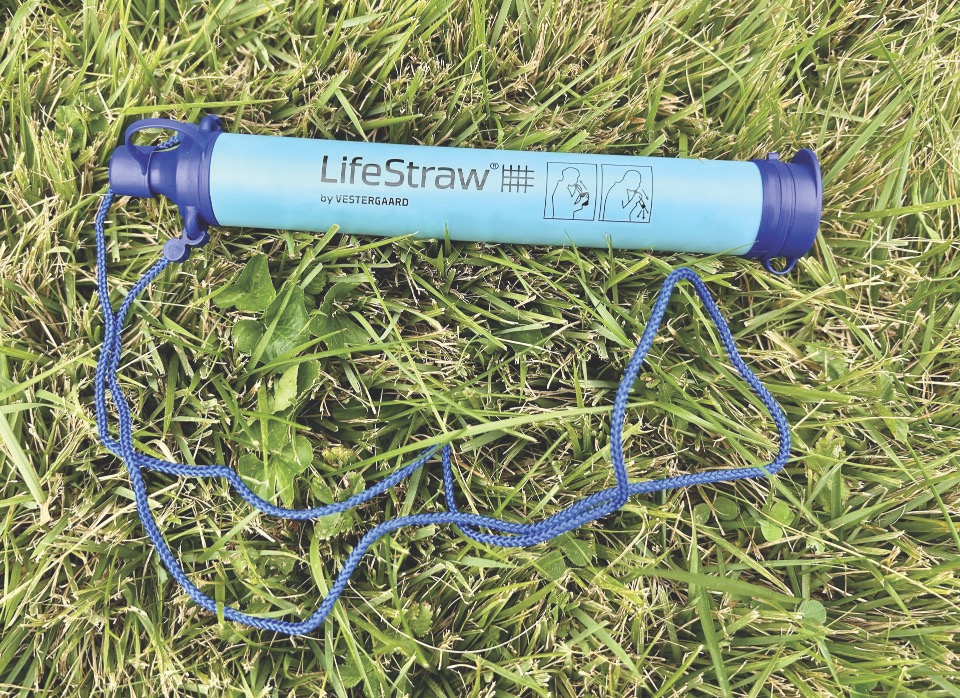
“It’s really handy to have in case you run out of water,” says Baker, who lives in Shelbyville. “It’s not designed to be your primary water source but it’s a great backup.” Photo: DAN HASSERT
It’s available from LifeStraw for $17.95 and cheaper elsewhere. Baker owns a LifeStraw himself and gave one to a niece for Christmas. She’s on a mission to hike in every national park in the U.S., and he doesn’t want her tempted to drink straight out of those mountain streams.
Charcoal chimney starters: