Kentucky’s vanishing countryside
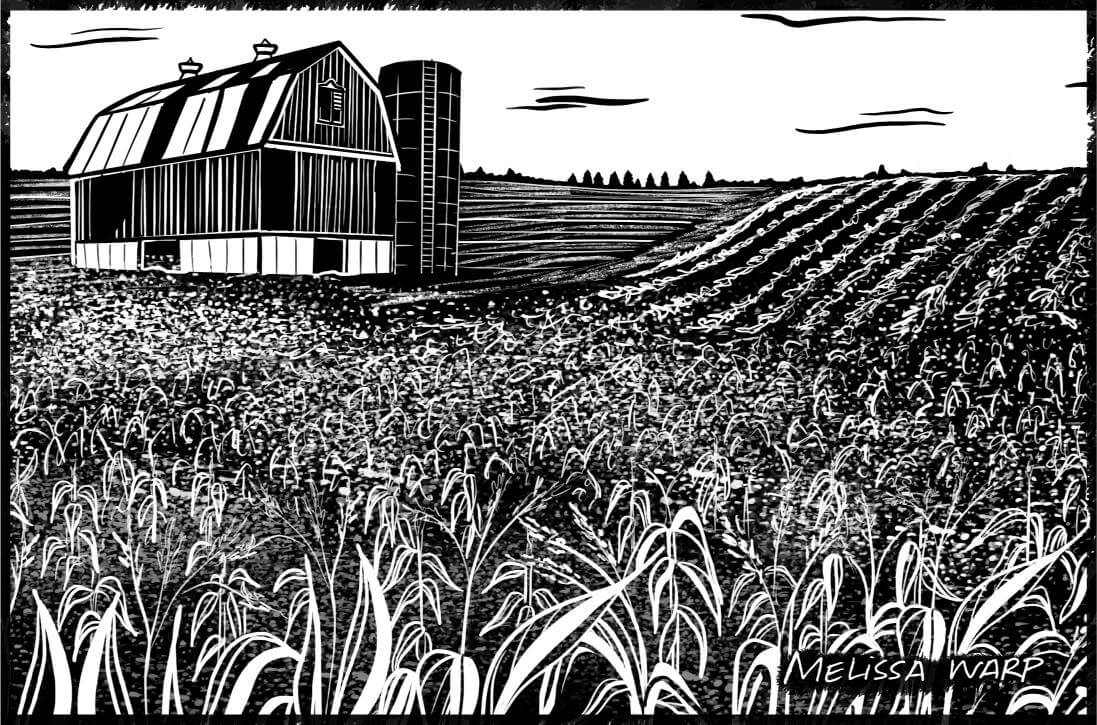
An initiative to preserve farmland
SOMETIMES WHEN I GLANCE over the countryside while traveling Kentucky, I’m reminded of the many farms of only a decade earlier that now have vanished from the landscape.
Although the disappearance of one farm may go unnoticed by most of us, such losses statewide are taking a serious toll on Kentucky’s agricultural lands as more farmers retire and sell their acreage in tracts to be developed.
The Kentucky Farm Bureau cites data from the U.S. Department of Agriculture showing that Kentucky is losing an alarming average of 291 acres of farmland each day.
“The average-size farm in Kentucky is between 270 and 280 acres,” says Kentucky Farm Bureau president Eddie Melton. “We’re losing one of those farms every day. In 20 years we’ve lost over 17,000 farms and 1.4 million acres … and about a third of that was in the last five years.”
Melton hopes that the Kentucky Farm Bureau’s Kentucky Farmland Transition Initiative will help reverse the trend by raising awareness of options for keeping farmland in the hands of active farmers. The initiative, which is supported by a network of 28 other organizations, focuses on providing technical assistance and other support for beginning farmers, young farmers, and those who want to sell their land. It offers help with information about tax benefits that may be available through the Kentucky Selling Farmer Tax Credit and the Protecting American Farmlands Act.
“This Transition Initiative is not only about selling a farm, but it’s also about transitioning a farm within your own family … to keep it in agricultural land,” says Melton, a Webster County farmer and consumer-member of Kenergy.
Commercial development of prime farmland often presents a challenge, says University of Kentucky agricultural economist Will Snell, a consumer-member of Bluegrass Energy. Decision-makers face the complicated choice of balancing the potential for increasing jobs in rural areas versus the long-term jeopardy of agriculture and food production.
Finally, beyond our farmland’s value for crops, the vanishing landscape of Kentucky’s Bluegrass region remains a growing concern among a number of conservation and preservation groups that monitor the loss of the region’s iconic horse farms and scenic landscape. World Monuments Fund included the Bluegrass region on its watch list of 100 most endangered global sites.
At that time, Karl Raitz, then chair of the Department of Geography at the University of Kentucky, explained that the historical overlay of settlements that grew from the rich limestone and fertile soil created a horse breeding culture that produced a “built environment” that has a sister in the Nashville Basin, “but other than that, generally cannot be found anywhere else in North America.”
In England, an unbroken expanse of land punctuated by ancient trees might be called “park land,” he told me.
“Applying that definition to much of Kentucky, instead of looking at parks in cities, we are looking at cities in a giant park many counties wide. But it’s rapidly dwindling.”