Preserving the past
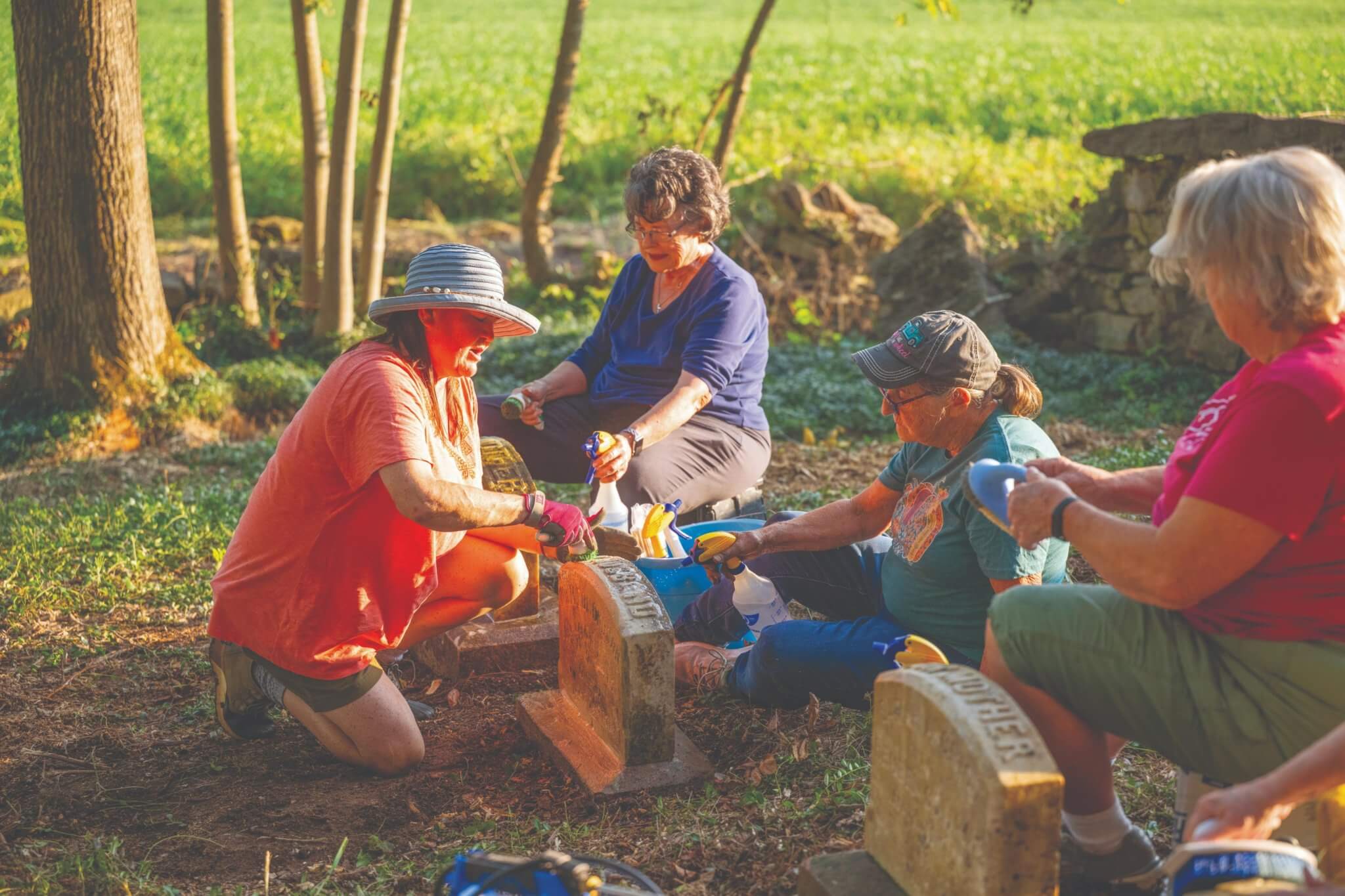
May is National Historic Preservation Month. Learn how cemetery preservation secures a vulnerable link with history
Terri Cooper still remembers visiting cemeteries with her grandparents as a 5-year-old, where they regaled her with family history as they strolled among the old gravestones.
Years later, a school assignment tasked her kids with looking for historic sites near their Taylorsville neighborhood. But when a burial site beckoned to the Cooper family, they found it overgrown and nearly impossible to access.
“We literally crawled on our hands and knees to get back to it,” Cooper says.
Seven years later, that same cemetery boasts a sign, reflection garden and legible stones, thanks to efforts by the Cooper family and other volunteers, who have now helped preserve a total of 10 Spencer County cemeteries. Cooper says cemetery restoration projects have connected her with the commonwealth’s history and built friendships along the way. “I just love my community,” she says, “and I love what we are doing.”
May is National Historic Preservation Month, but cemetery preservation groups across Kentucky are maintaining their local burial grounds every month of the year. With thousands of cemeteries scattered across the state, an opportunity to support local history could be right in your own neighborhood.
The path to preservation
Cemeteries can be located on city, county, church or private properties. Before you tackle any preservation project, it’s vital to secure the proper permissions.
To preserve a cemetery in need, such as a burial ground that’s overgrown or has illegible or broken grave markers, the first step is to identify the landowner, obtain necessary permissions and coordinate with cemetery caretakers, if there are any.
If you’re undertaking a cemetery preservation project on private property, detailed communication with the current landowner is essential. In the rare instance a landowner is unwilling to grant access, it may be time to pick a different project. If ownership of the cemetery is unknown, preservationists can reach out to the office of their local property valuation administrator, or PVA.
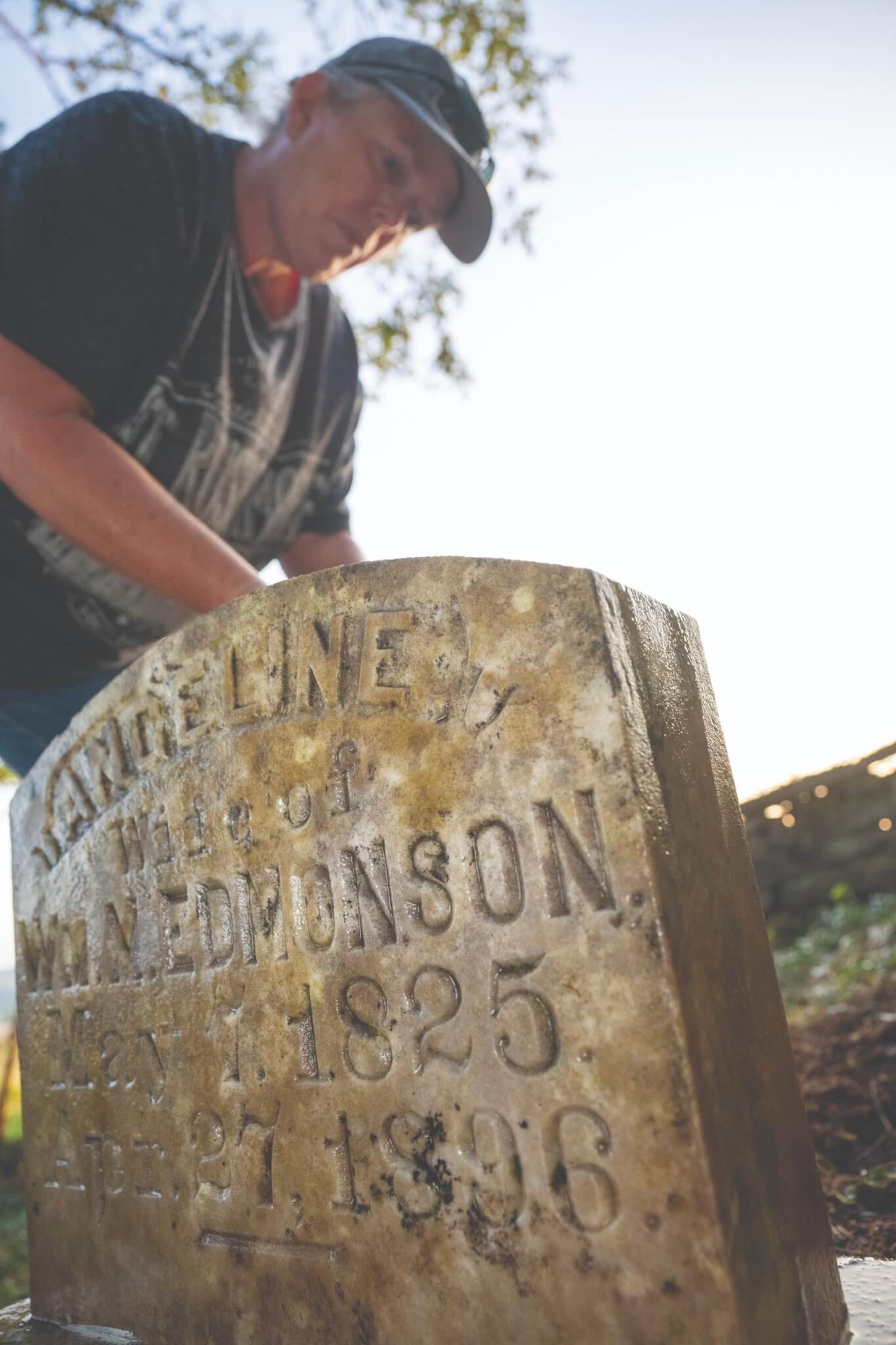
Kelly Meeks cleans an 1825 headstone.
Photo: Joe Imel
“I always tell people it’s very much a team effort,” says Jim Seaver, a community engagement coordinator with the Kentucky Historical Society. “The two things I tell people to prioritize are safety and doing things that are legally sound, so good diplomacy is key with these kinds of projects.”
Seaver also reminds preservation-minded Kentuckians to “know your limits and don’t bite off more than you can chew.” After all, Seaver adds, “There’s no shortage of projects that are a lot easier to tackle and more manageable.”
If you’ve never undertaken a cemetery project before, there are plenty of resources available online, but Bonnie Burks Gray, co-founder of Friends of Grove Hill Cemetery in Shelby County, cautions novices to get tips “from an accredited preservation group.”
Cooper started out by attending an instructional seminar before joining Friends of Grove Hill Cemetery to do some hands-on work. “Find other people that are like you,” Cooper advises. “Learn from them.”
Stone repair
As Cooper began cemetery restoration work in her own community, she found that many cemeteries contained fallen or broken stones. To repair grave markers that had toppled, Cooper and her fellow volunteers learned how to dig a hole for a foundation of concrete and gravel before putting the stone’s base back in its original location. When headstones are in multiple pieces, Cooper uses a two-part epoxy that she orders from Scotland to glue the fragments back together.
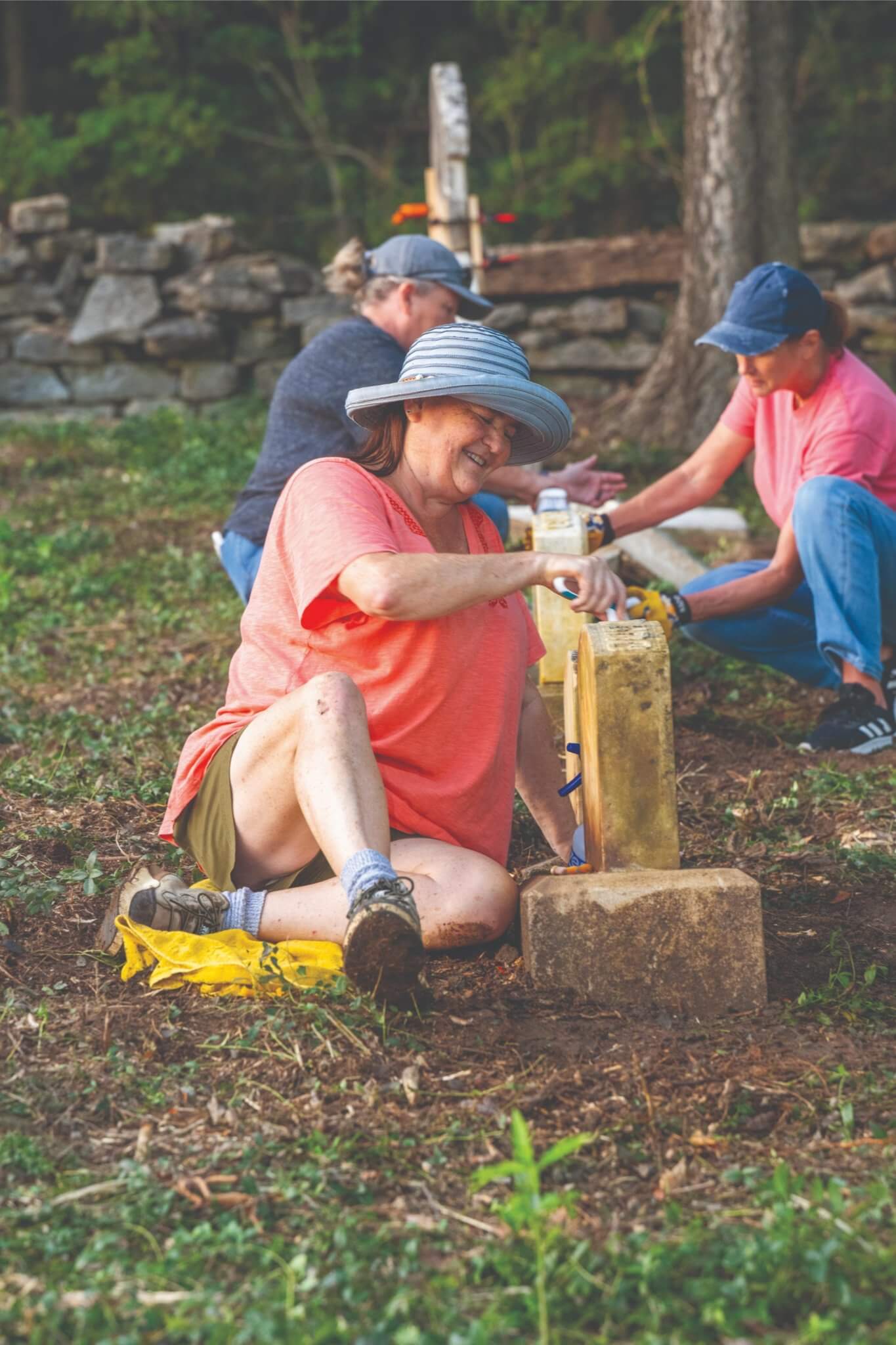
Terri Cooper volunteers at the McGee family cemetery in Spencer County. Photo: Joe Imel
When it comes to repairing grave markers, Seaver says, “The challenge is finding the perfect balance between the aesthetics, the legibility and the long-term viability of a cemetery headstone or monument.” He adds that preservationists will need to clamp any pieces in place with wooden shims while the epoxy is setting. For stones that still look unsteady, Seaver suggests using metal bars to act as brackets on either side of the stone.
Give stones a cleaning
Cleaning headstones is an important part of cemetery restoration, but it must be done with care. Seaver offers memorable advice: “If you wouldn’t use it on a horse, you shouldn’t use it on a headstone.” In other words, don’t use harsh cleaners stored under your kitchen sink, or abrasive wire-bristle brushes, which can harm the stone’s surface. Instead, opt for nylon bristles, such as soft-bristle horse brushes, which can be found at your local farm supply store.
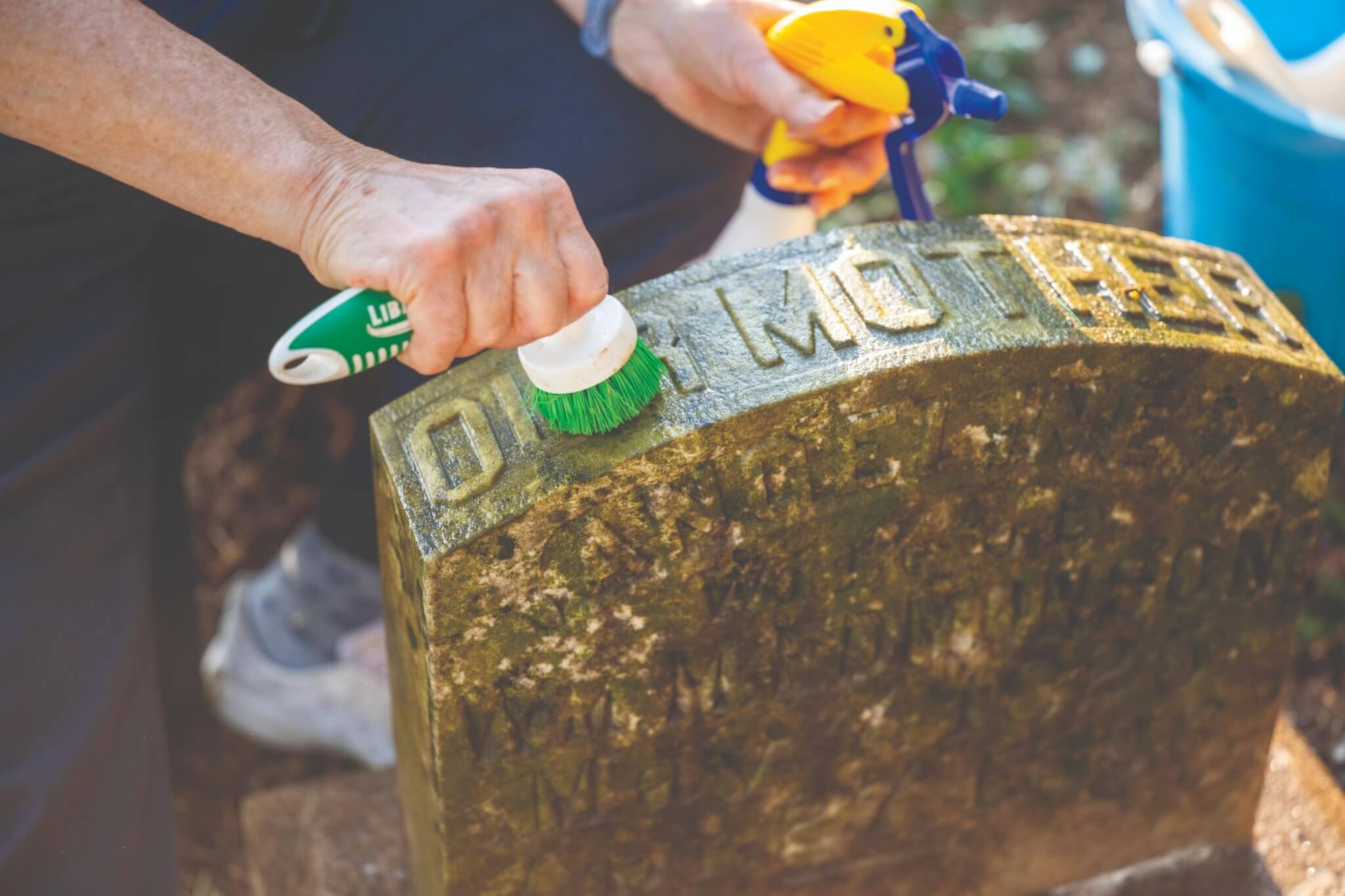
A volunteer cleans a headstone
using D/2 biological solution, which
preservationists recommend for use
on historic stone. Photo: Joe Imel
When it’s time to clean grave markers at Grove Hill Cemetery, Burks Gray and her group start with a dry clean, using brushes to remove debris, before spraying water on the marker to remove embedded dirt, moss, lichen or other growth. The group then uses D/2 Biological Solution, a cleaner that gently kills off growth like mosses, lichens and mold. Burks Gray adds that D/2 will “work for months—even years— continuing to clean the stone.”
Replacing stones
While repairing and cleaning stones are positive steps toward restoration, some cemeteries have unmarked graves or stones that are beyond repair. When that happens to a veteran’s grave, Cooper reaches out to the U.S. Department of Veterans Affairs for help. Cooper notes that applicants seeking VA-provided grave markers must find a direct descendant to fill out the application, and if the application is approved, the applicant is tasked with placing the stone. So far, Cooper has successfully set four stones for Revolutionary War veterans. “They deserve to be remembered,” she says.
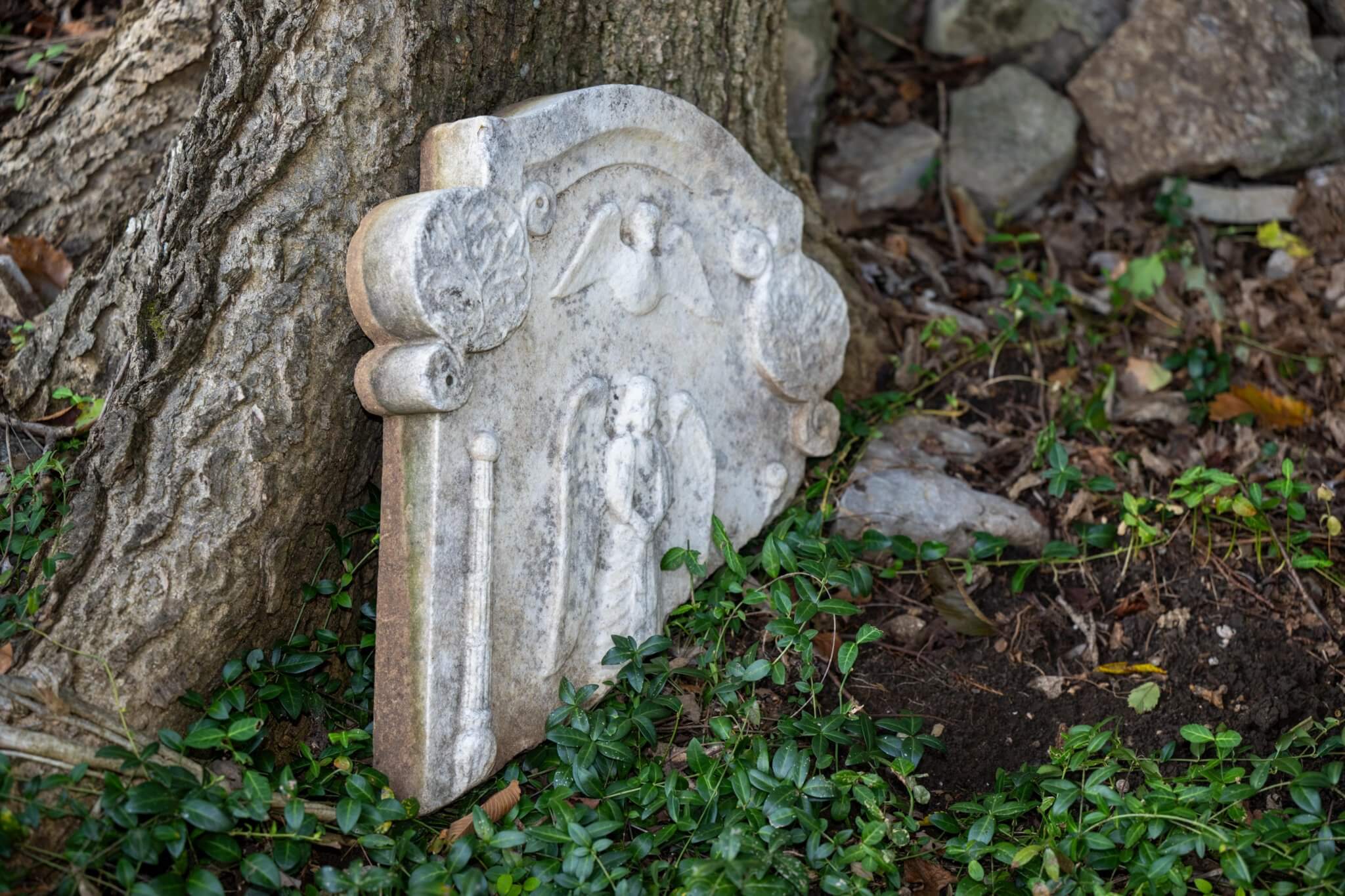
The top portion of Patrick McGee’s headstone rests against a tree. McGee was the grandson of a Revolutionary War veteran of the same name. Photo: Joe Imel
Chad Comer, a Tri-County Electric consumer-member who founded
Friends of Gamaliel Cemetery, noticed that many people buried there had either no grave marker at all or a simple limestone fieldstone. Because of exceptional record keeping, the group knows the identities of these individuals, many of whom were typhoid and cholera epidemic victims in the 1800s. Every year, Comer gathers donations and sells reprinted cemetery record books, securing funding for 5-inch by 10-inch granite grave markers inscribed with names. Comer has just 158 graves left to mark. “Some years we do as few as 10,” he says. “Our largest project was 52 in 2019.”
A collaborative effort
Burks Gray likes to think of cemeteries as “a place of discovery, history and beauty”—and preserving them for the future is a group effort. To ensure that people of all ages can enjoy the unique natural beauty of historic burial grounds, Friends of Grove Hill Cemetery teamed up with Shelby County High School’s junior history class in 2024. Around 200 students participated in a project-based learning program that taught young people the purpose of cemeteries, how to clean stones and proper research methods.
Olivia Herrell, president of the Henry County Historical Society, also recognizes the value of collaboration. Her group hosted RaShae Jennings, a historic preservation coordinator at the Kentucky Heritage Council, to lead a class on cemetery preservation. Attendees learned how to properly clean stones and how to identify the meanings of symbols they might spot on historic grave markers.
“We never want to lose the history that headstones can provide for us,” Herrell says. “Sometimes it is the only record of a person that we have.”
Preserving the past
Here are some resources to help you with many aspects of cemetery preservation.
The National Park Service has offered reputable information for people of all ages, with videos, articles and other resources to help people navigate their cemetery preservation journey.
Kentucky Heritage Council provides some Q&As on its website, as well as documents about recording historic graves, planning for disasters and a cemetery workshop program for high school students.