Growing bigger fish
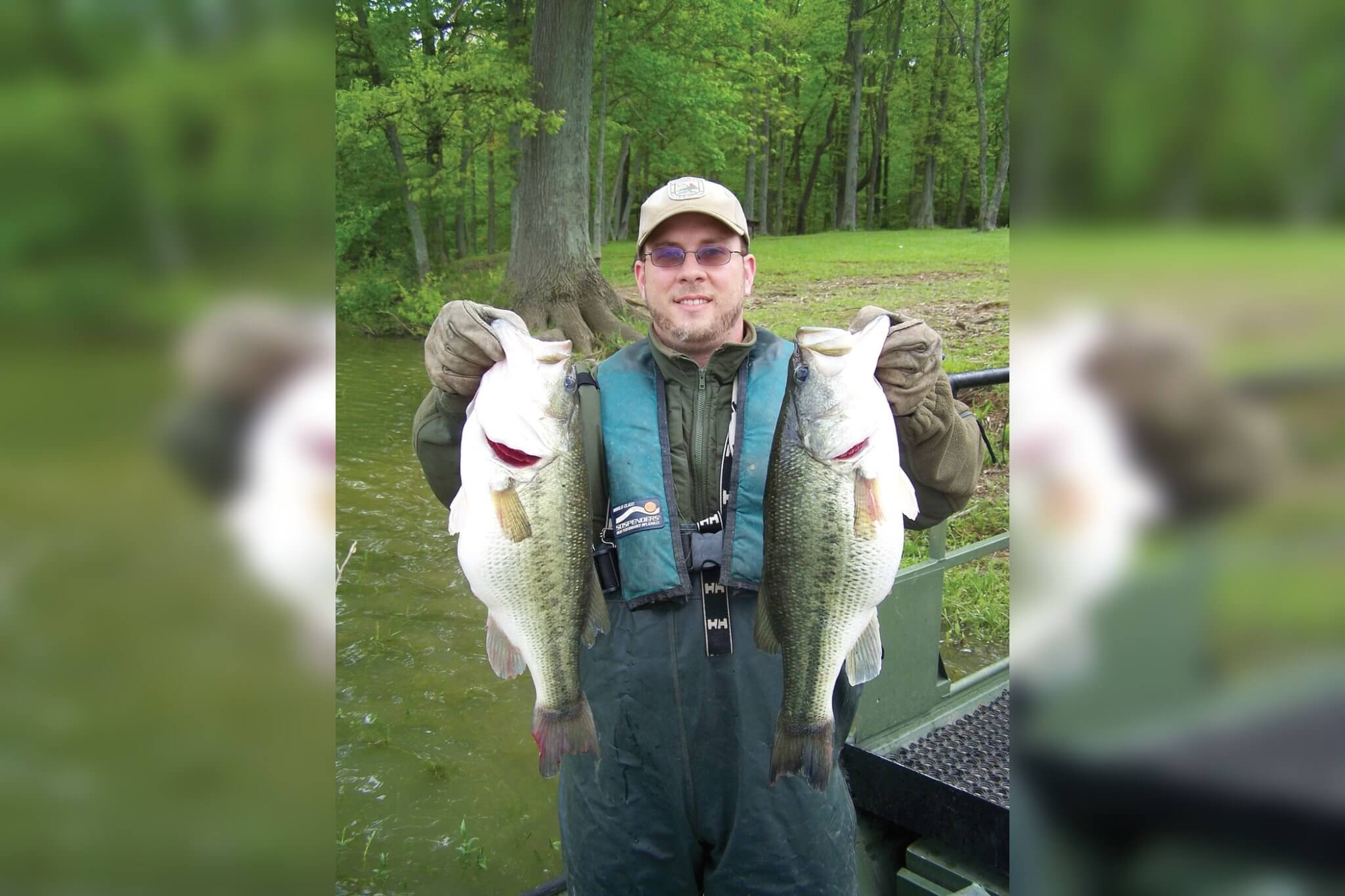
Kentucky’s Thoroughbred Bass Program
I REMEMBER WHEN big Florida-strain bass were introduced to Kentucky Lake, back in my bass tournament days. Having fished for largemouth bass for many years as a boy in Florida, I knew how big they grew there. I was excited to hear about this release program, and hoped to land some giant bass here in Kentucky.
Kentucky Lake was, and still is, a great fishery for both largemouth and smallmouth bass. But the goal at the time was to offer anglers more opportunities to catch a double-digit bass—one weighing 10 pounds or more—which is rare on most lakes around the country.
The Florida strain bass program worked sporadically in Kentucky, seeing better success in states further south. The main problem was our colder winters, which made survival tough for the fish. If you have ever fished for Florida bass, you know how hard it is to get a bite when the slightest cold front moves through. Because of these low temperatures, the Florida bass didn’t thrive and were nearly impossible for anglers to catch during the winter months. However, research never slowed. With time and effort, fishery biologists with the Kentucky Department of Fish and Wildlife Resources found a way to breed bigger bass using Kentucky’s native fish.
Adam Martin is the program coordinator for the state wildlife agency’s Western Fishery District. He says this new, science-driven study brings great hope for introducing trophy largemouth bass into Kentucky waters.
“The Thoroughbred Bass Program is based on studies that have been around for a while but only recently became financially feasible to use on largemouth bass.” Martin says. “The study compares genetic markers between larger bass, say 5 to 6 pounds, and smaller bass of the same age class. There were markers found in the larger bass that were not found in the smaller bass. These markers can be used to determine which fish are most likely to grow larger.”
At the hatchery, biologists can identify and separate fingerlings with the most promising genetic markers, Martin says, releasing some into Kentucky waterways and saving others to continue the breeding cycle at the hatchery.
Unlike the Florida strain, the largemouth bass used in this selective breeding process are native to Kentucky, which means they are naturally acclimated to the region
“This continues the trophy-class genetics, passing them to future generations through natural reproduction to gradually transform the genetic makeup of bass populations,” Martin says. “Ultimately, this program increases opportunities for anglers here in Kentucky to catch trophy-class largemouth bass.”