A trusted resource
Cooperative Extension brings research to rural Kentucky
No matter where you live in Kentucky, there’s a Cooperative Extension Office nearby—and a multitude of free, local resources, from sewing classes to agriculture research and estate planning.
“Extension isn’t for profit and is strictly there to help,” says Dayna Fentress, a Family and Consumer Sciences extension agent in Hardin County. “It has done such a great job staying true to that trust for so many years.”
The history of Cooperative Extension traces back to the federal Morrill Act of 1862, which established land grant institutions. We have two of them in the commonwealth: the University of Kentucky and Kentucky State University. The development of Kentucky’s Extension Service during the 1910s extended practical, research-based learning to rural Kentuckians. That tried and tested information, combined with a grassroots network of local staff who are known as community neighbors, generates a deep sense of trust.
Today, the University of Kentucky’s Cooperative Extension Service has offices in each of the state’s 120 counties. The federal USDA National Institute of Food and Agriculture provides oversight, and extension faculty and staff at the university develop relevant programming in partnership with local Extension staff, who are called agents.
Family and Consumer Sciences
Fentress, a consumer-member of Meade County RECC, first experienced Extension as a 4-H member, showing hogs to pay for college. Now her daughter is a young 4-H Cloverbud looking forward to her first camp experience next summer.
As a Family and Consumer Sciences agent in Hardin County, Fentress serves community members at every stage of life. One Extension offering that has seen increased interest is estate planning. Encouraging families to have tough conversations now, Fentress says, can help avoid conflict around possessions after a death.
Old-fashioned homemaking skills are also drawing in participants. Beginning sewing classes often fill up the day registration opens. Cooking and canning classes are also trending, with a focus on food safety and building confidence in the kitchen for all generations.
“The next generation is wanting to learn these homemaking skills,” says Fentress. “When finances are tight, they want to be more self-reliant, and having these kinds of skills is a mental health boost.”
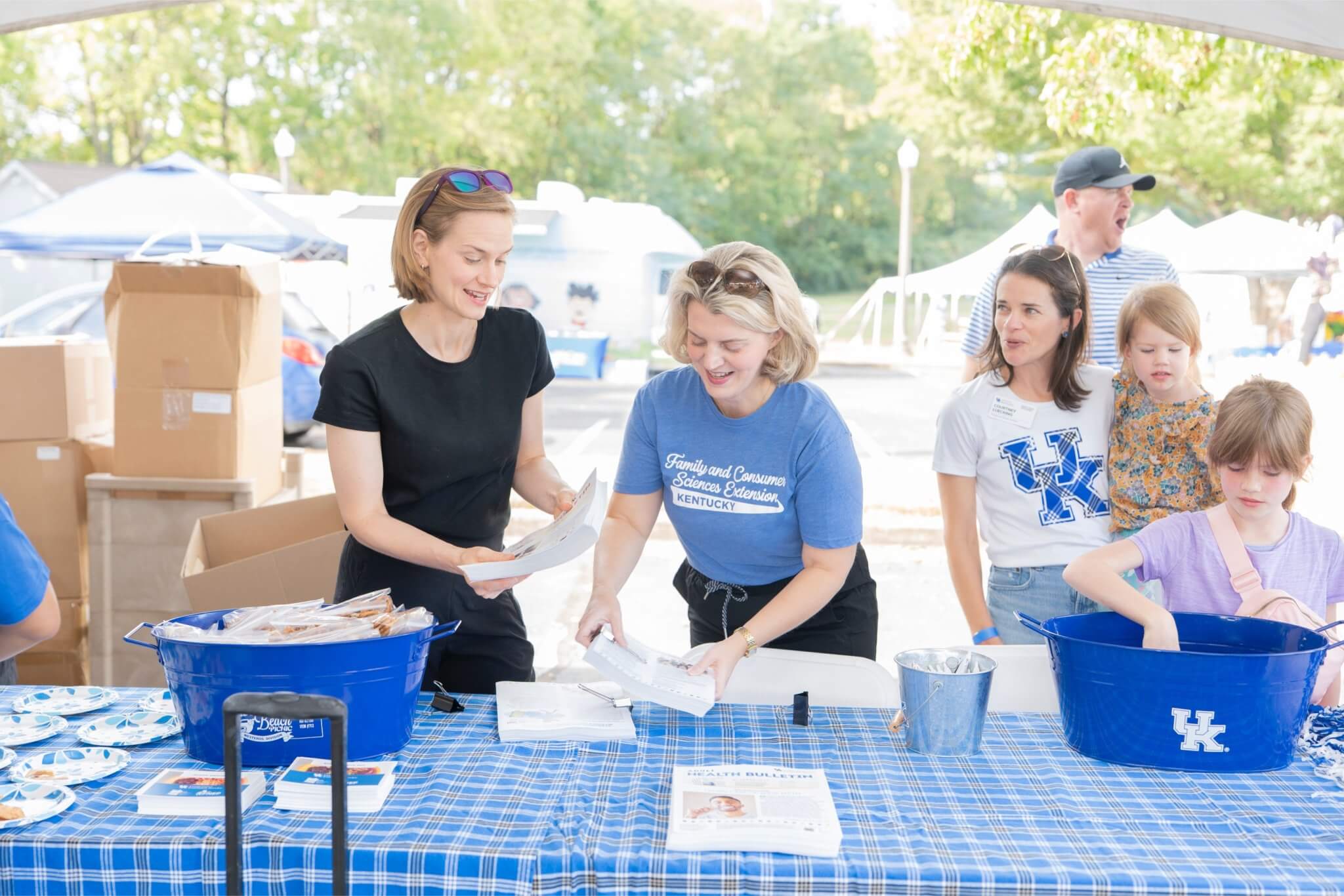
The Be Healthy Bash offers health screenings, wellness resources and more. Photo: UK Martin-Gatton College of Agriculture, Food and Environment
Agriculture & Natural Resources
Agriculture and Natural Resources is another high-visibility Extension arm. County offices offer soil testing and water quality assessment, in addition to distributing farmers market vouchers for seniors. Education is the main focus for Reed Graham, the Agriculture and Natural Resources agent in Breathitt County and a consumer-member of Licking Valley RECC. He leads fruit orchard tours, tree grafting workshops and country ham classes. He also conducts more than 100 farm visits a year to help farmers solve problems and make management decisions.
A popular two-year homesteading series in Breathitt County shared skills, best practices and personal experiences. Through a partnership with the public library, a gardening program offered tillage, seeds, plants and cover crops to 50 families. Three counties—Morgan, Wolfe and Breathitt—collaborated on a horseman training series.
Now in its 26th year in Breathitt County, a canoe trip on the north fork of the Kentucky River welcomes 40–50 people annually. Participants learn about the fish in the river and techniques for managing stream banks, but Graham says it is mostly just a lot of fun. The event has increased the county’s pride in the river, generating the construction of boat ramps and organized stream clean-ups.
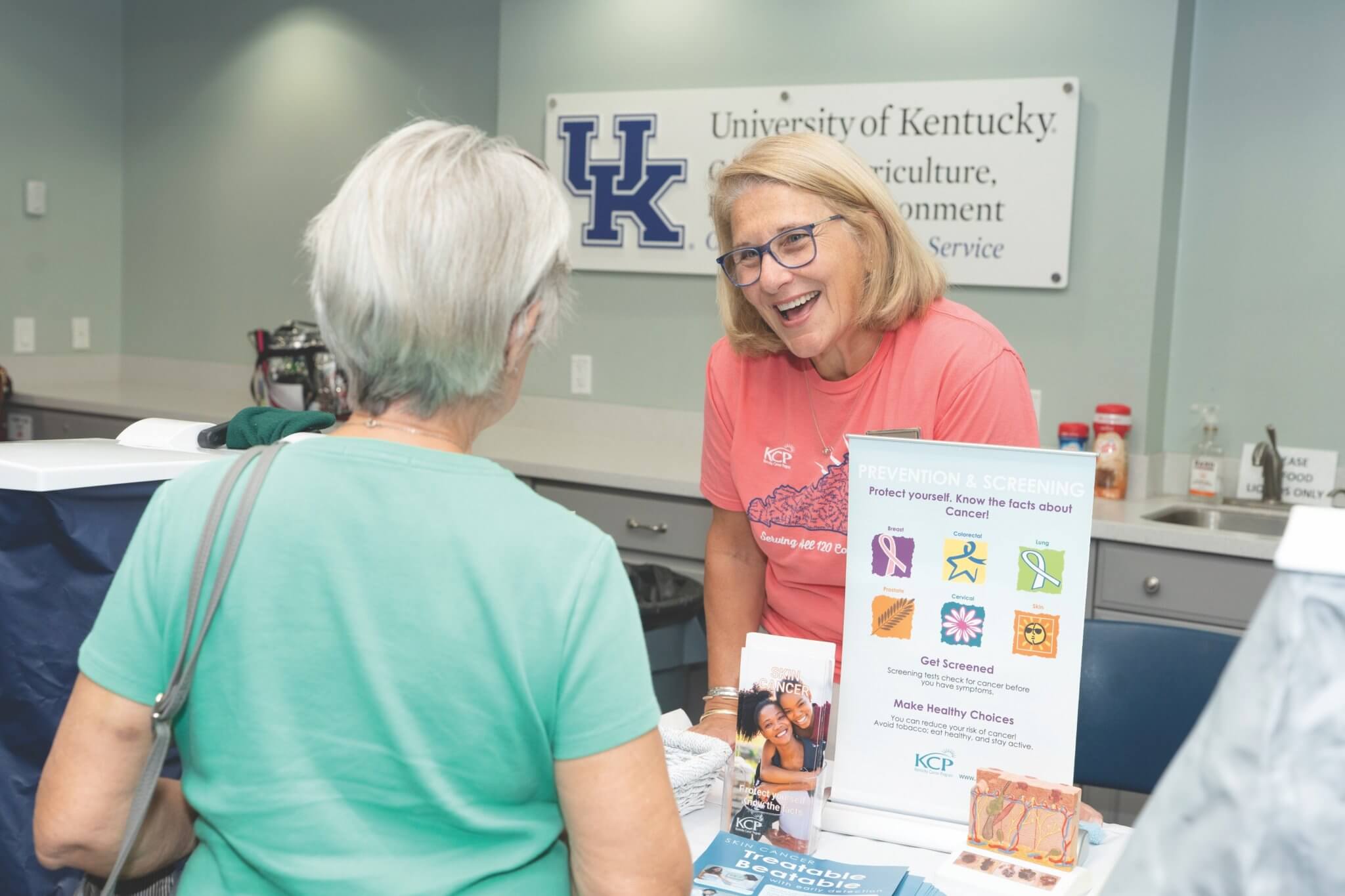
Cooperative Extension’s Be Healthy Bash is an example of its mission to connect Kentuckians with research-based education. Photo: UK Martin-Gatton College of Agriculture, Food and Environment
Research
UK faculty develop most of the curriculum for Family and Consumer Sciences, using recognized expert sources like the National Center for Home Food Preservation and a University of Illinois program on healthy aging. Extension also has a collaborative culture, with states and localities offering to share exemplary programs they have developed.
Much of the research for Agriculture and Natural Resources is performed here in Kentucky by UK’s agricultural experiment stations. Established by the federal Hatch Act of 1887, these facilities are research laboratories for faculty and students. Current studies include a long-range forage variety pasture trial and an investigation of hemp yields.
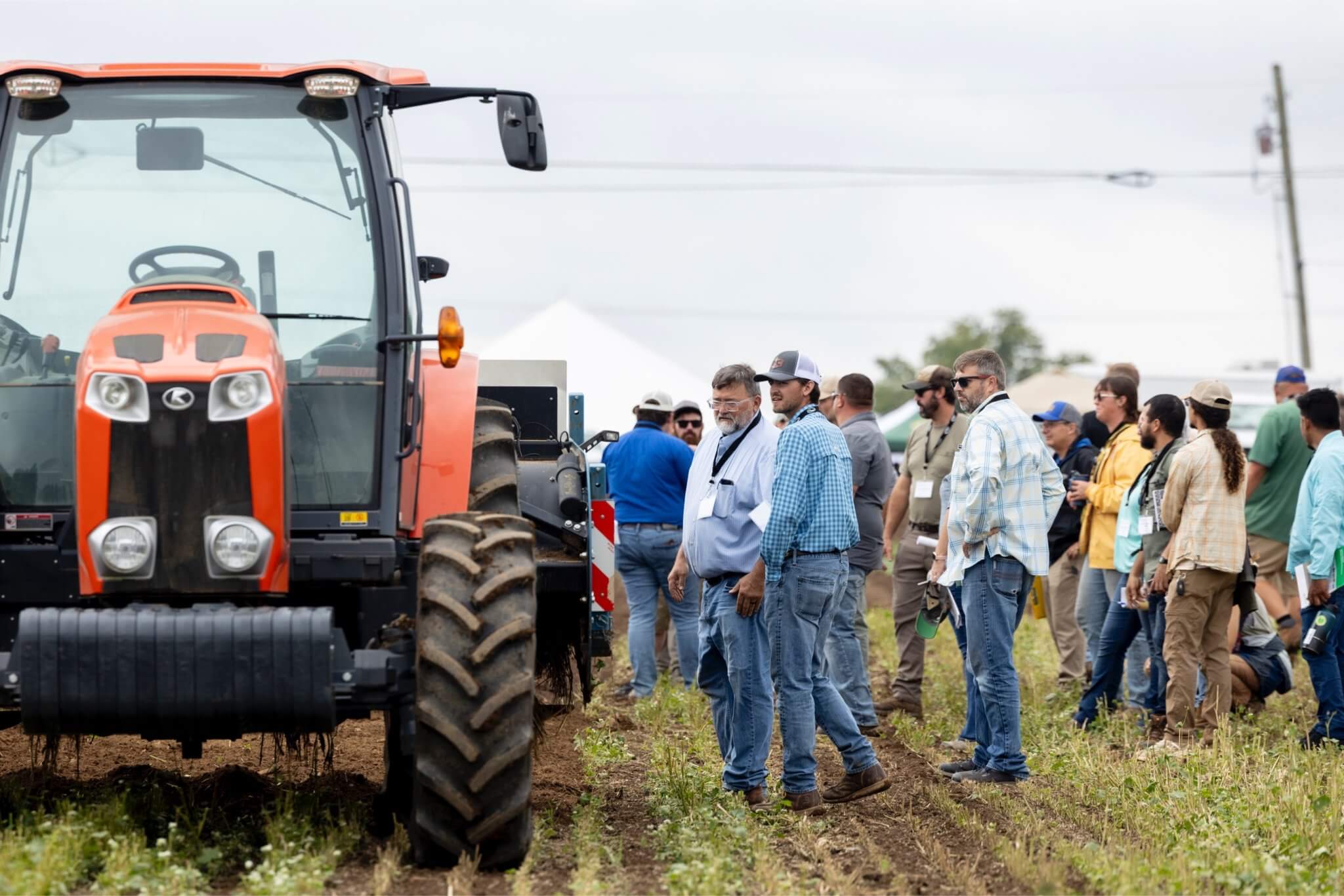
Extension offices sponsor on-site field days and educational workshops for producers to see the practical applications of the farms’ research. The Robinson Center Research Station in Breathitt County offers both farm and forest programming, like a forestry field course for high school students and a mechanical weed control field day.
“It is easier to get landowners to adopt new practices or methods if we can show them how it works,” says Graham. “Trials show them it can work on their farm.”
The University of Kentucky and Kentucky State University hosted the 65th annual Farm City Field Day in Frankfort in July.
Local needs, local solutions
The Extension system is nimble. Farming looks different across Kentucky’s diverse geographies, and local offices can share region-specific information. Agents select programs from a cafeteria of options that best meet local needs.
Community needs assessments, local focus groups and advisory councils inform programming. In 2018, communities across Kentucky identified substance abuse prevention and recovery as the top need. While Extension is not typically involved in that particular arena, state leaders could see how many existing program areas aligned with recovery and prevention goals.
As a result, UK established the nation’s first Extension faculty position to support substance abuse prevention and recovery. The specialist develops programming for agents and leads local activities that require more expertise.
“We are doing prevention and recovery work that naturally fits into the Extension wheelhouse,” explains Jennifer Hunter, who directs the UK Cooperative Extension Service. “That includes forming relationships with youth, research-based prevention programming and building recovery assets like money management, healthy eating and workforce development.”
From homemaking classes to horticulture to health, Cooperative Extension makes research-backed information available and useful.
“We view it as the front door of UK,” Hunter says. “Extension is many people’s first, and sometimes only, interaction with the university. It brings university resources to an individual’s kitchen table and to a farmer’s field. We are keenly positioned to meet people where they are with resources they need.”

Guests learn about health and wellness during the 2025 Be Healthy Bash, presented by UK HealthCare and UK Cooperative Extension Service.
Supporting rural development
Blueprint Kentucky is a statewide Extension program focusing on economic development in rural communities. Blueprint offers a suite of resources for rural places and people to not just survive, but thrive.
The Kentucky’s Rural Economy report provides data on economic conditions across the commonwealth at the individual, community and industry levels. County-level data profiles provide leaders with relevant, specific information for strategic planning.
Rural leaders can tap Blueprint Kentucky to assist with retail sector analysis, feasibility studies and other technical assessments to form strategies for growth. The First Impressions program helps towns assess their community centers and launch revitalization efforts. Trainings and workshops support communities in applying for Brownfield Redevelopment and other grant funds.
Specific teams offer focused workshops. The community design team leads trainings on creative approaches to empowering and strengthening communities. The workforce team offers a Sow and Grow series on ideas that strengthen workplaces.
More resources to explore: